Hi-vis workwear jackets: picking the right one for your job
Last updated
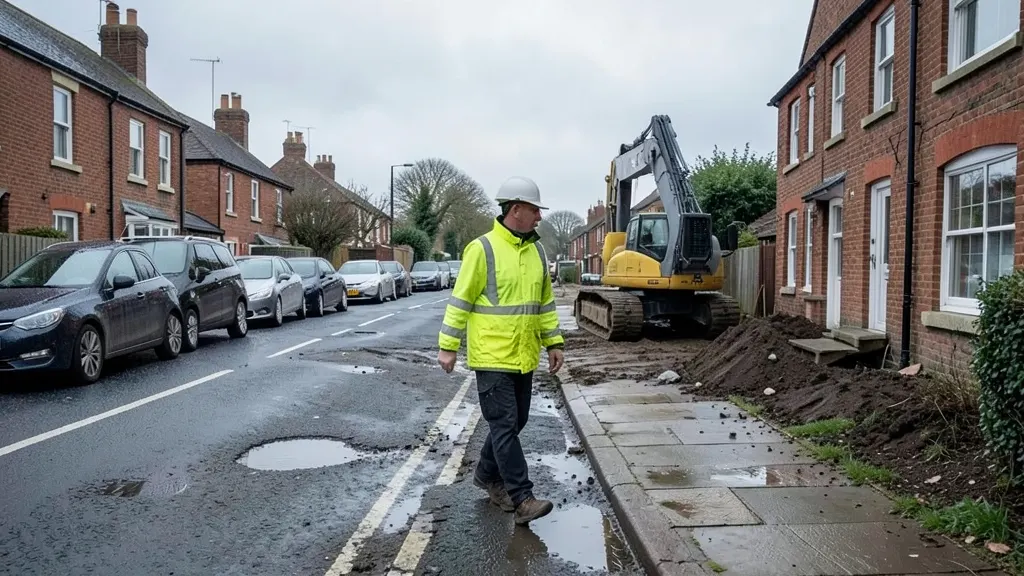
If you work on or near roads, railways, plant or moving vehicles, a hi vis work jacket is often the single most important bit of kit you put on each morning. This page compares the main uses of high visibility clothing workwear so you can match the jacket to the job, rather than guessing. We look at site work, road and rail work, warehouse and logistics work, and outdoor trades, and finish with a quick decision guide.
What this comparison covers
Choosing hi vis workwear usually comes down to three questions. What hazards are around you? How much of you needs to be visible? And what does your employer or site rules require? Under the Personal Protective Equipment at Work Regulations 1992, employers must provide suitable PPE to workers exposed to a health or safety risk, unless that risk is adequately controlled by other means. Since 6 April 2022 those duties also cover limb (b) workers, and the employer must provide the PPE free of charge. So for many people the class of jacket is set by the employer's risk assessment, and your job is to understand why, wear it properly and keep it clean. For more background on the rules, see when hi-vis is required at work in the UK.
The main use cases compared
General construction and building sites
A site hi vis jacket for a building site is usually a class 2 garment. EN ISO 20471 sets three classes, and class 2 requires at least 0.50 m2 of fluorescent background material plus 0.13 m2 of retroreflective material. That is enough to make you conspicuous against plant, telehandlers and reversing vehicles at moderate distances, without the bulk of a full class 3 outfit. On a fenced site with no public roads, class 2 is normally the sensible middle ground. The jacket needs to survive mud, dust and daily washing, so look for sturdy zips, a plain back panel for printing and enough room for layers underneath in winter.
Roadside and highway work
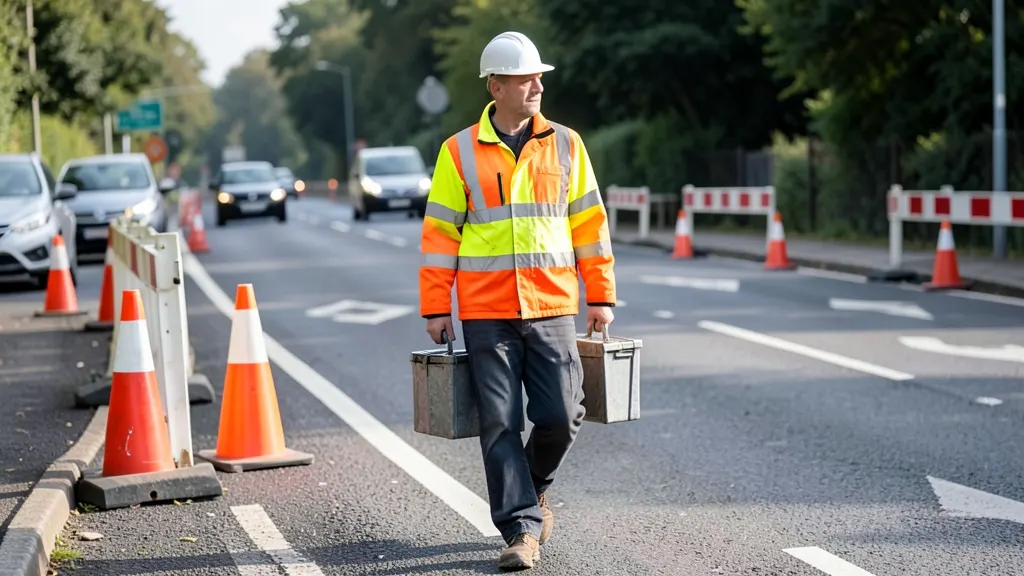
Work on or beside public roads, especially in low light or at night, pushes you towards class 3. Class 3 is the highest EN ISO 20471 class, requiring at least 0.80 m2 of fluorescent background material and 0.20 m2 of retroreflective material. The extra fluorescent area and reflective banding matter because traffic approaches fast, and drivers need to pick you out from cones, signs and vehicles. A class 3 jacket often has full-length sleeves with bands around the arms and a band across the chest or shoulders, which helps drivers judge your shape and movement. If you want more detail on the top class, read class 3 hi vis jackets: myths and facts.
Rail work
Rail has its own rule on top of the general standard. SATRA, a UK PPE testing body, states that rail standard RIS-3279-TOM requires an orange colour and garments meeting at least class 2 of EN ISO 20471. So a railway hi vis work jacket must be orange rather than yellow, and class 2 as a minimum. If you move between road and rail jobs, check whether your jacket carries both the EN ISO 20471 mark and the rail orange specification before you rely on it.
Warehouses, logistics and delivery
Inside a warehouse the risks are forklifts, lorries and tight corners rather than fast traffic. Visibility still matters, but so does comfort and movement, since you may be bending, lifting and climbing in and out of cabs all shift. A lighter class 2 jacket, or even a class 1 vest over a normal work fleece, may be enough depending on the site assessment. Class 1 requires a minimum fluorescent background area of 0.14 m2 and 0.10 m2 of retroreflective material, the lowest of the three classes. Delivery drivers who also step out onto roads and pavements should treat this as a road exposure question, not just a warehouse one.
Outdoor trades and daytime road work
Groundworkers, surveyors, fencers and estate workers often spend the day in daylight away from fast traffic. Here a hi vis work jacket earns its keep through fluorescent colour more than reflective tape, because the reflective element only shows up in headlights. To understand why that matters, see how reflective material works. The Highway Code makes the same point for everyone on or near roads. Rule 3 advises helping other road users to see you, noting that in the dark reflective materials such as jackets can be seen by drivers using headlights up to three times as far away as non-reflective materials, and Rule 17 says simply that at night you should wear something reflective.
Which option fits which situation
Match the garment to the worst condition of your day, not the average one. A scaffolder on a city street at dusk faces traffic risk, so class 3 is the safer call. A fitter inside a plant shed with slow-moving vehicles can stay at class 2. A track worker needs rail orange class 2 as a floor, class 3 where the site assessment says so. A courier doing urban drops in winter should aim for class 2 or 3 with good reflective coverage, because the time spent outside the van is the risky part. If your day mixes roles, buy for the highest exposure.
Fit and care matter as much as class. A jacket worn open, or buried under a bulky coat, does not count. HSE guidance says reusable PPE must be cleaned and kept in good condition, that hi vis jackets, trousers and coveralls must be cleaned regularly, and that workers must report any loss, destruction or obvious defect. A jacket gone grey with dust and grime has lost much of its fluorescent value, so replace it rather than pushing on.
Quick decision guide
Work through these checks in order.
- Has your employer issued a specification, or does the site induction state a class? If yes, that decides it.
- Is it rail work? Then the jacket must be orange and at least class 2 under EN ISO 20471.
- Will you be near fast or moving traffic, or working in low light and after dark? Choose class 3, with at least 0.80 m2 of fluorescent material and 0.20 m2 of retroreflective material.
- Is the exposure mostly plant, forklifts and site vehicles in daylight? Class 2 is the usual answer, with at least 0.50 m2 of fluorescent background.
- Is the exposure brief, controlled and indoors? Class 1 may be acceptable, but confirm with the risk assessment.
- Whatever the class, is the jacket clean, undamaged, fastened and worn over everything else? If not, fix that first.
For a wider look at the different types available, start with hi-vis jackets: how to choose the right one. Get the class right, keep the garment clean, and the rest of the decision comes down to comfort and durability.
Frequently asked questions
What is the difference between class 2 and class 3 hi vis workwear?
EN ISO 20471 has three classes. Class 2 requires at least 0.50 m2 of fluorescent background material and 0.13 m2 of retroreflective material, while class 3 requires at least 0.80 m2 and 0.20 m2 respectively. Class 3 is the highest class and is generally used where workers face fast-moving traffic or work in darkness.
Can my employer make me pay for a hi vis jacket?
No. Under the Personal Protective Equipment at Work Regulations 1992, employers must provide suitable PPE to workers exposed to a health or safety risk, unless that risk is adequately controlled by other means. Since 6 April 2022 the duties also cover limb (b) workers, and the employer must provide the PPE free of charge.
Why does rail work need an orange hi vis jacket?
SATRA, a UK PPE testing body, states that rail standard RIS-3279-TOM requires an orange colour and garments that meet at least class 2 of EN ISO 20471. So rail workers need orange rather than yellow hi vis, at class 2 as a minimum.
How often should I wash my hi vis work jacket?
HSE guidance says reusable PPE must be cleaned and kept in good condition, and that hi vis jackets, trousers and coveralls must be cleaned regularly. You should also report any loss, destruction or obvious defect, because dirt and fading reduce how visible the jacket actually is.
Is reflective tape important if I only work in daylight?
In daylight the fluorescent colour does most of the work, while the retroreflective element matters in low light and darkness. The Highway Code notes that in the dark, drivers using headlights can see reflective materials up to three times as far away as non-reflective ones. If any part of your day runs into dusk or night, keep good reflective coverage.