Thermal hi vis jackets: sorting the myths from the facts
Last updated
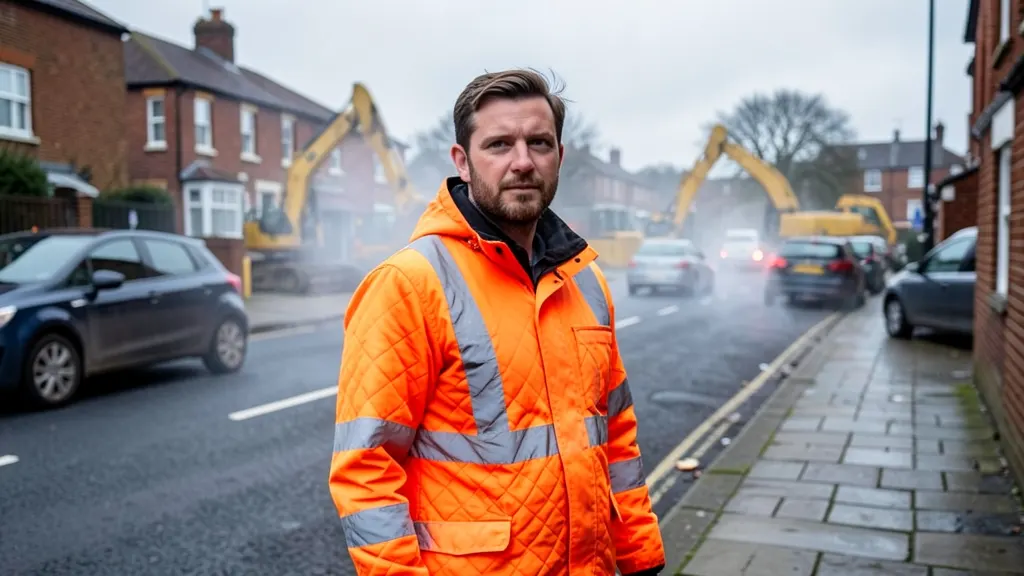
The biggest myth: a warm hi-vis jacket is a compromise on visibility
The most common misconception is that insulation somehow dilutes visibility. People assume that once you add a quilted lining, a thermal layer or a padded shell, you drift away from the safety standard and end up with a jacket that is warm but only "sort of" hi-vis. Some buyers go the other way and buy a thin, flimsy fluorescent jacket in winter, reasoning that a proper certified garment cannot possibly be warm.
Both halves of that thinking are wrong. Thermal hi vis jackets are certified under exactly the same standard as their lighter cousins. Warmth and visibility are two separate properties, and a hi vis jacket with thermal lining can hold the same certification class as any summer shell.
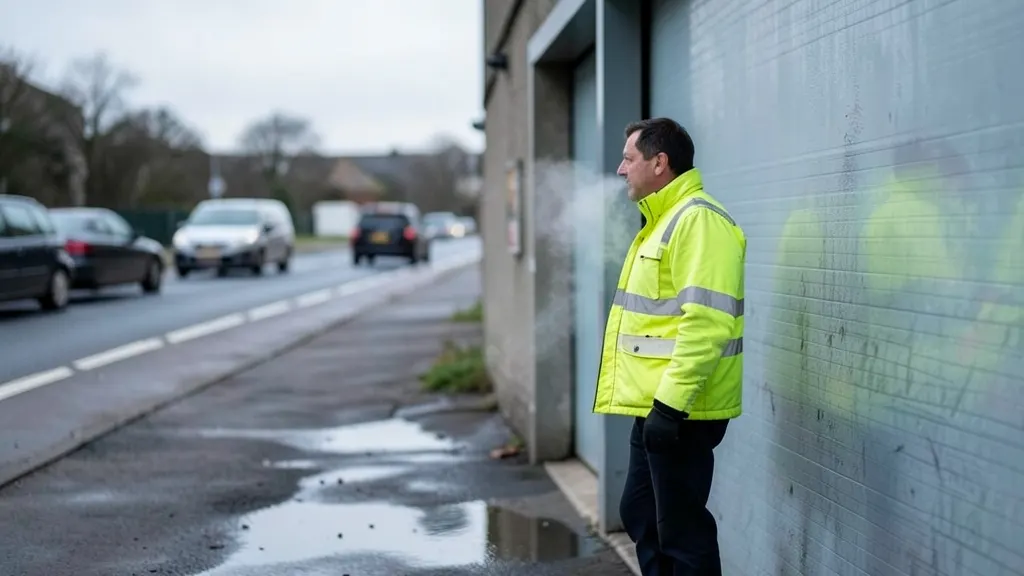
What the standard actually says
EN ISO 20471, the standard behind hi-vis clothing, says nothing at all about insulation, warmth or lining thickness. It is concerned with two things only: how much fluorescent background material the garment has, and how much retroreflective material it carries.
The standard has three classes. Class 1 requires a minimum of 0.14 m2 of fluorescent background material and 0.10 m2 of retroreflective material. Class 2 steps up to 0.50 m2 of background and 0.13 m2 of reflective. Class 3, the highest class, needs at least 0.80 m2 of fluorescent background and 0.20 m2 of retroreflective material.
None of those numbers change because a jacket happens to contain a quilted or thermal lining. A insulated hi vis jacket can be class 1, 2 or 3, exactly like an unlined one. The certification depends on the visible material and its condition, not on what sits between the outer shell and your jumper.
For workers, the legal backdrop is the Personal Protective Equipment at Work Regulations 1992, which require employers to provide suitable PPE to workers exposed to a health or safety risk unless that risk is controlled by other means. Since 6 April 2022 those duties also cover limb (b) workers, and the employer must provide the PPE free of charge. In practice, a winter site jacket should be supplied with the same care as a summer one.
More myths worth clearing up
"Fluorescent is what keeps you safe at night"
Fluorescent material works in daylight and poor light. In full darkness it does very little on its own. The Highway Code makes the distinction clearly. Rule 59 advises cyclists that light-coloured or fluorescent clothing helps other road users see them in daylight and poor light, while reflective clothing or accessories increase visibility in the dark. Rule 17 says much the same for anyone on foot at night: wear something reflective. A warm jacket that is all fluorescent and no retroreflective banding is a daylight garment, not an all-hours one.
"Reflective bands are decoration"
The retroreflective strips on a hi vis jacket are the part drivers actually pick up in headlights. Rule 3 of the Highway Code notes that in the dark, reflective materials such as jackets, sashes, waistcoats, armbands or footwear can be seen by drivers using headlights up to three times as far away as non-reflective materials. On a quilted hi vis jacket, those bands do the night work. If you are cycling, remember that reflectivity supports your lights rather than replacing them, since Rule 60 requires a cycle used at night to have a lit white front light, a red rear light and a red rear reflector.
"One warm hi-vis jacket lasts the whole winter, whatever happens to it"
HSE guidance is blunt on this point. Reusable PPE must be cleaned and kept in good condition, and hi-vis jackets in particular must be cleaned regularly. Workers must report any loss, destruction or obvious defect. A thermal jacket that gets caked in mud, grease or grit loses both its fluorescent punch and its reflectivity, however thick the lining is. Washing matters more than most people think, and a filthy jacket is not a compliant jacket.
What to do instead
Choose the class of jacket your situation demands first, then treat warmth as a separate shopping criterion. For low-light road work or any higher-risk environment, a class 3 garment gives you the largest minimum areas of fluorescent and retroreflective material. If you work on or around the railways, note that SATRA, a UK PPE testing body, states that the rail standard RIS-3279-TOM requires an orange colour and at least class 2 of EN ISO 20471.
For everyday use, match the reflective elements to when you will actually be out. A dog walker doing evening rounds needs generous retroreflective banding, and the bands should sit where headlights will catch them. Our guide to hi-vis jackets for dog walking covers that in more detail. Cyclists will find a buyer's guide to hi-vis jackets for cycling useful, and anyone weighing up certification levels should read our piece on Class 3 hi vis jackets.
Beyond that, keep it simple. Check the label for the EN ISO 20471 class before you look at anything else, look for a thermal lining rated to how cold your winters actually feel, and wash the jacket often enough that the fluorescent stays bright and the reflective strips stay shiny. Warmth is a matter of comfort. Visibility is a matter of being seen, and the two sit together perfectly well in one garment.
Frequently asked questions
Does a thermal lining affect a hi-vis jacket's certification?
No. EN ISO 20471 is based on the area of fluorescent background material and retroreflective material, not on warmth or lining. A hi vis jacket with thermal lining can be certified to class 1, 2 or 3 in the same way as an unlined one, provided the minimum areas of material are met.
What class of insulated hi vis jacket do I need?
It depends on your risk level. Class 3 is the highest class under EN ISO 20471, with at least 0.80 m2 of fluorescent background material and 0.20 m2 of retroreflective material. Lower-risk settings may be fine with class 2, which requires 0.50 m2 of background and 0.13 m2 of reflective material.
Are fluorescent thermal jackets enough for walking in the dark?
Not on their own. Fluorescent material helps in daylight and poor light, but in the dark it is the retroreflective strips that drivers see in their headlights. Look for a jacket with plenty of reflective banding if you will be out after sunset, and keep the garment clean so both materials keep working.
Who has to pay for a thermal hi vis jacket at work?
Under the Personal Protective Equipment at Work Regulations 1992, employers must provide suitable PPE to workers exposed to a health and safety risk unless the risk is controlled by other means. Since 6 April 2022 the duties also cover limb (b) workers, and the employer must supply the PPE free of charge.
Do I need an orange one for railway work?
Yes, for work on or around the rails. SATRA, a UK PPE testing body, states that the rail standard RIS-3279-TOM requires garments in an orange colour that meet at least class 2 of EN ISO 20471.