Kids hi vis jackets: sorting the myths from the facts
Last updated
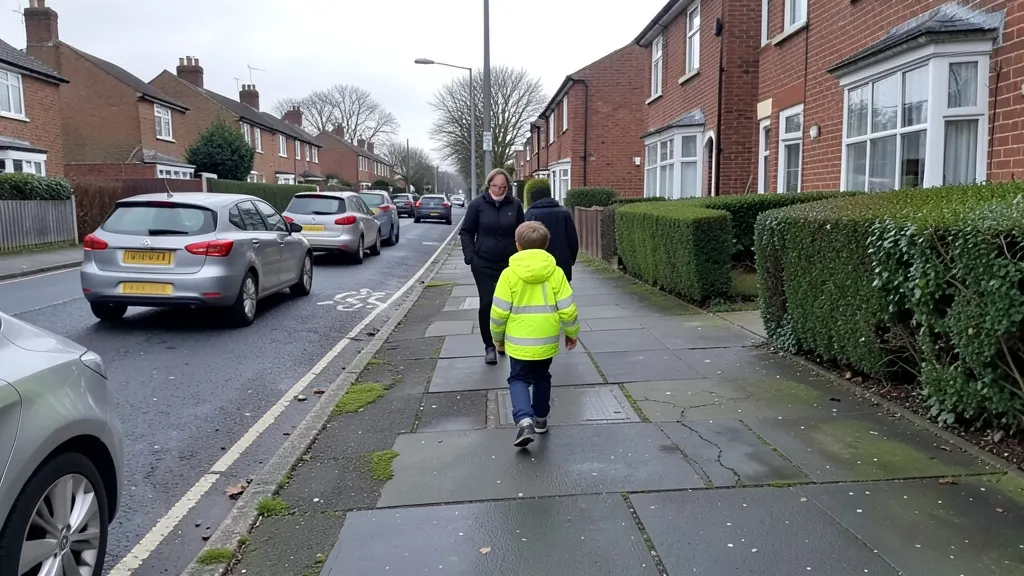
Ask most parents about a kids hi vis jacket and you will hear the same confident claim: they are really just a gimmick, a yellow coat that makes no real difference to safety on the walk to school. It is easy to see where the idea comes from. Plenty of cheap tabards sold for children look bright in the shop but seem thin and flimsy, and some schools hand them out without explanation, which suggests they are more tradition than protection. So the jacket gets dismissed as box-ticking, or bought once and worn for a week before being left in the peg.
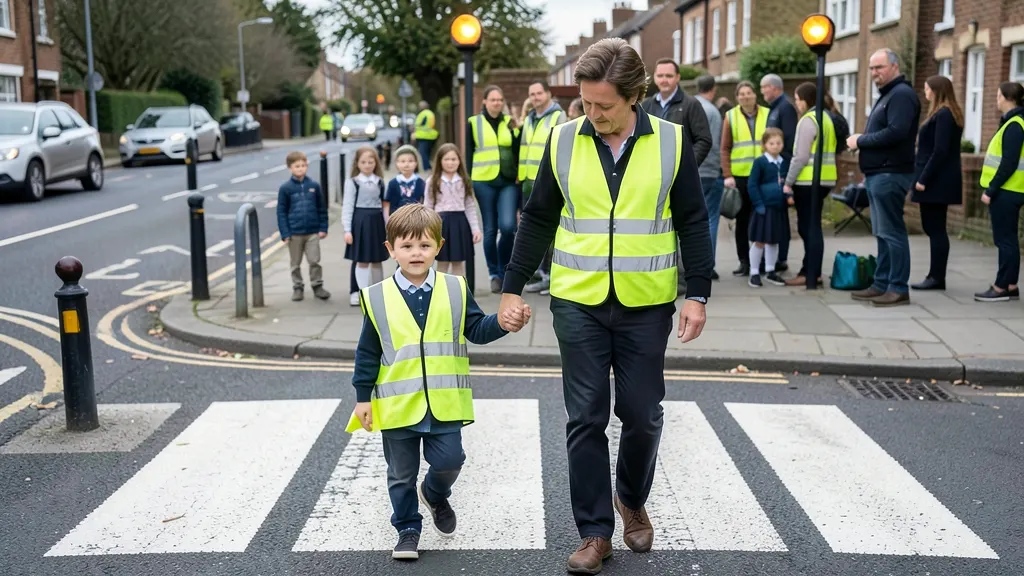
The truth: hi-vis really does help drivers see children earlier
The misconception falls apart once you look at what the Highway Code actually says. Rule 3 asks every road user to help others see them, and states that in the dark, reflective materials such as armbands, sashes, waistcoats, jackets or footwear can be seen by drivers using headlights up to three times as far away as non-reflective materials. Three times the distance means three times the thinking and braking time. For a child on a pavement edge or crossing near parked cars, that margin matters far more than it would for an adult standing still in the open.
The key word, though, is "reflective". A fluorescent jacket works by converting ultraviolet light into visible glow, which is why it shines in daylight and poor light, but it does almost nothing on its own on an unlit road at night. The retroreflective bands are what catch headlights. That is why EN ISO 20471, the standard behind every genuine childrens high visibility jacket, sets two separate requirements: a minimum area of fluorescent background material and a separate minimum area of retroreflective material. Even class 1, the lowest of the standard's three classes, requires at least 0.14 m2 of fluorescent material and 0.10 m2 of retroreflective material.
So the jacket is not a gimmick. A childs hi vis jacket that carries an EN ISO 20471 mark is a tested garment with measured amounts of both materials. Our guide to Hi-vis jackets: how to choose the right one covers how the classes work in practice, and if your child cycles to school, see Hi-vis for school children for the full picture on the school run.
More myths worth clearing up
"Any bright colour counts as hi-vis"
A bright red or lime coat from a regular clothing shop is not the same thing. Fluorescent material in the EN ISO 20471 sense is a specific finish that reacts to ultraviolet light, and retroreflective bands are engineered to bounce light straight back at its source. A school hi vis jacket with the standard marked on the label has both in tested quantities. A plain bright coat has neither, however cheerful it looks.
"Class 2 or class 3 is what a child needs, because higher is safer"
Class 3 is the highest EN ISO 20471 class, requiring at least 0.80 m2 of fluorescent background material and 0.20 m2 of retroreflective material. It is designed for adults working beside fast traffic or on motorways, and on a child that area of material would make for a heavy, bulky garment. For pavement walking and the school run, class 2, with a minimum of 0.50 m2 of fluorescent background and 0.13 m2 of retroreflective material, is generally plenty. Our page on Class 3 hi-vis jackets explains who that level is really for.
"My child never walks in the dark, so it is pointless"
The dark arrives earlier than many people expect in a British winter. The morning school run in December is done in twilight or full darkness, and Rule 17 of the Highway Code applies exactly then: at night, wear something reflective to make it easier for others to see you. Rule 59 makes the same point for young cyclists, noting that light-coloured or fluorescent clothing helps in daylight and poor light, while reflective clothing or accessories increase visibility in the dark. If your child rides, Rule 60 also requires white front and red rear lights lit at night, along with a red rear reflector, so the jacket is a companion to good bike lights rather than a substitute. See Hi-vis jackets for cycling for more on that combination.
"One size too big is fine, they will grow into it"
A jacket two sizes too large slides around, the reflective bands end up in the wrong places, and sleeves can cover hands on a bike's handlebars. Fit the jacket to the child you have now.
What to do instead
Buy a jacket that carries the EN ISO 20471 mark, in whatever class suits the journey, and check that it genuinely has retroreflective bands rather than just a fluorescent shell. Fit it properly. Look after it, because reflective material only works while it is clean and intact: Health and Safety Executive guidance on reusable PPE says such garments must be cleaned regularly and kept in good condition, and while that guidance is aimed at workplaces, the logic applies at home too. A jacket caked in mud or balled up wet in a school bag loses much of its benefit.
Get the child into the habit rather than treating the jacket as a one-off. If it lives on the same peg as the school bag, it gets worn. Pair it with lights on bikes, and remember that for dog walks and evening activities the same rules apply, as our page on Hi-vis jackets for dog walking explains. Finally, involve the child in choosing it. A jacket they like gets zipped up every morning, and a jacket that gets worn is the one that actually does its job.
Frequently asked questions
Do children need a class 3 hi-vis jacket?
Usually not. Class 3 is the highest EN ISO 20471 class, requiring at least 0.80 m2 of fluorescent background material and 0.20 m2 of retroreflective material, and it is designed for high-risk adult work environments such as motorways. Class 2, with minimums of 0.50 m2 and 0.13 m2 respectively, is generally sufficient for walking to school or cycling in traffic.
Does a fluorescent jacket work at night?
On its own, not well. Fluorescent material glows in daylight and poor light by reacting with ultraviolet light, but after dark the retroreflective bands do the work by returning headlight light to the driver. The Highway Code notes that reflective materials can be seen by drivers using headlights up to three times as far away as non-reflective materials, so make sure the jacket has proper reflective bands.
Is a kids hi vis jacket legally required?
No UK law requires children to wear one. The Highway Code rules are guidance: Rule 3 encourages everyone to help other road users see them, and Rule 17 says that at night you should wear something reflective. A jacket is simply a practical way to follow that advice.
What should I check when buying a childrens high visibility jacket?
Look for the EN ISO 20471 mark on the label, which confirms tested amounts of both fluorescent and retroreflective material. Check the fit so the reflective bands sit where they should, and keep the jacket clean, because dirty or damaged material reflects far less light.