High visibility clothing explained
Last updated
What is high visibility clothing?
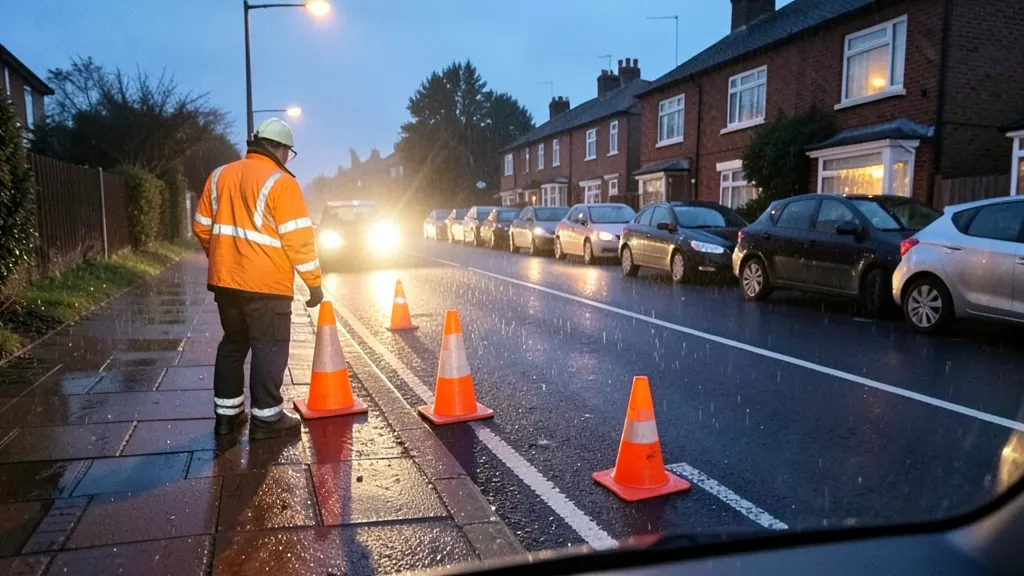
High visibility clothing is any garment that combines two things: a fluorescent background material, usually yellow, orange or red-pink, and retroreflective bands or panels. The fluorescent part helps you stand out in daylight and poor light, because it converts ultraviolet energy into a glow the human eye notices quickly. The reflective part does a different job. It bounces light from headlights straight back towards the driver, which is what matters after dark.
In the UK, hi vis clothing is sold with a class under EN ISO 20471. The standard has three classes, and the class tells you how much fluorescent material and how much retroreflective material a garment carries. Class 1 is the lowest level and is suited to lower-risk settings. Class 2 covers most workwear needs, including roadside work where traffic is slower. Class 3 is the highest class, with at least 0.80 square metres of fluorescent background material and 0.20 square metres of retroreflective material. A garment needs enough material to reach class 3, so a simple tabard rarely qualifies.
Who suits what? Site workers and roadside operatives generally need class 2 or class 3 depending on the risk. Cyclists, runners, dog walkers and parents on the school run can choose freely, and comfort matters as much as class. If you commute on unlit roads, the reflective detail counts for more than the fluorescent colour. If you mostly walk in town under street lighting, either works. Riders and motorcyclists benefit from fluorescent or reflective panels on the sides as well as front and back, because drivers see them from many angles.
What to check before buying
Class
Look at the label before anything else. EN ISO 20471 gives you classes 1, 2 and 3, with minimum fluorescent background areas of 0.14, 0.50 and 0.80 square metres respectively, and minimum retroreflective areas of 0.10, 0.13 and 0.20 square metres. If your employer has told you a class is needed, match it exactly. If you are buying for yourself, pick the class that fits your roads and light conditions rather than the cheapest option. Our page on class 3 hi vis jackets covers some common misconceptions about the top class.
Fabric
Most hi vis jackets use polyester, often with a PVC coating for waterproofing. Coated fabric keeps rain out but can feel clammy, so look for vents or a breathable membrane if you work up a sweat. A mesh-backed option suits summer, while a fleece-lined or padded one suits winter. Check the weight of the fabric too: a heavy-duty jacket lasts longer on a building site, but a lighter one gets worn more often, and a jacket left at home protects nobody.
Fit
A hi vis jacket should be roomy enough to go over your work clothes or a jumper without pulling at the shoulders. If the sleeves ride up when you reach forward, the garment is too tight, and the reflective bands end up in the wrong place. Hems should not flap around your hips, and cuffs should seal snugly. For children, avoid buying several sizes up, because baggy fabric can snag. See our guide to kids hi vis jackets for more on fit and safety claims.
Reflective tape
Run your hand over the reflective bands. Good retroreflective tape feels smooth and returns light sharply when you shine a phone torch at it in a dark room. Check where the bands sit: they should circle the body and sleeves so that some tape faces every direction. Grey tape often contains glass beads, and prismatic tape reflects more strongly but costs more and can be less flexible. If you want hi vis that does not look like it, a black hi vis jacket uses reflective panels on a dark shell, though these rely on headlights and offer little fluorescent benefit in daylight.
Common use cases and trade-offs
Work. Under the Personal Protective Equipment at Work Regulations 1992, employers must provide suitable PPE to workers exposed to a health or safety risk, unless that risk is adequately controlled by other means. Since 6 April 2022 those duties also cover limb (b) workers, and the employer must provide the PPE free of charge. If you work on or near railways, the rail standard RIS-3279-TOM requires an orange colour and garments meeting at least class 2 of EN ISO 20471, according to SATRA, a UK PPE testing body. Our guide to when hi-vis is required at work explains the rules in more detail.
Cycling. The Highway Code says, in rule 59, that light-coloured or fluorescent clothing can help other road users see a cyclist in daylight and poor light, while reflective clothing or accessories can increase visibility in the dark. Rule 60 adds that a cycle must have white front and red rear lights lit at night, plus a red rear reflector. Clothing helps, but lights and reflectors are the legal baseline. See Hi-vis jackets for cycling for specific advice.
Walking and dog walking. Rule 3 of the Highway Code advises helping other road users to see you, and notes that reflective materials such as armbands, sashes, waistcoats, jackets or footwear can be seen by drivers using headlights up to three times as far away as non-reflective materials. Rule 17 says to wear something reflective at night. If you walk a dog, a reflective lead and collar do as much work as your jacket, and our dog walking guide covers the details.
Motorcycling and riding. Rule 86 advises motorcyclists to make themselves visible from the side as well as front and rear, for example with fluorescent clothing or strips, and rule 87 says to wear reflective clothing or strips when riding in the dark. Horse riders gain the same benefit from reflective leg bands on themselves and their horse.
The trade-off in every case is visibility versus wearability. The brightest jacket is useless if it lives in a cupboard because it is too hot or too heavy.
Care and when to replace
HSE guidance says reusable PPE must be cleaned and kept in good condition, and that hi-vis jackets, trousers and coveralls must be cleaned regularly. Workers must report any loss, destruction or obvious defect. Grime dulls the fluorescent colour, and fabric softener or heavy soiling can clog reflective tape, so wash at a cool temperature with ordinary detergent and skip the tumble dryer unless the care label allows it. Velcro fastenings pick up lint and stop gripping, so close them before washing.
Replace a garment when the colour has faded to a shade closer to white than yellow, when tape has cracked, peeled or stopped returning light, or when the fabric has worn thin at the shoulders or elbows. Retroreflective performance fades with washing and age even when the jacket still looks bright, so a heavily used work jacket has a finite life. If you cannot read the class label any more, replace it rather than guess.
Frequently asked questions
What is high visibility clothing made of?
It combines a fluorescent background fabric, usually polyester in yellow, orange or red-pink, with retroreflective tape. The fluorescent material helps you stand out in daylight and poor light, while the reflective tape returns light from headlights to drivers after dark. Both parts matter, and a garment with only one of them is not really hi vis.
Do I legally have to wear hi vis clothing in the UK?
There is no general law requiring the public to wear it. Employers must provide suitable PPE to workers exposed to a risk under the Personal Protective Equipment at Work Regulations 1992, and since 6 April 2022 this also covers limb (b) workers, with the employer paying. The Highway Code advises reflective or fluorescent clothing for cyclists, pedestrians, motorcyclists and horse riders, but it is guidance rather than a legal requirement.
What is the difference between fluorescent and reflective?
Fluorescent material increases contrast in daylight and poor light by converting ultraviolet energy into visible light. Reflective material contains glass beads or prismatic structures that bounce headlight beams straight back to the driver. The Highway Code notes that reflective materials can be seen by drivers up to three times as far away as non-reflective materials in the dark.
Does hi vis clothing work at night?
Only the reflective part does much after dark, because fluorescence needs daylight or UV to work. A bright yellow jacket on its own looks grey under headlights. Look for generous reflective bands around the body and sleeves, and add lights if you cycle, since rule 60 of the Highway Code requires lit white front and red rear lights plus a red rear reflector at night.
How often should hi vis clothing be replaced?
Replace it when the fluorescent colour has faded, when the reflective tape has cracked or stopped returning light, or when the fabric has worn thin. HSE guidance requires reusable PPE to be cleaned regularly and kept in good condition, with workers reporting any loss or obvious defect. Retroreflective performance also degrades with repeated washing even if the jacket still looks bright.