What to wear running in the dark
Last updated
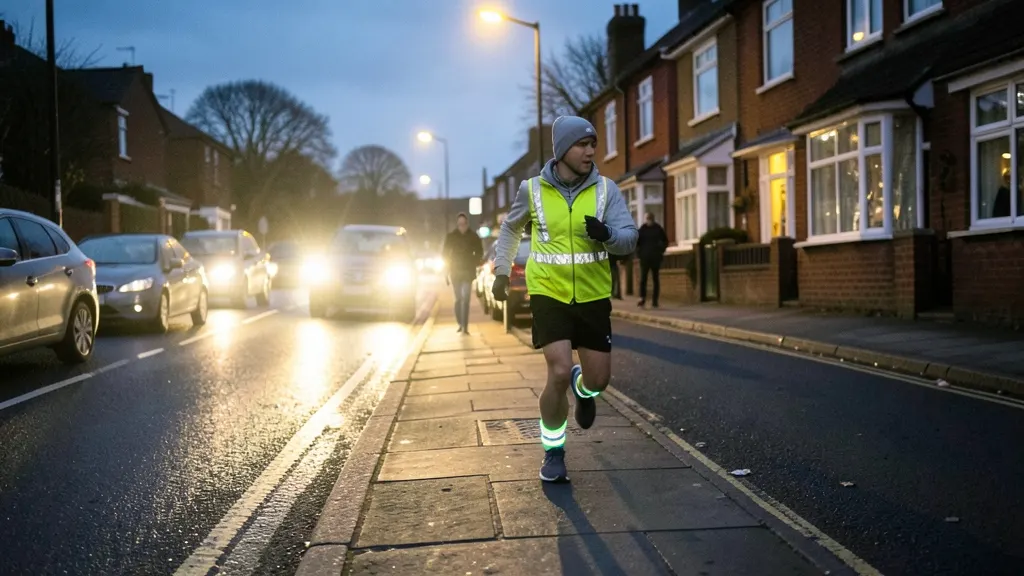
Running in the dark is a normal part of British life for much of the year. Between late autumn and early spring, anyone who runs before work or after the school run does some or all of their miles in the dark. The good news is that being seen is largely a solved problem, provided you understand a few rules and pick the right kit.
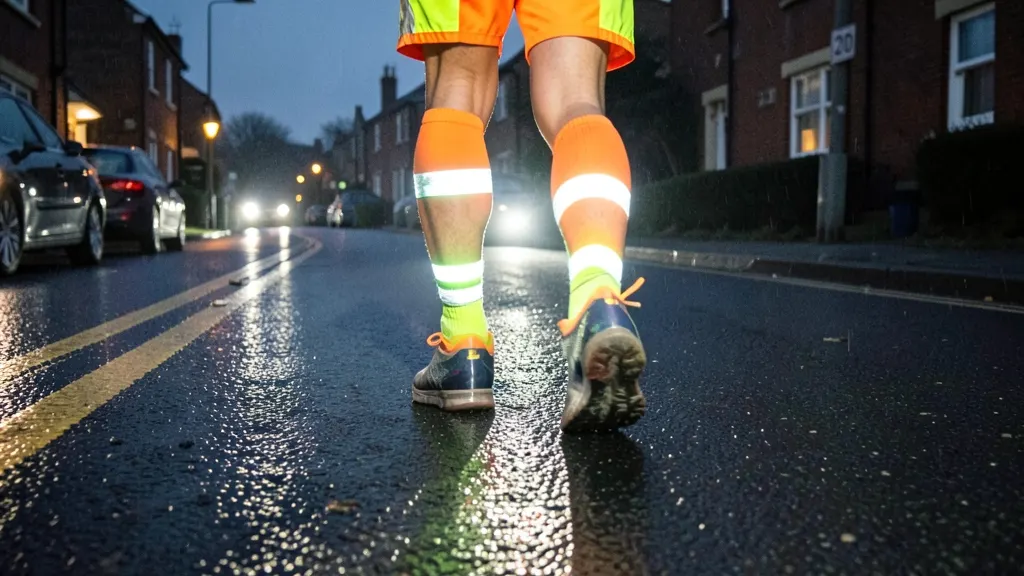
What being visible actually means
Visibility has two halves. Fluorescent material helps you stand out in daylight and poor light, such as at dusk or on a grey, drizzly afternoon. Reflective material does the opposite job: it works in the dark, when there is a light source such as car headlights to bounce back. Nothing reflective helps in complete darkness with no light aimed at it, and fluorescent material does little at night. So a runner out before dawn and after sunset needs reflective kit, while someone running at twilight needs both.
The Highway Code covers this directly. Rule 3 tells all road users to help others see them, and notes that reflective materials such as armbands, sashes, waistcoats, jackets or footwear can be seen by drivers using headlights up to three times as far away as non-reflective materials. Rule 17 says simply that at night you should wear something reflective. Those two rules are the whole basis of running in the dark visibility: be bright, be reflective, and assume the driver has not seen you until proven otherwise.
How reflective kit works
Reflective material contains tiny glass beads or microprisms that return light towards its source instead of scattering it. That is why a reflective strip on a jacket suddenly lights up when headlights hit it. The effect is strongest when the material sits where body movement catches the eye, which is why ankle bands and moving shoes work so well: the up-and-down motion draws a driver's attention in a way a static patch never does.
There is also a formal standard for hi-vis clothing, EN ISO 20471, which sets minimum areas of fluorescent and retroreflective material across three classes. Most sports kit is not certified to it, and it does not need to be, but understanding the classes helps you judge quality. A class 3 garment, the highest, must have at least 0.80 m2 of fluorescent background material and 0.20 m2 of retroreflective material. If a running jacket or vest has generous, well-placed reflective panels rather than a token logo on the chest, it is doing the same job even without the label. For a fuller explanation, see How reflective material works and Hi-vis classes and EN ISO 20471 explained.
Putting it into practice on UK roads
The practical approach is to layer your visibility.
- Head and torso: a bright or light-coloured jacket with reflective panels across the chest, shoulders and back. A dedicated reflective running vest over your normal layers is the cheapest way to add serious coverage, and you can slip it over anything as the weather changes.
- Moving parts: reflective ankle bands or laces. Drivers notice movement before they notice shape, so your feet and lower legs are prime real estate.
- Extremities: gloves with reflective detailing keep your hands visible when you signal or gesture.
- Light: a small clip-on light or head torch adds active visibility that reflective kit alone cannot give, especially on unlit paths where there are no headlights to reflect.
A few habits matter as much as the kit. Run facing oncoming traffic where the pavement ends, so you can see what is coming. Cross at lit places where you can. Assume that wet roads, low sun behind you, or a rain-specked windscreen halves the driver's view of you. If you also walk the dog on the same dark lanes, the same rules apply, and our guide to dog walking at night covers kit for both of you.
It is worth knowing that certified hi-vis is a legal matter in some contexts. Under the Personal Protective Equipment at Work Regulations 1992, employers must provide suitable PPE to workers exposed to a health and safety risk, and since 6 April 2022 those duties extend to limb (b) workers, with the PPE provided free of charge. If you run as part of a job, for example leading groups or delivering on foot, ask your employer what they supply. For everyone else, the Highway Code rules above are the ones that apply, and there is no legal requirement for runners to wear any particular kit.
Kit maintenance is on you. Hi-vis garments work only when they are clean, because dirt and grime kill both fluorescence and reflectivity. Wash reflective running kit according to the label, avoid tumble drying where the label says so, and retire anything where the reflective strips have gone dull or cracked. A vest that no longer lights up under headlights is just a yellow top.
Where to read more
The Highway Code rules quoted here (3, 17 and, for comparison, 59 and 60 on cyclists) are the key source for road users. For the technical side, EN ISO 20471 covers the classes and minimum material areas. Our other guides go deeper on specific situations: Motorcycle visibility kit, Hi-vis for horse riders on the road and Hi-vis for school children cover road users who share the same dark mornings and evenings you do.
Frequently asked questions
Do I have to wear hi-vis when running at night?
No law requires runners to wear hi-vis or reflective clothing. The Highway Code advises it: Rule 3 recommends reflective materials in the dark, and Rule 17 says to wear something reflective at night. Following that advice is simply the sensible option on lit and unlit roads alike.
Is fluorescent or reflective kit better for running in the dark?
Reflective is what matters in the dark, because it bounces headlight light back towards drivers. Fluorescent material helps in daylight and poor light such as dusk, but does little at night. For runs that start in daylight and end after dark, wear both.
How much reflective kit do I need?
Aim for reflection at your chest, back and lower legs. A reflective running vest covers the torso, and ankle bands or reflective shoe detailing put visibility where movement draws the eye. The Highway Code notes that reflective materials can be seen by drivers using headlights up to three times as far away as non-reflective materials, so a few well-placed items go a long way.
Do I need lights as well as reflective clothing?
Reflective kit only works when there is light to reflect, so a clip-on light or head torch is worth having on unlit lanes, canal towpaths and trails. On lit roads with steady traffic, reflective kit does most of the work, but a small light adds a margin on bends and junctions.
How do I know if my reflective kit still works?
Take it into a dark room or garden and shine a torch at it, or ask someone to view it under car headlights. If the strips look dull, cracked or patchy, wash it if it is simply dirty, or replace it if the reflective coating has failed. Dirt and wear both reduce reflectivity.