Hi-vis for school children: keeping them seen on the walk to school
Last updated
What hi-vis for school children actually means
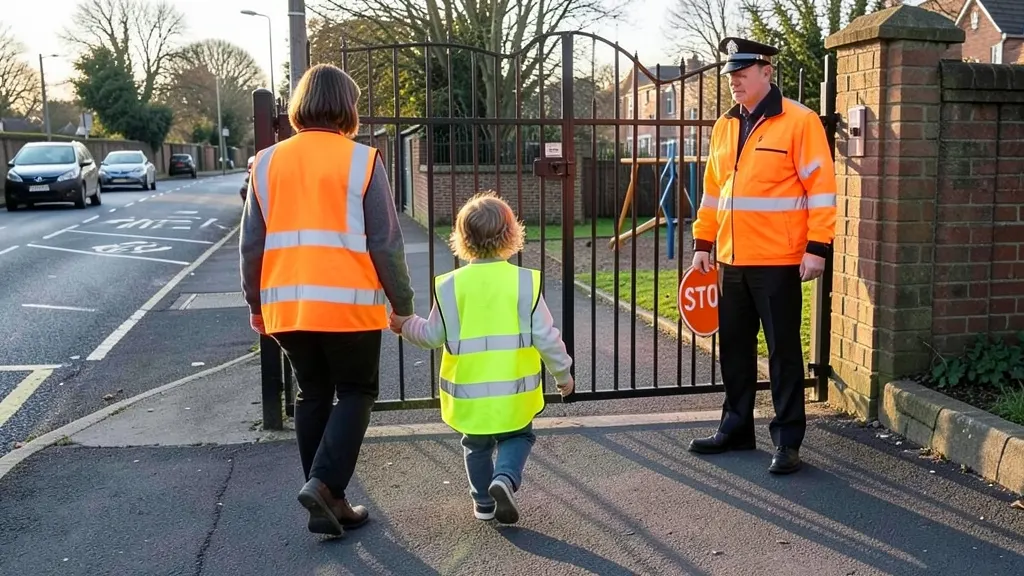
Keeping children visible walking to school is about making sure drivers spot them early, especially in the autumn and winter months when the walk home often happens in dusk or darkness. Hi-vis kit for children usually combines two things. Fluorescent material, in yellow, green, pink or orange, works in daylight and poor light by reacting with ultraviolet rays and appearing brighter than ordinary fabric. Reflective material works at night, bouncing light from car headlights straight back towards the driver.
These two materials do different jobs, and a garment can have one without the other. A bright yellow coat is fluorescent and helps in daytime, but unless it carries reflective bands or panels it will not do much more than any light-coloured coat after dark. That distinction matters when you are choosing kids reflective clothing for the school run.
What the rules say
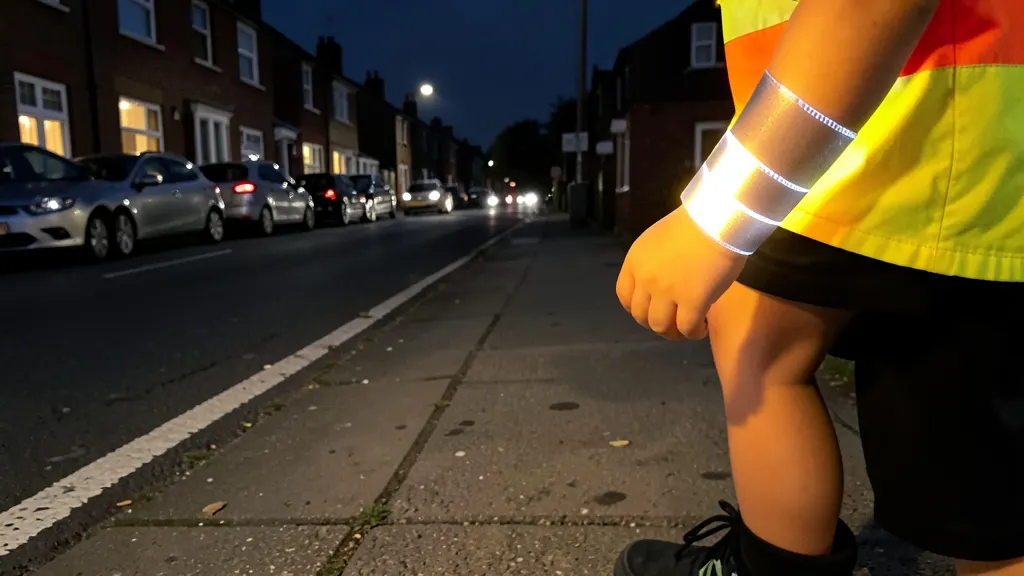
There is no law in the UK requiring a child to wear hi-vis on the walk to school. The rules that exist are advisory, and they come from the highway code. Rule 3 gives the clearest statement: help other road users to see you. In the dark, it recommends reflective materials such as armbands, sashes, waistcoats, jackets or footwear, which can be seen by drivers using headlights up to three times as far away as non-reflective materials. Rule 17 repeats the same advice in the section aimed at pedestrians: at night, wear something reflective to make it easier for others to see you.
If your child cycles to school, Rule 59 says light-coloured or fluorescent clothing can help other road users see a cyclist in daylight and poor light, while reflective clothing or accessories such as a belt, arm or ankle bands can increase visibility in the dark. Rule 60 adds a legal requirement that applies at night: a cycle must have white front and red rear lights lit, and a red rear reflector.
Where hi-vis is formally required by law, it is usually in workplaces rather than on the school run. The Personal Protective Equipment at Work Regulations 1992 require employers to provide suitable PPE to workers exposed to a risk to their health or safety. Since 6 April 2022 those duties also cover limb (b) workers, and the employer must provide the PPE free of charge. None of this applies to a child walking to school, but it explains why the hi-vis clothing you see in shops is often tested and labelled to a workplace standard.
Putting it into practice on the school run
Most children's hi-vis garments sold in the UK are made to EN ISO 20471, the standard that governs high-visibility clothing. It has three classes based on how much fluorescent background material and retroreflective material a garment contains. Class 1 is the lowest, requiring at least 0.14 square metres of fluorescent background material and 0.10 square metres of retroreflective material. Class 2 requires 0.50 and 0.13 square metres respectively. Class 3 is the highest, with at least 0.80 square metres of fluorescent background material and 0.20 square metres of retroreflective material.
For a child on the pavement, a class 1 or class 2 garment is generally plenty. Class 3 matters for people working on roads or railways, not for the walk to school. If you want to understand the classes in more depth before buying, see our guide to EN ISO 20471 classes explained.
Here are some practical points that make a real difference:
- A slim tabard or wraparound vest fits over a coat, so it works all year and can be taken off at the school gate.
- Reflective strips at ankle and wrist level move as a child walks, and moving reflections catch a driver's eye better than static panels.
- Bags count too. A reflective strip or patch on a backpack stays with the child even when a coat comes off.
- Check the fit. A vest that flaps about or hangs below the hem of the coat is less effective and more likely to be taken off.
- Involve your child in choosing the colour. A vest they like gets worn; one they find embarrassing ends up at the bottom of the bag.
Maintenance is straightforward but easy to forget. Guidance on reusable PPE from the HSE says garments must be cleaned and kept in good condition, and that hi-vis jackets and trousers must be cleaned regularly. The same common sense applies to children's kit. Dirt and grime dim fluorescence, and a faded or scuffed garment reflects less light. Wash it according to the label, check that the reflective strips still shine when you shine a torch or phone light at them, and replace anything that has lost its reflective face.
Timing is worth thinking about as well. The danger windows are the school run at either end of the day: low winter sun in the morning, and darkness falling mid-afternoon in the depths of winter. Even a bright, sunny afternoon can turn gloomy by home time, so many parents keep hi-vis in the bag from October half-term through to the spring clocks going forward.
If your child walks the dog on the same route, the same advice applies, and you can read more in our guide to being seen when dog walking at night. Cyclists and runners face slightly different demands, and our guides on reflective running kit and hi-vis at work cover those in detail.
Where to read more
The highway code itself is free to read online, and rules 3 and 17 cover pedestrians, with rule 59 onwards covering cyclists. The HSE website explains the 1992 regulations and the 2022 changes for limb (b) workers. Testing bodies such as SATRA publish plain-English explanations of EN ISO 20471 and related standards, which is useful if you want to know exactly what a class label means. Finally, your school may run a walking or cycling scheme with its own guidance, so it is worth asking at the office before you buy anything.
Frequently asked questions
Is hi-vis clothing a legal requirement for children walking to school?
No. There is no law in the UK requiring children to wear hi-vis on the school run. The highway code only advises it. Rule 3 recommends reflective materials such as armbands, sashes or waistcoats in the dark, and rule 17 repeats that pedestrians should wear something reflective at night.
What is the difference between fluorescent and reflective clothing for children?
Fluorescent material helps in daylight and poor light, while reflective material only works when a light source such as headlights shines on it. Children walking home in winter darkness need reflective material most. Ideally a garment has both, so it works across the whole day.
How far away can drivers see reflective clothing?
The highway code states that reflective materials can be seen by drivers using headlights up to three times as far away as non-reflective materials. That extra distance gives a driver far more time to slow down or steer clear.
What class of hi-vis does a child need?
For walking on pavements, class 1 or class 2 under EN ISO 20471 is generally sufficient. Class 3, the highest class, exists for people working in high-risk environments. Most children's tabards, vests and armbands fall into the lower classes and still work well on the school run.
Does my child need lights as well if they cycle to school?
Yes, if they ride after dark. Rule 60 of the highway code makes it a requirement that a cycle has white front and red rear lights lit at night, plus a red rear reflector. Reflective clothing and accessories add to that but do not replace the lights.