When is high visibility clothing required in the UK?
Last updated
What high visibility clothing is for
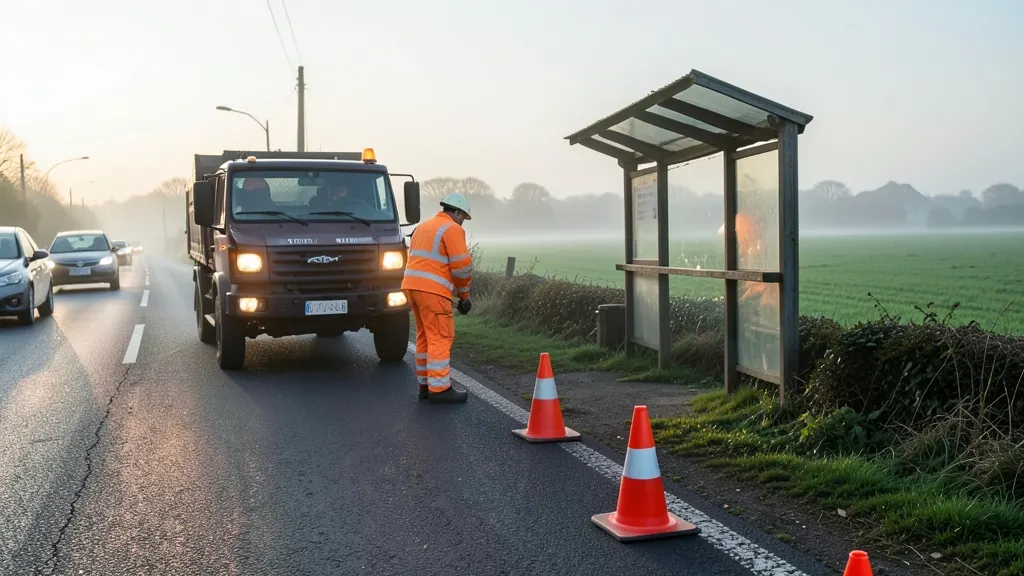
High visibility clothing, usually shortened to hi vis, is clothing made from fluorescent material with retroreflective strips. The fluorescent background makes you noticeable in daylight and poor light, while the reflective parts pick up headlights after dark. Both matter, and neither replaces the other.
There is no single law that says every person in Britain must wear hi vis at all times. Instead, there are two separate sets of rules. The first is workplace law, which places clear duties on employers. The second is the Highway Code, which sets out what road users should do. Understanding the difference between "must" and "should" will answer most questions people have about whether hi vis is required.
What the rules actually say
At work
Under the Personal Protective Equipment at Work Regulations 1992, employers must provide suitable PPE to workers exposed to a risk to their health or safety, unless the risk is adequately controlled by other means. If your job puts you near moving vehicles, plant machinery or traffic, hi vis will normally count as that suitable PPE.
Since 6 April 2022, these duties have also covered limb (b) workers, meaning contractors and agency staff, not just employees on the payroll. The employer must provide the PPE free of charge. So if you are asking, do I have to wear hi vis at work, the honest answer is: if your employer has issued it after assessing the risks, yes, and they cannot charge you for it.
Employer hi vis responsibilities do not end at handing over a vest. HSE guidance says reusable PPE must be cleaned and kept in good condition, and that hi vis jackets, trousers and coveralls must be cleaned regularly. Grubby fluorescent fabric loses much of its effect. Workers in turn must report any loss, destruction or obvious defect in their kit.
On the road
The Highway Code treats hi vis as advice for most everyday road users rather than a legal obligation. Several numbered rules set the tone:
- Rule 3: help other road users to see you. In the dark, use reflective materials such as armbands, sashes, waistcoats, jackets or footwear, which drivers using headlights can see up to three times as far away as non-reflective materials.
- Rule 17: at night, wear something reflective to make it easier for others to see you. This is the rule for pedestrians.
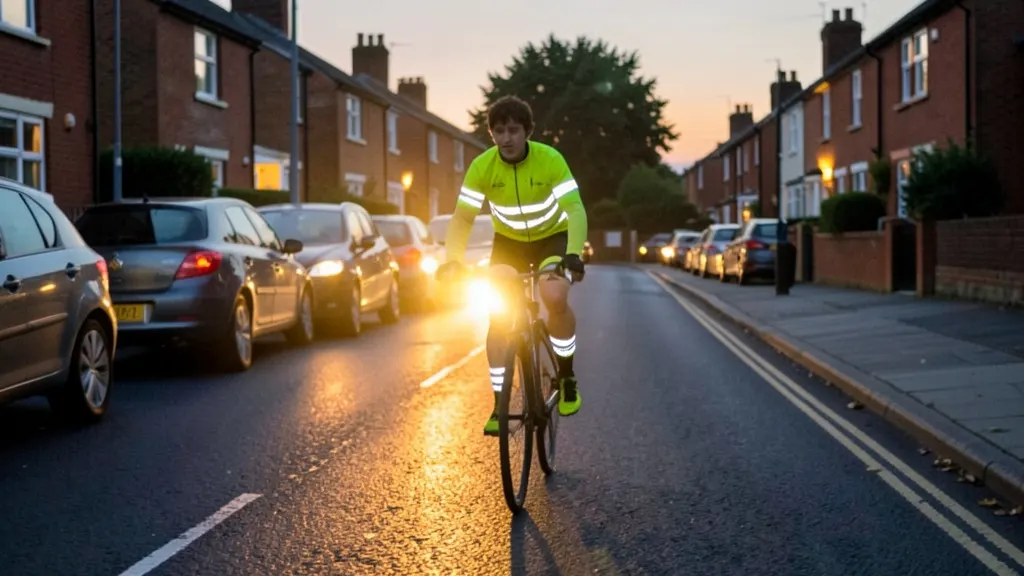
- Rule 59: light-coloured or fluorescent clothing can help other road users see a cyclist in daylight and poor light, while reflective clothing or accessories such as belts, arm bands or ankle bands can increase visibility in the dark.
- Rule 86 and Rule 87: motorcyclists should make themselves as visible as possible from the side as well as the front and rear, and when riding in the dark should wear reflective clothing or strips.
Note the word "should" in those cycling and motorcycling rules. Failing to follow it is not an offence on its own, but it can be taken into account if an incident ends up in court. Rule 60 is firmer: at night a cycle must have a white front light and red rear light lit, plus a red rear reflector. Rule 69 adds that cyclists must obey all traffic signs and traffic light signals. Lights and reflectors are the legal backbone for night riding, and hi vis is the sensible addition on top.
The standard behind the garments
Most hi vis you see in the UK is certified to EN ISO 20471. This standard has three classes, based on how much fluorescent and retroreflective material a garment carries. Minimum fluorescent background areas are 0.14 m2 for class 1, 0.50 m2 for class 2 and 0.80 m2 for class 3, with minimum retroreflective areas of 0.10, 0.13 and 0.20 m2 respectively. Class 3 is the highest, and it is what you want near fast traffic. If you want to compare classes in more detail, read our guide Hi-vis classes explained: EN ISO 20471 made simple.
One workplace example is worth knowing. SATRA, a UK PPE testing body, states that rail standard RIS-3279-TOM requires an orange colour and garments that meet at least class 2 of EN ISO 20471. Anyone working on or near the railway will be told this on day one.
How this plays out in practice
In real life, the rules land differently depending on what you are doing:
- Site and warehouse workers. Employers issue hi vis after a risk assessment, free of charge, and expect it to be worn in marked zones. A torn or faded vest should be reported and replaced.
- Cyclists and commuters. The law requires working lights at night. Fluorescent kit in daytime and reflective strips after dark are strongly advised, and cheap ankle bands do a surprising amount of good. To understand why, see How does reflective material work? A simple guide.
- Motorcyclists. Fluorescent clothing or strips help in daylight, and reflective kit matters in the dark, especially for visibility from the side.
- Dog walkers and pedestrians. No law forces a reflective jacket on the school run or an evening walk, but Rule 17 is blunt about what is wise. Our guide on how to be seen walking a dog at night covers practical options.
- Horse riders. Again, advised rather than legally required on most roads, but the consequences of being unseen are severe. We look at this in Do horse riders need hi vis on the road?.
- Delivery and courier drivers. A common misconception is that drivers are exempt because they are in a vehicle most of the day. In practice, the moments between vehicle and door are the risky ones, and many sites will refuse entry without hi vis. We cover this in Do delivery drivers need hi vis? A practical guide.
Runners fall into the same bracket as pedestrians. Nothing in law compels reflective gear, but the Highway Code advice applies, and our guide to what to wear running in the dark makes the case plainly.
Where to read more
For the legal text itself, look up the Personal Protective Equipment at Work Regulations 1992 on the HSE website, where the guidance on cleaning, maintenance and reporting is also published. The Highway Code rules quoted above are freely available online and are worth reading in full. For the garment standard, EN ISO 20471 documentation explains the class system, and SATRA publishes information on rail requirements under RIS-3279-TOM. If in doubt about your own workplace, ask for the risk assessment, because that document is what determines whether hi vis is required in your case.
Frequently asked questions
Is hi vis required by law in the UK?
There is no general law forcing everyone to wear hi vis. At work, the Personal Protective Equipment at Work Regulations 1992 obliges employers to provide suitable PPE, including hi vis, where a risk assessment shows workers face a hazard such as traffic or moving machinery. On the road, the Highway Code advises reflective or fluorescent clothing for pedestrians, cyclists, motorcyclists and horse riders, and that advice carries real weight in any incident investigation.
Do I have to wear hi vis at work if my employer provides it?
Generally yes. If your employer has assessed the risks and issued hi vis as PPE, you are expected to wear it where directed. Since 6 April 2022 the rules also cover limb (b) workers such as agency staff, and the employer must provide the kit free of charge. If the clothing is damaged or defective, report it rather than carrying on in compromised gear.
What are my employer's hi vis responsibilities?
Employers must assess risks, provide suitable hi vis free of charge, and ensure it is maintained. HSE guidance says reusable PPE must be cleaned and kept in good condition, with hi vis jackets, trousers and coveralls cleaned regularly because dirt reduces visibility. Workers must report any loss, destruction or obvious defect so replacements can be issued.
What hi vis class do I need?
EN ISO 20471 has three classes. Class 1 offers the least coverage, with at least 0.14 m2 of fluorescent background material, class 2 has at least 0.50 m2, and class 3 has at least 0.80 m2 plus 0.20 m2 of retroreflective material. Class 2 is the common choice for working near traffic, and class 3 suits high-risk roads and motorways. Rail work under RIS-3279-TOM requires orange garments meeting at least class 2.
Do cyclists legally have to wear hi vis?
No law requires cyclists to wear hi vis, but Rule 59 advises fluorescent clothing in daylight and poor light, and reflective clothing or accessories in the dark. The legal requirement at night is a lit white front light, a lit red rear light and a red rear reflector under Rule 60. Reflective accessories can be seen by drivers up to three times further away than non-reflective materials, so the advice is well worth following.