Do horse riders need hi vis on the road?
Last updated
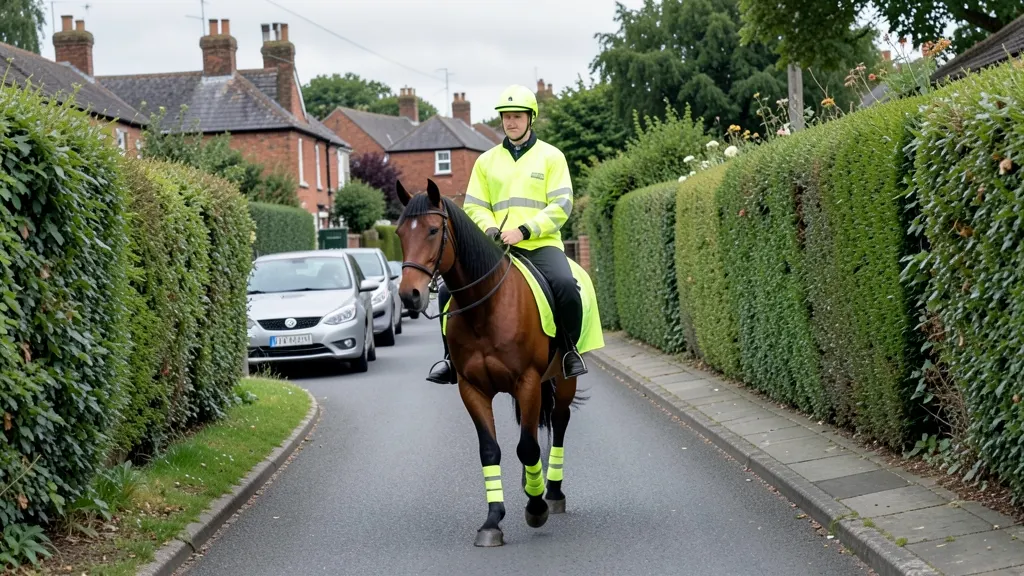
Riding on the road brings you face to face with traffic that is bigger, faster and heavier than you and your horse. The goal is simple: make sure every driver sees both horse and rider early enough to slow down and pass safely. The Highway Code does not force horse riders to wear hi-vis in the way it sets out duties for cyclists' lights, but the principle behind its rules is clear. Rule 3 asks all road users to help others see them, and notes that reflective materials can be seen by drivers using headlights up to three times as far away as non-reflective materials. Good equestrian road safety starts with treating visibility as part of your riding kit, not an afterthought.
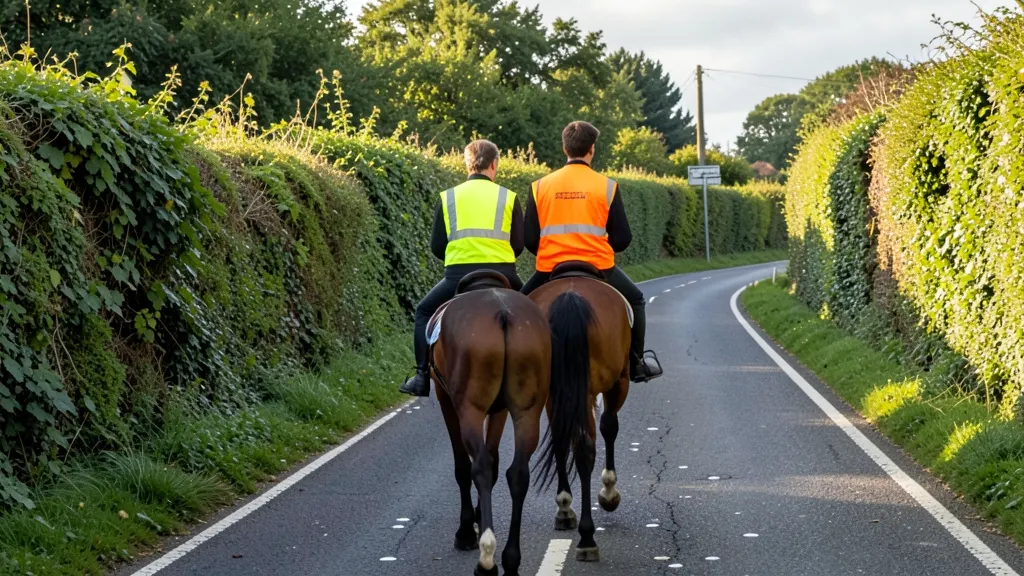
What you need before you set out
Think in layers of visibility, covering both you and the horse.
- Fluorescent clothing for daylight and poor light, such as a tabard, exercise sheet or leg bands. Fluorescent yellow, pink and orange show up best in daylight and overcast conditions.
- Reflective items for dusk, dawn and dark: armbands, a sash, reflective strips on the exercise sheet, and leg bands that catch headlights.
- A hat cover in a bright colour, so drivers following you can spot the top of your head above hedges.
- Something on the horse as well as on you. Drivers often see the horse before they see the rider, so a fluorescent exercise sheet, tail guard or leg bands add width and movement that catch the eye.
If you want kit with a benchmark to check against, EN ISO 20471 is the main standard for high-visibility clothing, and our guide to hi-vis classes explained covers what the classes mean. In short, the higher the class, the more fluorescent and retroreflective material the garment must contain, with class 3 requiring at least 0.80 square metres of fluorescent background and 0.20 square metres of retroreflective material.
Steps to get visible before a road ride
- Check the light. Ask yourself when you will ride and how much of that time falls in daylight, poor light or dark. Fluorescent material works by day; reflective material works in headlights. Most riders need both.
- Dress yourself first. Put on a fluorescent tabard or jacket with reflective panels. Add reflective armbands or a sash, which follow the movement of your body and are easy for drivers to pick out.
- Dress the horse. Fit a fluorescent exercise sheet with reflective edging, plus leg bands on all four legs. The moving legs do a lot of the work, because the flashing rhythm of reflective bands is very noticeable in headlights.
- Cover your head. A bright or reflective hat cover means drivers behind can see you over hedges and walls on narrow country lanes.
- Ride in a bright colour yourself, not just the horse. Dark jodhpurs and a black jacket hide the rider even when the horse is lit up like a beacon.
- Plan your route and timing around light. Avoid riding on roads at dusk or in the dark if you can. If you must, follow the spirit of Highway Code rules for other vulnerable road users: Rule 17 says at night, wear something reflective, and Rule 59 makes the same point for cyclists, that reflective clothing or accessories increase visibility in the dark.
- Do a final check from a distance. Have someone walk down the lane and look back at you, or check yourself against car headlights in a safe spot. If you cannot see the reflection clearly, neither can a driver.
This layered approach is the same idea behind our advice for dog walking at night and for choosing reflective running kit: cover the body, add moving reflective parts, and think about the horse and rider as one visible unit.
Common mistakes and how to fix them
Fluorescent kit worn in the dark. Fluorescent material needs daylight to work. In headlights it looks grey, not bright. Fix: add reflective strips, armbands and leg bands for any riding near dusk or after dark.
Dressing only the rider. A driver rounding a bend sees the broad shape of the horse first. Fix: put fluorescent and reflective items on the horse, especially leg bands and an exercise sheet.
Worn-out hi-vis that has gone pale. Garments fade with washing and sun, and retroreflective bands stop reflecting once the glass beads or coating wear away. Fix: wash according to the label, avoid fabric conditioner, and hold kit up to a torch or headlights to check it still glows.
Assuming drivers have seen you. Even bright riders get missed by drivers who are looking for cars, not horses. Fix: keep riding defensively, thank drivers who slow down, and be ready to move off the road. Visibility gear reduces risk, it does not remove it.
No hi-vis on the yard dog or a child riding with you. Anyone walking or riding alongside should be visible too, and the same ideas apply to hi-vis for school children on the walk to school.
When to stop and replace instead
Hi-vis kit does not last forever, and a faded tabard can give you false confidence. Replace an item when:
- The fluorescent colour has faded to a washed-out shade that no longer stands out against the lane.
- The retroreflective bands no longer glow when you shine a torch or headlights on them in a dark room.
- The reflective strips are cracked, peeling or worn through where tack, boots or the saddle rub against them.
- Straps, zips or fastenings on the horse's kit no longer sit securely, which can flap, slip or spook the horse.
Guidance from the Health and Safety Executive on workplace hi-vis, which is a useful benchmark for any hi-vis garment, says reusable PPE must be cleaned and kept in good condition, and that hi-vis jackets, trousers and coveralls must be cleaned regularly, with any loss or obvious defect reported. Treat your riding kit the same way. Check it before the season changes, especially before autumn when light levels drop and road riding becomes riskier.
The short answer
So, do horse riders need hi vis on the road? There is no single rule making it compulsory, but equestrian road safety depends on being seen, and the Highway Code's general advice to help other road users see you applies to everyone. A fluorescent and reflective combination on both rider and horse is the practical answer, and it costs little effort compared with the benefit of a driver easing off the throttle a few seconds sooner.
If you ride on the road often, the same visibility habits apply to other road users you might share the lanes with, including delivery drivers who spend their whole working day on the road, which is covered in our guide to hi-vis for delivery drivers and couriers.
Frequently asked questions
Do horse riders legally have to wear hi-vis on the road?
No specific law makes hi-vis compulsory for horse riders in the UK. However, the Highway Code asks all road users to help others see them, and Rule 3 notes that reflective materials can be seen by drivers using headlights up to three times as far away as non-reflective materials. Most riding organisations and road safety advice strongly recommend it. In practice, riding without it means accepting a much greater risk on the road.
What colour hi-vis is best for riding on roads?
Fluorescent yellow, pink and orange all perform well in daylight and poor light. The key point is that fluorescent colours need daylight to work, so for dusk or dark riding you need reflective material as well, such as armbands, a sash or reflective strips. What matters most is that both horse and rider are covered, not just one of you.
Should the horse wear hi-vis as well as the rider?
Yes, it makes a real difference. Drivers often notice the shape and movement of the horse before the rider. Fluorescent leg bands on all four legs, an exercise sheet with reflective edging and a bright tail guard all help. The moving legs in particular create a flashing effect in headlights that is very easy for drivers to pick out.
How do I know when my hi-vis needs replacing?
Check it in the dark with a torch or car headlights. If the retroreflective bands no longer glow strongly, or the fluorescent colour has faded, the garment is no longer doing its job. Cracked or peeling reflective strips and tired fastenings are also signs to replace it. HSE guidance on workplace hi-vis, a good benchmark, says garments must be cleaned regularly and kept in good condition.