Choosing a hi-vis jacket for dog walking
Last updated
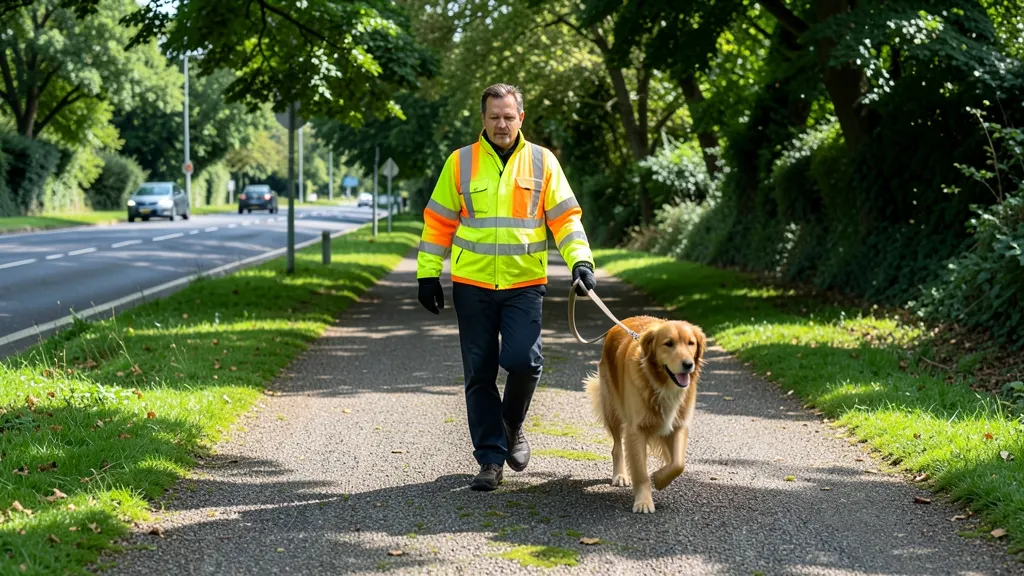
Dog walking happens at the edges of the day. Early mornings, dusky evenings, wet winter afternoons: the times you are out with the dog are often the times drivers struggle to see you. Add a lead, an excited animal and unlit lanes or pavements, and the right jacket becomes more than a comfort choice. This page compares the main hi-vis jacket options for dog walkers so you can pick the one that suits your routes and your routine.
If you want the wider background first, see Hi-vis jackets: how to choose the right one. If your walks are mainly after dark, Dog walking at night: staying visible goes into lighting and route planning in more detail.
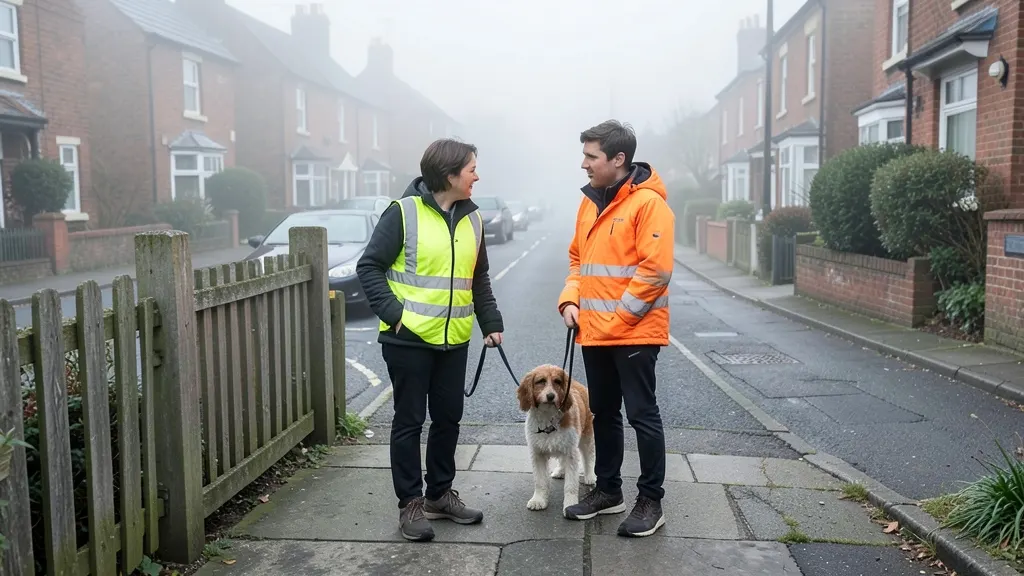
Comparing the main options
The Highway Code is clear on the principle. Rule 3 asks everyone to help other road users see them, and notes that in the dark reflective materials such as jackets can be seen by drivers using headlights up to three times as far away as non-reflective materials. Rule 17 puts it simply: at night, wear something reflective. For dog walkers, the question is which jacket does that job while also coping with mud, rain and the odd enthusiastic jump-up.
A basic fluorescent tabard or vest is the lightest option. It slips over whatever you are wearing, costs little to replace if it gets shredded, and packs down into a pocket. The fluorescent yellow or pink fabric works well in daylight and poor light such as drizzle or dusk, but cheap vests often carry only thin strips of retroreflective tape, so they do less for you once it is properly dark. They also give no weather protection at all.
A dedicated dog walking hi vis jacket is the middle ground and for many people the best answer. These are usually a lined or waterproof shell in fluorescent fabric with reflective tape around the body and sleeves. You get pockets for poo bags and treats, a longer cut that stays warm, and a hood or collar for rain. The reflective banding matters most on the sleeves and lower hem, because those parts move when you walk and catch headlights. Because the tape is stitched onto a proper garment, it tends to survive washing better than on a vest.
A full waterproof hi-vis jacket sits at the heavy end. It is the right call if you walk open fields and towpaths in genuine winter weather, or if you need something that doubles for the school run or commuting. The extra fabric usually means more fluorescent coverage, so you present a bigger visible block to drivers. The trade-off is weight and warmth on mild days, where a heavy jacket ends up carried rather than worn.
Whichever style you consider, it helps to understand what the labelling means. Garments sold as safety hi-vis are usually certified to EN ISO 20471, which has three classes. A class 1 garment needs at least 0.14 m2 of fluorescent background material and 0.10 m2 of retroreflective material, class 2 needs at least 0.50 m2 and 0.13 m2, and class 3, the highest class, needs at least 0.80 m2 of fluorescent material and 0.20 m2 of reflective material. For dog walking you do not legally need any particular class, but the numbers are a useful shorthand. A jacket at class 2 level gives most walkers plenty of coverage, while class 3 suits people who walk beside fast traffic or in darkness most of the time. You can read more in Class 3 hi vis jackets: myths and facts.
One thing the standard does not cover is your dog. No jacket makes up for a dark dog vanishing into a hedge line, so reflective gear on the dog, a light on the collar and a light-coloured lead all work alongside your own kit.
Which jacket fits which situation
For short suburban walks in built-up streets with street lighting, a simple reflective vest or a lightweight fluorescent jacket is usually enough. The pavements are lit, traffic is slow, and you mainly want drivers reversing out of driveways to spot you.
For rural lanes, footpaths that cross roads, or anywhere you walk in the half light of morning or evening, choose a proper dog walking hi vis jacket with reflective tape on sleeves and body. This is where the difference between fluorescent and reflective material really shows, because fluorescent colours do little for you in darkness while retroreflective tape lights up in headlights.
For regular winter darkness, long off-lead walks in the rain, or routes along faster rural roads, a class 3 style jacket with the largest areas of fluorescent and reflective material gives the most margin. Cyclists face the same logic, as Rule 59 of the Highway Code advises fluorescent clothing for daylight and poor light, and reflective clothing or accessories for the dark. If you ride as well as walk, Hi-vis jackets for cycling covers the specifics.
For families, remember that a child on the walk needs the same visibility. Our pages on Hi-vis for school children and Kids hi vis jackets: myths and facts explain what works for smaller bodies.
Quick decision guide
Ask yourself three questions and the choice narrows quickly.
- When do you walk? Daylight or well-lit streets means almost any fluorescent garment will do. Regular darkness means you need proper retroreflective tape.
- Where do you walk? Fast roads, unlit lanes or crossings call for more coverage, ideally a class 2 or class 3 style jacket. Quiet estates can get away with less.
- What is the weather? If you are out in rain several days a week, a waterproof hi-vis jacket earns its place. If you only meet a shower now and then, a lighter jacket plus a reflective vest in the pocket covers both.
Whichever you buy, look after it. Guidance from the Health and Safety Executive on workplace kit makes the point that applies at home too: hi-vis garments must be cleaned regularly, because dirt blocks both fluorescence and reflection, and damaged or faded hi-vis should be reported and replaced rather than worn on trust.
A good reflective dog walking jacket is not the cheapest thing in the cupboard, but it is the one you will reach for every dark morning from October to March. Choose the cut and coverage that match your routes, keep it clean, and check the tape before each winter starts.
Frequently asked questions
Do I legally have to wear hi-vis when walking my dog?
No UK law requires dog walkers to wear hi-vis clothing. The Highway Code only asks pedestrians to help other road users see them, noting that reflective materials such as jackets can be seen by drivers using headlights up to three times as far away as non-reflective materials. Wearing reflective gear in the dark is strongly advised even though it is not a legal requirement.
What is the best hi vis jacket for dog walkers?
For most people it is a fluorescent waterproof jacket with retroreflective tape on the body and sleeves, pockets for poo bags and a hood for rain. If you walk beside fast roads or in full darkness, look for a garment with class 3 levels of coverage, meaning at least 0.80 m2 of fluorescent material and 0.20 m2 of reflective material. Casual daylight walkers can manage with a lighter class 1 or 2 style.
Is fluorescent or reflective material more important for night dog walks?
Reflective material is the one that matters after dark, because fluorescence needs daylight or another light source to show its colour. Retroreflective tape returns headlight beams straight back to the driver. Fluorescent fabric earns its keep in daylight, dusk and poor light, so a good jacket combines both.
How often should I wash my hi-vis dog walking jacket?
Wash it regularly, because mud and grime dull both the fluorescent colour and the reflective tape. Follow the care label, avoid fabric conditioner where the label warns against it, and replace the jacket if the tape peels or the colour fades. Dirty or damaged hi-vis gives a false sense of security.
Does my dog need hi-vis too?
A reflective dog walking jacket on you does not make a dark-coated dog visible, so consider a reflective harness or collar light for the dog. A light-coloured or reflective lead also helps drivers judge where both of you are. Treat the dog's kit as part of the same visibility plan.