Fleece hi vis jackets: what to look for before you buy
Last updated
What a fleece hi vis jacket is and who it suits
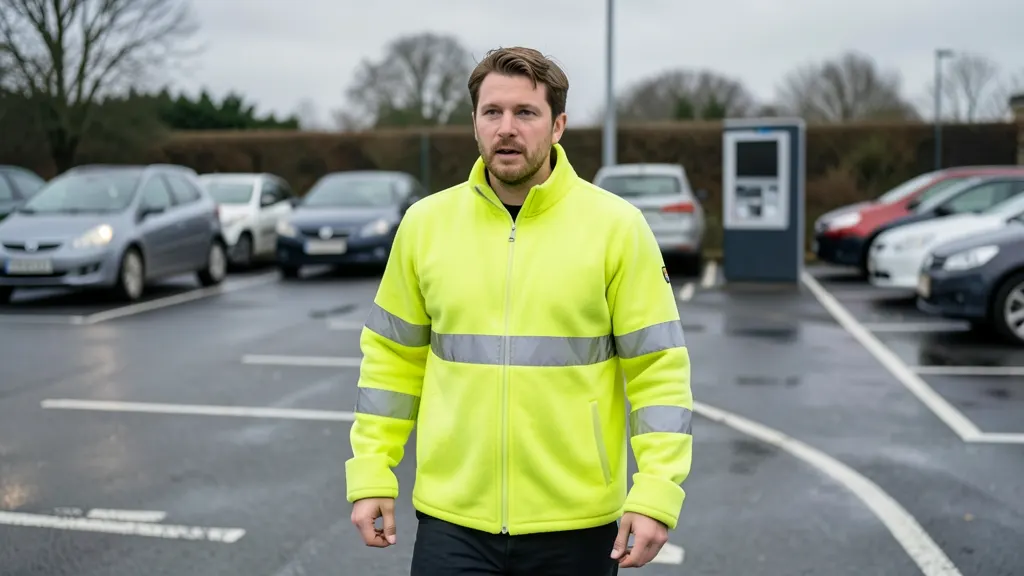
A fleece hi vis jacket combines a fluorescent outer layer with a warm, cosy fleece lining or body, so you get visibility and insulation in one garment. Think of it as the winter option in the hi vis family: warmer than a mesh vest, softer than a coated shell, and usually comfortable enough to wear all day.
This type of jacket suits anyone who is outside in cold weather near traffic, plant or machinery. Site workers on winter jobs, roadside crews, warehouse staff working near vehicle doors that open to the elements, cyclists and horse riders on chilly morning rides, and parents doing the dark school run in November all get good use from one. If your current hi vis is a thin vest you wear over a bulky coat, a hi vis fleece lined jacket replaces two layers with one, which is often safer because nothing can billow open or obscure the reflective detail.
What to check before buying
Class
Hi vis garments in the UK are graded under EN ISO 20471, which has three classes. The classes are based on how much visible material the garment carries. The minimum fluorescent background area is 0.14 m2 for class 1, 0.50 m2 for class 2 and 0.80 m2 for class 3. The minimum retroreflective areas are 0.10, 0.13 and 0.20 m2 respectively.
Class 3 is the highest class, so it suits the riskiest settings: working on or near a motorway, night work on a road, or anywhere vehicles travel fast. Class 2 is the common choice for general site and warehouse work. If you are buying for work, check what your employer's risk assessment demands, because the Personal Protective Equipment at Work Regulations 1992 require employers to provide suitable PPE to workers exposed to a health or safety risk, unless the risk is adequately controlled by other means. Since 6 April 2022 those duties also cover limb (b) workers, and the employer must provide the PPE free of charge. If you work on the railways, note that rail standard RIS-3279-TOM requires an orange colour and garments that meet at least class 2 of EN ISO 20471, according to the UK testing body SATRA.
You can read more in our guide to Class 3 hi vis jackets: myths and facts.
Fabric
Check the weight and construction of the fleece. A heavier fleece is warmer but bulkier, which can restrict movement if you are climbing or reaching all day. Look at the outer shell too: a shower resistant finish is handy for British weather, though a fleece is not a substitute for a proper waterproof when the rain sets in. Also check whether the garment is certified as a single item or relies on other layers to make up the class, because some hi vis depends on the full combination being worn together.
Fit
The fit matters more than people expect. A hi vis fleece zip should close right up to the chin without the zip pulling open when you move, and the sleeves should let you raise your arms without the hem riding up and exposing non hi vis layers underneath. Take a size that fits over what you normally wear under it, but avoid anything so loose that the reflective tape twists out of view.
Reflective tape
Look at how much reflective tape there is and where it sits. Tape around the sleeves and across the body keeps you visible from the side as well as front and back, which matters if you work near moving vehicles. Official road user guidance makes the same point for motorcyclists, advising that riders should make themselves as visible as possible from the side as well as the front and rear, and that in the dark they should wear reflective clothing or strips. Reflective material can be seen by drivers using headlights up to three times as far away as non reflective material, so tape condition is not a cosmetic detail.
Common use cases and trade offs
For everyday wear, the trade off is warmth versus breathability. A fleece hi vis jacket excels on cold, dry days but can leave you sweaty during hard physical work, and it will soak through in prolonged rain. Roadside and rail workers tend to use it as a mid layer under a waterproof when the weather turns, or as the primary garment on dry winter shifts.
Cyclists can benefit from one on cold commutes, but note that rule 59 advises that light coloured or fluorescent clothing helps other road users see a cyclist in daylight and poor light, while reflective clothing or accessories increase visibility in the dark. Also remember rule 60: at night a cycle must have white front and red rear lights lit, and a red rear reflector. Clothing is a supplement to lights, never a replacement. Our page on Hi-vis jackets for cycling covers this in more detail.
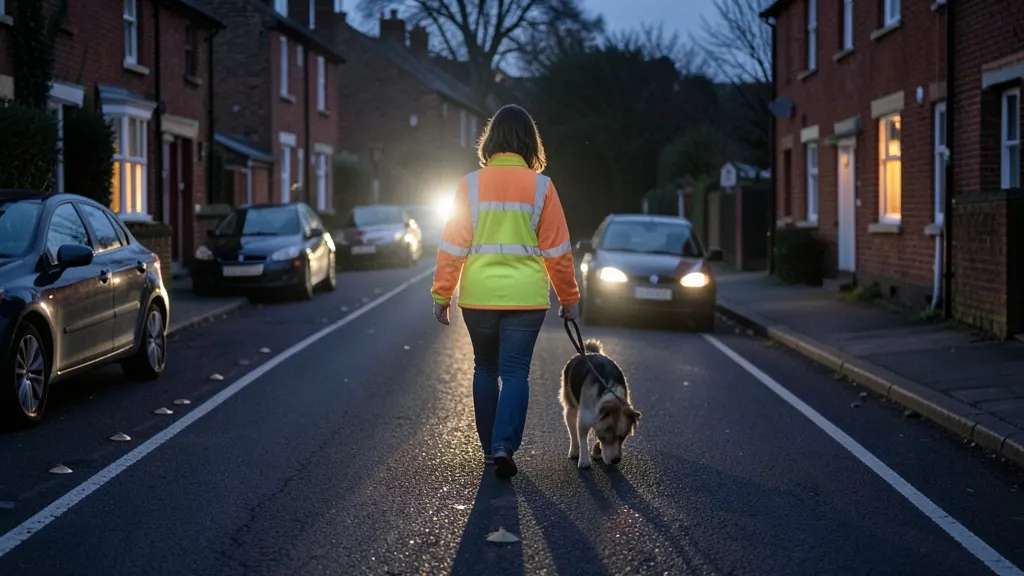
For dog walkers on dark lanes and parents on the school run, a high visibility fleece is often the most practical option because people actually enjoy wearing it. Rule 17 tells pedestrians that at night they should wear something reflective to make it easier for others to see them, and a fleece you reach for without thinking beats a specialist garment left at home. Dog walkers can find more suggestions in Hi-vis jackets for dog walking.
Care and when to replace
HSE guidance says reusable PPE must be cleaned and kept in good condition, and hi vis jackets specifically must be cleaned regularly, with workers required to report any loss, destruction or obvious defect. Wash the fleece inside out on a gentle cycle with ordinary detergent, and skip fabric conditioner, which can clog the reflective tape and dull its performance. Let it dry naturally rather than on a hot radiator.
Inspect the garment every few weeks. Faded fluorescent areas, tape that has cracked or peeled, a zip that no longer closes fully, or a hem that has shrunk so the garment no longer meets its stated class all mean it is time to replace it. A hi vis fleece only works if it stays hi vis, so when the colour goes grey and the tape stops catching headlights, retire it. For broader advice on choosing replacements, see Hi-vis jackets: how to choose the right one.
Frequently asked questions
Is a fleece hi vis jacket warm enough for winter site work?
A hi vis fleece lined jacket is a good match for cold, dry conditions and can replace a vest worn over a bulky coat. If you are working in prolonged rain or on fast moving roads, many people layer it under a waterproof hi vis shell. Check that the combination still meets the class your site requires.
What class of hi vis do I need?
Under EN ISO 20471, class 1 is the lowest class, class 2 suits most general site and warehouse work, and class 3 is required for the highest risk settings such as motorway work. Class 3 requires at least 0.80 m2 of fluorescent background material and 0.20 m2 of retroreflective material. If you work on the railways, the RIS-3279-TOM standard requires orange and at least class 2.
Can I wear a hi vis fleece instead of bike lights at night?
No. Rule 60 states that at night a cycle must have white front and red rear lights lit, plus a red rear reflector. Reflective and fluorescent clothing helps drivers see you, and reflective material can be spotted up to three times further away in headlights, but it supplements lights rather than replacing them.
How often should I wash my hi vis fleece?
Wash it regularly, because HSE guidance says hi vis jackets must be cleaned regularly and kept in good condition. Wash inside out with ordinary detergent, avoid fabric conditioner, and dry naturally. Dirt and grime significantly reduce both fluorescence and reflectivity.
When should I replace it?
Replace it when the fluorescent colour fades, the reflective tape cracks or peels, or the zip will not close properly. HSE guidance also requires workers to report any loss, destruction or obvious defect in their PPE. A worn jacket that no longer catches headlights is no longer doing its job.