How to be seen on a motorbike: a practical guide to visibility kit
Last updated
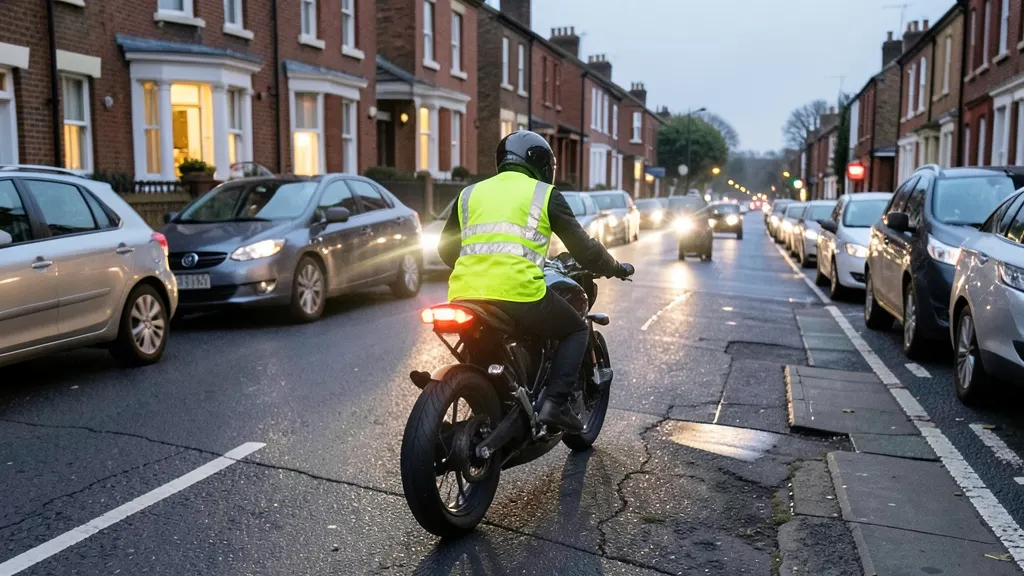
Motorcyclists are among the least visible road users. A bike is narrow, mostly dark coloured, and easy for a driver's eye to skip over, especially at junctions, in low winter light or in the rain. Motorcycle conspicuity, which simply means how well you stand out against your background, is something every rider can improve with a few cheap and simple choices. This guide explains what the rules say, how visibility kit works, and how to apply it on UK roads.
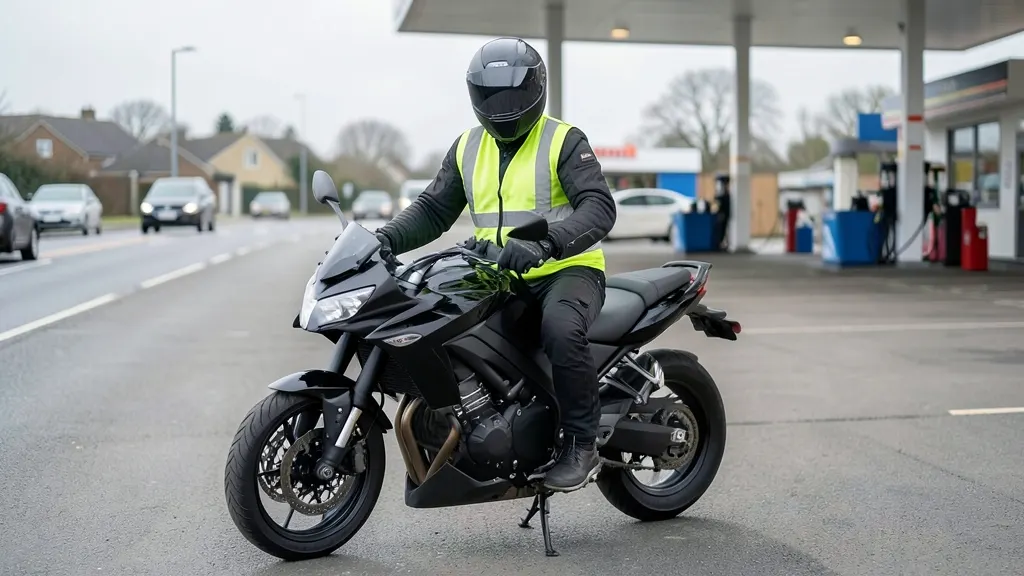
What motorcycle visibility means
Being seen on a motorbike is about two different things, and it helps to keep them separate. Fluorescent material works in daylight and poor light. It takes ultraviolet and near-ultraviolet light that your eyes cannot use and converts it into visible light, so the garment glows in a way ordinary fabric does not. Retroreflective material works differently. It contains tiny glass beads or microprisms that bounce light from a source, usually a car's headlights, straight back towards the driver. That is why a reflective strip can look dull in a shop and dazzling on the road at night.
Riders often assume a black jacket with a few reflective logos is enough. In daylight it does very little, because black simply disappears against tarmac, shadows and hedgerows. A fluorescent layer does the work by day; a reflective layer does the work after dark. The two solve different problems, and you need both.
What the rules say
There is no law that forces a private motorcyclist in the UK to wear hi vis, so the short answer to the question is hi vis compulsory for motorcyclists is no. That does not mean the official guidance ignores the issue. Rule 86 advises that motorcyclists should make themselves as visible as possible from the side as well as the front and rear, for example with fluorescent clothing or strips. Rule 87 goes further for night riding: motorcyclists should wear reflective clothing or strips to improve visibility in the dark. More general advice backs this up. Rule 3 says to help other road users see you, and notes that in the dark, reflective materials such as armbands, sashes, waistcoats, jackets or footwear can be seen by drivers using headlights up to three times as far away as non-reflective materials. Rule 17 also says that at night you should wear something reflective to make it easier for others to see you.
The situation is different for people who ride for work. Under the Personal Protective Equipment at Work Regulations 1992, employers must ensure suitable PPE is provided to workers exposed to a risk to health or safety, unless the risk is adequately controlled by other means. Since 6 April 2022 those duties have also covered limb (b) workers, and the employer must provide the PPE free of charge. So a courier or despatch rider employed by a firm may well find that high visibility kit is supplied as part of their gear, and the decision is not theirs alone. Do delivery drivers need hi vis? A practical guide covers the same logic for van and delivery work.
How visibility kit is graded
Hi vis garments sold as safety clothing are usually certified to EN ISO 20471, which has three classes. The classes depend on how much fluorescent and retroreflective material a garment contains. The minimum fluorescent background area is 0.14 m2 for class 1, 0.50 m2 for class 2 and 0.80 m2 for class 3. The minimum retroreflective areas are 0.10, 0.13 and 0.20 m2 respectively. Class 3 is the highest class, with at least 0.80 m2 of fluorescent background material and 0.20 m2 of retroreflective material.
For a rider, a class 2 jacket or vest is often the practical choice: enough coverage to matter without being a full boiler suit. A class 3 garment is the one to look at for motorway commuting in winter darkness. Our guide to hi vis classes explained: EN ISO 20471 made simple breaks the standard down in more detail.
Applying it on the road in the UK
In practice, most riders put visibility kit to work in a handful of situations. Think about where you are least visible and target those moments.
- Junctions and side roads. Drivers pulling out tend to look for car shapes. Fluorescent panels on your helmet, jacket or gloves fill the gaps between your bike's small silhouette.
- Filtering in slow traffic. Side visibility matters here, which is exactly what rule 86 highlights. Reflective strips on your sleeves, tank bag or panniers catch headlights from cars alongside you.
- Night riding and winter commutes. Follow rule 87: a reflective vest or jacket over your riding gear, or reflective strips on arms and legs, is the cheapest crash protection you will ever buy. Moving reflective material is noticed more than static material, so bands on arms and ankles work well because they move as you ride.
- Rural roads. Dark clothing against dark hedges in fading light is a poor combination. Fluorescent layers help here, and the same thinking applies to other vulnerable road users, such as in how to be seen walking a dog at night.
Look after whatever you buy. Grime kills retroreflective performance, so wash hi vis garments regularly and follow the care label, because stripping or worn patches reduce the reflective effect. Replace anything with cracked or peeling reflective band. If your kit comes from an employer, they must clean and maintain it, and you should report any loss or obvious defect, which mirrors health and safety guidance on reusable PPE.
Finally, remember that clothing is only part of conspicuity. Working headlamps, a clean visor, sensible road positioning and making eye contact with drivers all count. Kit helps a driver see you; good riding helps them notice you in time.
Where to read more
If you want to dig into the detail, start with the numbered rules for riders and other road users in the official guidance to road use, particularly rules 3, 17, 86 and 87. For the clothing standard itself, look up EN ISO 20471 and its three classes. Riders who also cycle can read about cycle lighting rules: rule 60 requires a white front light, a red rear light and a red rear reflector at night, and rule 59 suggests fluorescent clothing by day and reflective belts, arm or ankle bands in the dark. Runners face similar issues, and what to wear running in the dark covers garment choices from the same starting point. If you ride for an employer, ask about the Personal Protective Equipment at Work Regulations 1992 and your entitlement to free kit.
Frequently asked questions
Is hi vis compulsory for motorcyclists in the UK?
No. There is no law requiring a private rider to wear high visibility clothing. The official guidance recommends it, though. Rule 86 suggests making yourself as visible as possible from the side as well as the front and rear, and rule 87 says that when riding in the dark, motorcyclists should wear reflective clothing or strips. Riders who work, such as couriers, may be supplied with hi vis as PPE by their employer instead.
Does reflective clothing actually make a difference at night?
Yes. The official road guidance states that reflective materials can be seen by drivers using headlights up to three times as far away as non-reflective materials. That extra distance gives a driver more time to react, which matters most at junctions and on fast roads.
What do the classes on hi vis clothing mean?
EN ISO 20471 has three classes based on how much fluorescent and retroreflective material a garment contains. Class 1 needs at least 0.14 m2 of fluorescent background, class 2 needs 0.50 m2 and class 3 needs 0.80 m2. Class 3 is the highest, and it also requires at least 0.20 m2 of retroreflective material.
Where should I put reflective material on my riding kit?
Think front, rear and sides, as rule 86 advises. Strips on sleeves, shoulders, ankles and helmet edges all help, and material that moves as you ride catches the eye more than static panels. Reflective bands around arms or ankles are effective because they move with you.
Does fluorescent clothing work in the dark?
Not really. Fluorescent material needs daylight or poor light to glow, so it does little after dark. For night riding you need retroreflective material, which bounces headlight beams back towards drivers. The two types solve different problems, which is why good motorcycle visibility kit uses both.