Orange hi vis jackets: sorting myth from fact
Last updated
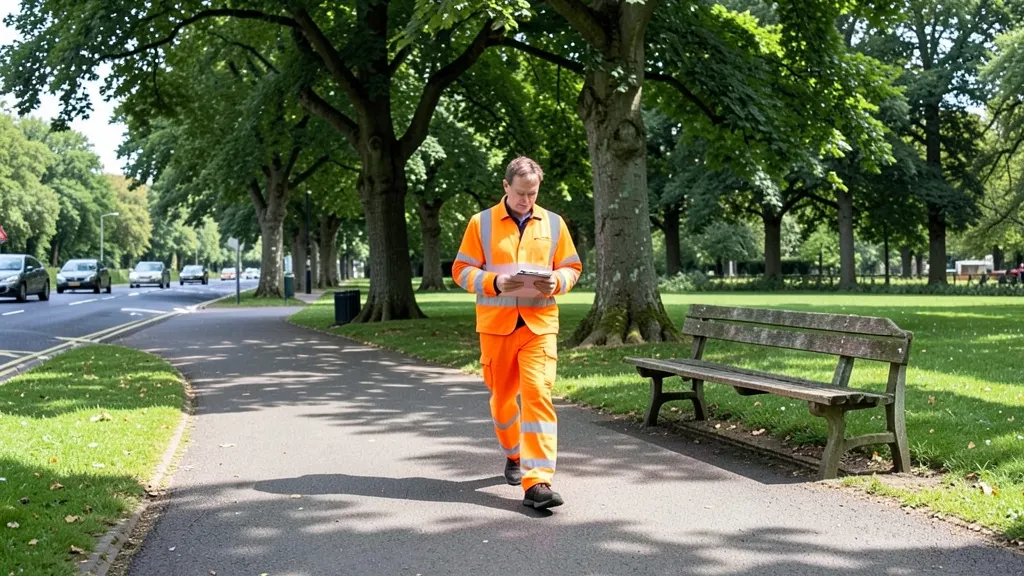
The most common misconception about orange hi vis jackets is that the colour alone does the job. Plenty of people believe that any bright orange coat counts as high visibility, whether it came from a workwear supplier or a market stall. The thinking goes: it is orange, it catches the eye, so surely drivers will see me.
That is not how hi-vis works, and the difference matters when a vehicle is bearing down on you at speed. A garment only counts as genuine high visibility clothing if it meets EN ISO 20471, the standard that sets minimum amounts of fluorescent background material and retroreflective material. A plain orange jacket with no certification might be colourful, but it is not measured against anything, and it will not perform in the dark.
Under EN ISO 20471, a certified garment carries one of three classes. The lowest, class 1, needs at least 0.14 m2 of fluorescent background material and 0.10 m2 of retroreflective material. Class 2 steps this up to 0.50 m2 of fluorescent background material and 0.13 m2 of retroreflective material. Class 3, the highest, requires at least 0.80 m2 of fluorescent background material and 0.20 m2 of retroreflective material. If a jacket has no class marked, there is no guarantee of any of this.
It is also worth understanding what the two material types actually do. The fluorescent orange background is what makes you stand out in daylight and poor light, and orange is genuinely effective for that. The retroreflective bands are what catch headlights after dark, bouncing light back towards the driver. The Highway Code makes the point plainly: Rule 3 advises road users to help others see them and notes that reflective materials such as armbands, sashes, waistcoats or jackets can be seen by drivers using headlights up to three times as far away as non-reflective materials. An orange jacket with no reflective strips throws away most of that benefit.
Further myths worth clearing up
The myth that all orange hi-vis is the same orange
There is a specific reason many orange jackets on UK railways look identical. SATRA, a UK PPE testing body, states that rail standard RIS-3279-TOM requires an orange colour and garments meeting at least class 2 of EN ISO 20471. That is a mandated, specific orange. An ordinary certified orange hi-vis jacket for roadwork or cycling has no such colour requirement beyond the standard's own specification, so oranges can vary between garments. If you work around railways, look for the rail standard explicitly rather than assuming any orange high visibility jacket will do.
The myth that a brighter class always suits everyone
More class means more visibility, so everyone should buy class 3, right? Not necessarily. Class 3 garments are larger and bulkier by design, because reaching that 0.80 m2 of fluorescent material takes real coverage. For a dog walker on a lit residential street, that may be more garment than the situation demands, whereas for anyone working on high-speed roads it is the sensible choice. Employers, for their part, have a legal duty under the Personal Protective Equipment at Work Regulations 1992 to provide suitable PPE to workers exposed to a health or safety risk that is not adequately controlled by other means. Since 6 April 2022 that duty has also covered limb (b) workers, and the PPE must be provided free of charge. Suitable, not simply the highest number available.
The myth that once bought, the jacket can be forgotten
Hi-vis degrades. Dirt, washing and wear all reduce performance, and faded orange or scuffed reflective bands will not do their job. HSE guidance is clear that reusable PPE must be cleaned and kept in good condition, that hi-vis jackets, trousers and coveralls must be cleaned regularly, and that workers must report any loss, destruction or obvious defect. A grubby orange jacket slung in a van for two years is closer to an ordinary coat than to PPE. See our page on how reflective material works for why the bands lose their shine.
What to do instead
Start by matching the class to the situation. Higher-risk environments with fast traffic call for class 3, and many work settings use class 2 as the everyday standard. Check the label for the EN ISO 20471 class before you buy anything, and be sceptical of an orange reflective jacket with no certification claim at all.
Next, match the colour to your surroundings. Orange tends to be the choice where yellow is already present in the environment, on worksites with yellow machinery or signage, and it is mandatory in the rail context described above. For general road use, both colours can work, and our guide to orange or yellow hi-vis goes into the comparison.
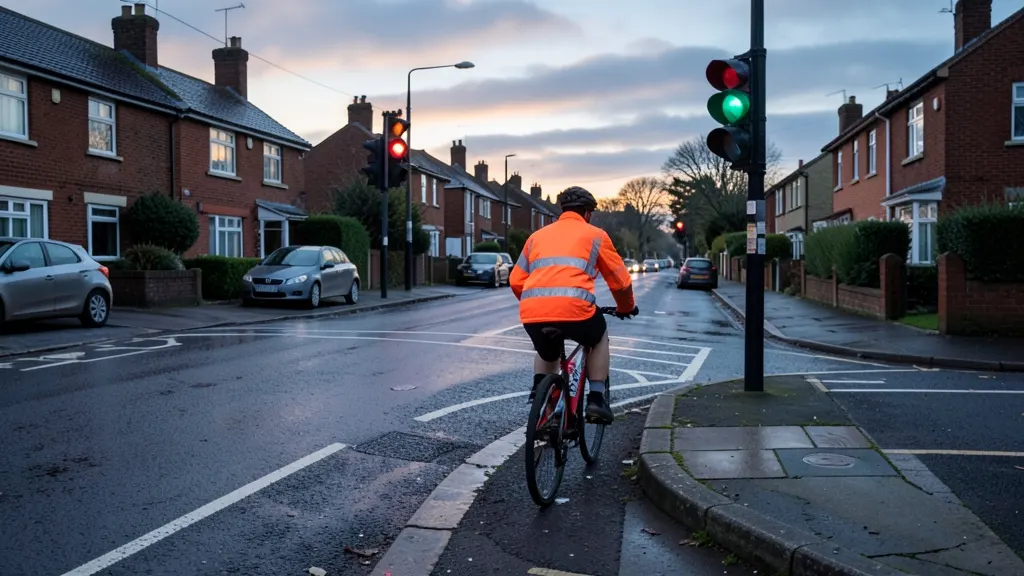
Think about the light you will actually be in. Cyclists should note that Highway Code Rule 59 says light-coloured or fluorescent clothing helps in daylight and poor light, while reflective clothing or accessories such as belts, arm or ankle bands increase visibility in the dark. Rule 60 requires a cycle used at night to have white front and red rear lights lit and a red rear reflector, so lights come first and the jacket supports them. Motorcyclists get similar advice: Rule 86 suggests making yourself visible from the side as well as front and rear, for example with fluorescent clothing or strips, and Rule 87 recommends reflective clothing or strips when riding in the dark. Our cycling buyer's guide covers the details.
Finally, look after the garment. Wash it as the label instructs, keep it out of constant sunlight when stored, check the reflective bands, and retire it when the orange goes dull. If you want a broader comparison of styles and classes, our general guide to hi-vis jackets is a good next read.
Frequently asked questions
Is an orange hi vis jacket as effective as a yellow one?
Both colours can meet the same EN ISO 20471 classes, so a certified orange high visibility jacket can be every bit as effective. Colour choice usually comes down to the surroundings: orange is often preferred where yellow appears in machinery, signage or lighting, and it is required for rail work under RIS-3279-TOM. For general road use, either colour works provided the class suits the risk.
What class of orange hi vis jacket do I need?
It depends on the risk. Class 2, with at least 0.50 m2 of fluorescent background material and 0.13 m2 of retroreflective material, is the common choice for everyday workwear. Class 3, with at least 0.80 m2 of fluorescent and 0.20 m2 of retroreflective material, is for the highest-risk settings such as high-speed roads. Employers must assess the risk and provide suitable PPE under the Personal Protective Equipment at Work Regulations 1992.
Does an orange hi vis jacket work at night?
Only if it has retroreflective material, which is the part that responds to headlights. The fluorescent orange helps in daylight and poor light but does little in darkness on its own. The Highway Code advises reflective materials for night use and notes they can be seen by drivers using headlights up to three times as far away as non-reflective materials.
Why do railway workers all wear the same orange?
The rail industry standard RIS-3279-TOM requires an orange colour and garments that meet at least class 2 of EN ISO 20471, according to UK testing body SATRA. That is why rail-issue orange jackets look consistent. General-purpose hi-vis is not held to that specific colour rule, so check for the rail standard if that is your line of work.
How do I know if my jacket still meets the standard?
Check the condition regularly. HSE guidance says reusable PPE must be cleaned and kept in good condition, and hi-vis jackets must be cleaned regularly, with workers reporting any loss, destruction or obvious defect. Faded fluorescent orange, dirt that will not wash out, or worn reflective bands all mean the jacket is no longer performing as certified.