Hi-vis jackets for running
Last updated
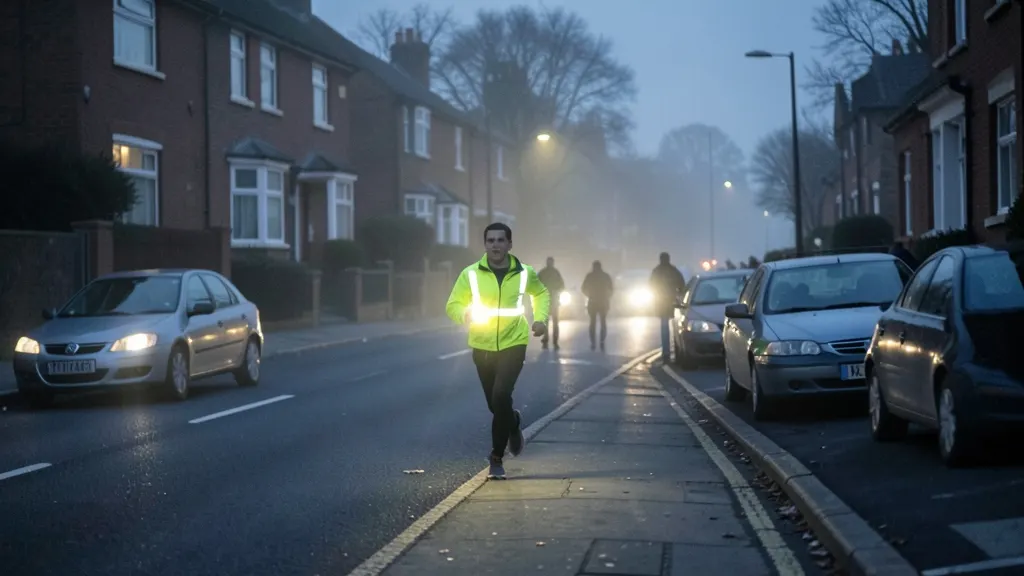
Fluorescent or reflective? The choice this page helps you settle
If you run near traffic, on shared paths or in the dark, a good jacket is the single most useful bit of visibility kit you can buy. The confusion starts with the labels. Some running hi vis jackets are covered in fluorescent yellow, some are black with discreet reflective piping, and others carry a certified standard from the world of workplace safety. Picking the right one depends on when you run, where you run and what the light is doing when you do it.
Fluorescent material and reflective material do different jobs. Fluorescent colours help drivers spot you in daylight and in poor light such as dusk, dawn, fog and drizzle. Reflective material only does its work when a light source hits it, so it matters most in the dark. The Highway Code makes the distinction clear across several of its rules. Rule 3 advises road users to help others see them, and notes that in the dark reflective materials such as armbands, sashes, waistcoats, jackets or footwear can be seen by drivers using headlights up to three times as far away as non-reflective materials. Rule 17 tells pedestrians simply to wear something reflective at night. Rule 59 applies the same logic to cyclists, recommending light-coloured or fluorescent clothing in daylight and poor light, plus reflective clothing or accessories in the dark.
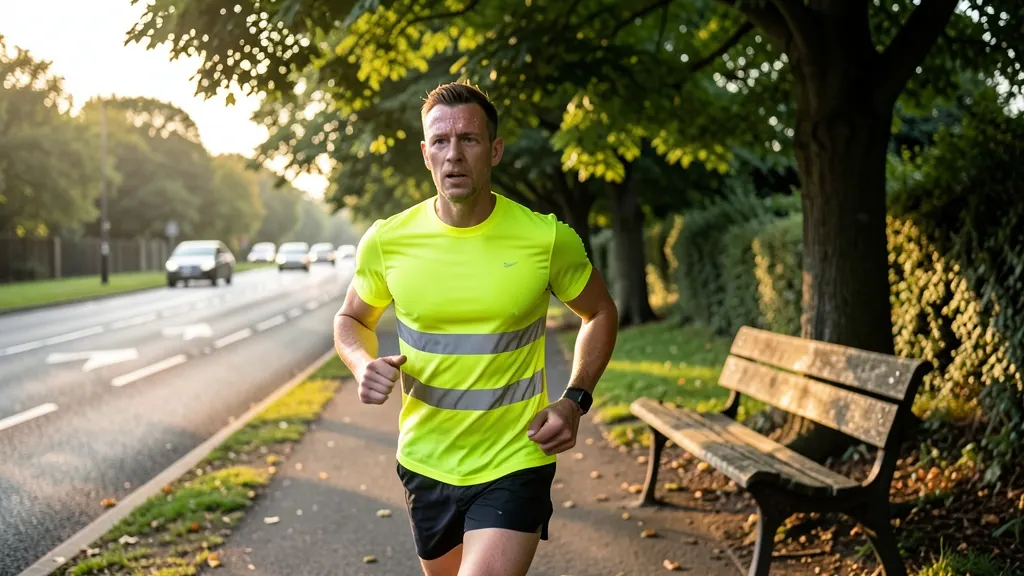
Comparing the main options
The bright fluorescent running hi vis jacket
The classic option. A fluorescent yellow or pink jacket with reflective strips is the choice for runners who share space with vehicles. The colour grabs attention in daylight and grey British afternoons, and the strips take over after dark when headlights sweep across you. This is also the style most likely to echo certified workwear, and for good reason.
The reference point for certified hi-vis is EN ISO 20471, which has three classes. A class 1 garment needs at least 0.14 m2 of fluorescent background material and 0.10 m2 of retroreflective material. Class 2 requires 0.50 m2 of fluorescent material and 0.13 m2 of retroreflective material. Class 3, the highest, needs at least 0.80 m2 of fluorescent background and 0.20 m2 of retroreflective material. Most running jackets are not certified at all, and that is fine, because the standard was written for workers exposed to risk, not joggers. What matters is that the principles carry over: big blocks of fluorescent colour, plus generous reflective panels rather than a token logo. If you want to dig into the standard, see our guide to class 3 hi vis jackets.
The black hi vis running jacket with reflective detailing
Not everyone wants to look like a road crew at breakfast. A black running jacket with well-placed reflective panels is a popular middle ground for city running under streetlights, where the light never fully disappears. The catch is that black gives you nothing in daylight, so this style suits well-lit urban routes and dark evenings rather than rural lanes in fog. We look at who this style suits in more detail in Black hi-vis jackets: who they suit and when.
The lightweight reflective shell
Many runners end up with two jackets: a warm, visible winter layer and a thin, packable reflective running jacket for the rest of the year. A light shell with all-over reflectivity can be stuffed in a running belt once the sun comes up, which is handy for out-and-back runs that start or finish in the dark. For the science behind why these fabrics glow under headlights, read How reflective material works.
Which option fits which situation
Runners who train in the early morning or evening in winter should put reflectivity first. Headlights are the main light source, so generous reflective coverage beats a large fluorescent area, though having both is ideal. Anyone running on rural roads without pavements should lean towards maximum visibility from the front and rear. Motorcyclists are advised under Rule 86 of the Highway Code to be visible from the side as well as the front and rear, and the same logic applies to runners on twisting lanes, where drivers may approach from any angle.
If you run in daylight, during your lunch break or on bright weekends, fluorescence is your friend and reflectivity barely matters. Choose a bright colour that stands out against green hedges and grey tarmac. Trail runners away from traffic can put visibility lower down the list and prioritise weather protection and freedom of movement instead.
Parents doing the school run on foot before heading out for a run, or runners who also cycle, might want kit that does double duty. Cyclists riding at night must have a white front light and red rear light lit plus a red rear reflector under Rule 60, and reflective clothing adds a second layer of defence on top of legal lights. Our guide to hi-vis jackets for cycling covers the overlap.
Quick decision guide
Run through these questions and the choice narrows quickly.
- Do you run in the dark on roads? Pick a fluorescent jacket with plenty of reflective panels, and consider adding ankle bands, which move as you stride and catch the eye.
- Do you run in daylight or poor light only? A bright fluorescent colour is the priority; reflectivity is a bonus.
- Do you run on lit city streets at night? A dark jacket with strong reflective detailing can work, but do not rely on streetlights alone.
- Do you run both summer and winter? Two jackets, one insulated and visible, one light and packable, will serve you better than one compromise layer.
- Do you cross paths with traffic at junctions and roundabouts? Check that the reflective material covers the sides of the jacket, not just the front and back.
Whatever you buy, look after it. Guidance from the Health and Safety Executive on reusable protective clothing says hi-vis garments must be cleaned regularly and kept in good condition. The same applies at home: dirt and grime flatten fluorescence and can mask reflective strips, so wash the jacket when it stops popping and retire it when the panels wear thin. For a wider comparison of styles, see our main guide to Hi-vis jackets: how to choose the right one, and if you are building a full kit of lights, bands and shoes, read Choosing reflective running kit.
Frequently asked questions
Do I need a certified running hi vis jacket?
No. The EN ISO 20471 standard is written for workers exposed to risk on the job, so most running jackets are not certified and do not need to be. The classes are still a useful benchmark: class 2 requires at least 0.50 m2 of fluorescent material and 0.13 m2 of retroreflective material, while class 3 requires 0.80 m2 and 0.20 m2 respectively. A jacket with similar proportions of colour and reflective panelling will serve you well.
Is a black running jacket with reflective panels good enough for night runs?
On well-lit urban routes it can work, provided the reflective detailing is generous and covers the sides as well as the front and back. On unlit rural roads a black jacket gives you nothing in the hours around dusk and dawn, when a fluorescent colour would help drivers spot you much earlier. Many night runners pair a dark jacket with a fluorescent bib or reflective bands.
Why do reflective strips matter more than bright colours after dark?
Fluorescent material needs daylight or some ambient light to stand out, so it fades into the gloom at night. Reflective material bounces light from headlights straight back to the driver, and the Highway Code notes it can be seen up to three times as far away as non-reflective material. Once the sun is down, reflectivity does the work.
How should I care for a hi vis running jacket?
Wash it regularly, because dirt and grime reduce both fluorescence and reflectivity, and HSE guidance on reusable hi-vis garments stresses regular cleaning and good condition. Check the reflective strips now and then for cracking or peeling. When the panels stop catching headlights, replace the jacket.
Should I add anything besides a jacket?
Reflective ankle bands are worth considering because the movement of your stride draws the eye. If you also cycle at night, remember the law requires a lit white front light, a red rear light and a red rear reflector, and reflective clothing adds protection on top of those. Gloves and a reflective cap also help drivers pick out a human shape.