Reflective jackets: which one suits your life?
Last updated
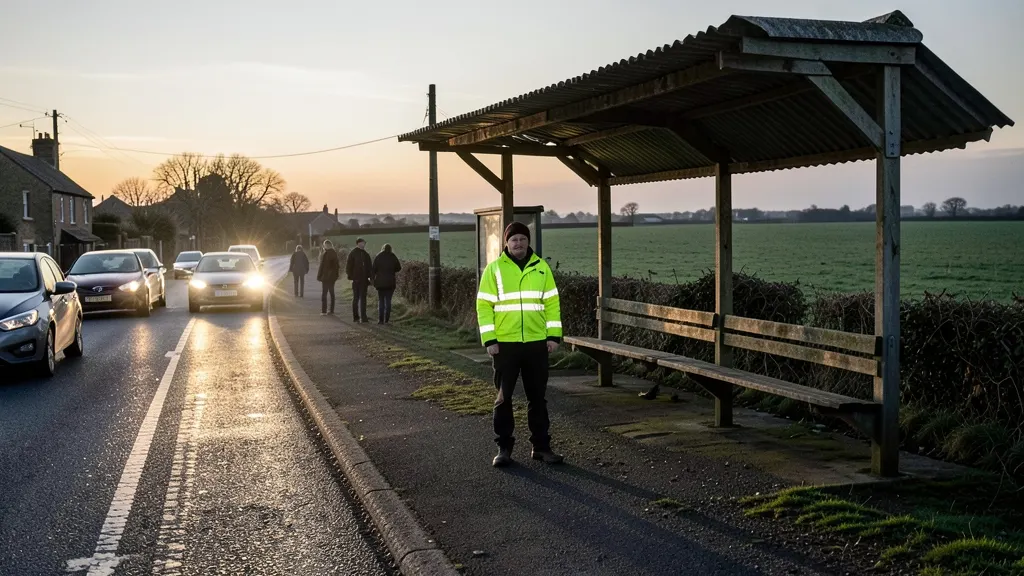
What this page helps you decide
Reflective jackets come in two broad flavours. Some are bright fluorescent jackets with reflective strips designed to make you visible day and night. Others look like ordinary coats that hide reflective detail until headlights catch them. Choosing between them, and picking the right level of reflectivity, depends on when and where you actually wear the thing. A commuter cycling home at 5pm in January needs something different from a dog walker on a lit residential street, and both need something different from a site worker in live traffic.
This page compares the main use cases side by side, explains the standards behind the labels, and finishes with a quick decision guide. If you want more detail on jacket types generally, see Hi-vis jackets: how to choose the right one.
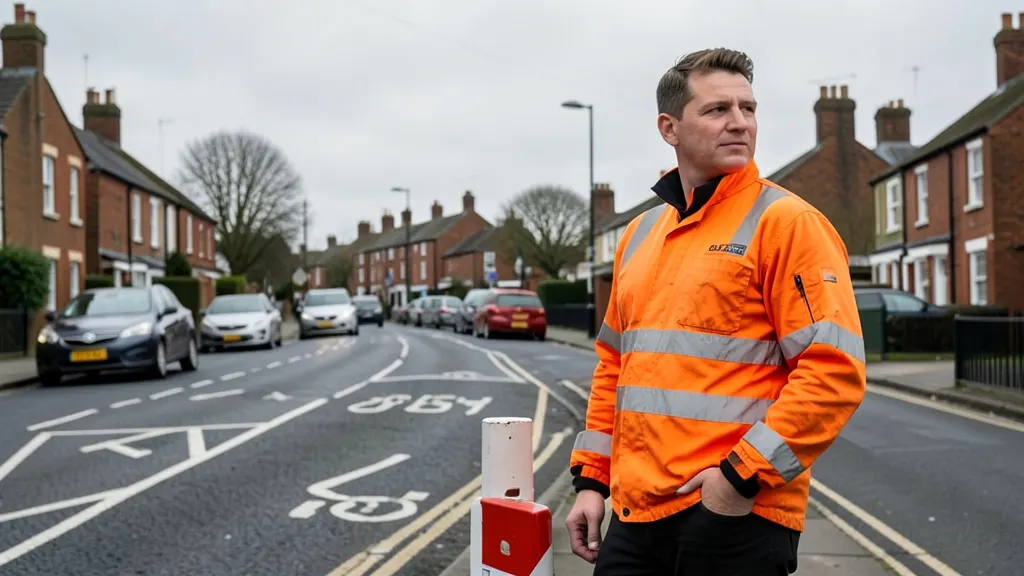
The main use cases compared
Working near traffic or machinery. For workwear, the key standard is EN ISO 20471, which has three classes. A class 1 jacket has at least 0.14 m2 of fluorescent background material and 0.10 m2 of retroreflective material. Class 2 steps up to 0.50 m2 of fluorescent material and 0.13 m2 of retroreflective material. Class 3, the highest, has at least 0.80 m2 of fluorescent background and 0.20 m2 of retroreflective material. The more of you that is covered, the more light goes back to drivers.
There are legal duties here too. Under the Personal Protective Equipment at Work Regulations 1992, employers must provide suitable PPE to workers exposed to a health or safety risk where that risk is not controlled by other means. Since 6 April 2022 those duties also cover limb (b) workers, and the employer must supply the PPE free of charge. Health and safety guidance adds that hi-vis jackets must be cleaned regularly, kept in good condition, and that workers must report any loss, destruction or obvious defect. A grubby jacket with worn strips reflects far less light than a fresh one.
One special case worth knowing: rail work. SATRA, a UK PPE testing body, notes that the rail standard RIS-3279-TOM requires an orange colour and garments meeting at least class 2 of EN ISO 20471. If you work near the railway, orange is not a style choice, it is a requirement.
Cycling. The Highway Code is quite specific here. Rule 59 says light-coloured or fluorescent clothing helps other road users see a cyclist in daylight and poor light, while reflective clothing or accessories such as belts, arm or ankle bands increase visibility in the dark. Rule 60 adds that at night a cycle must have white front and red rear lights lit, plus a red rear reflector. So a reflective jacket is one layer of a system, never a replacement for lights. For a fuller comparison of options, read Hi-vis jackets for cycling: a buyer's guide.
Running. Runners often move between pavements, unlit lanes and park paths, so jackets with reflective strips across the chest, sleeves and back work well because the strips move with your stride. Ankle bands are especially effective because the up-and-down motion catches a driver's eye. Our guide to reflective running kit goes into this in more depth.
Dog walking, school runs and everyday use. For casual use, the Highway Code still applies. Rule 3 asks all road users to help others see them, and notes that in the dark, reflective materials such as jackets, armbands, sashes or footwear can be seen by drivers using headlights up to three times as far away as non-reflective materials. Rule 17 puts it simply: at night, wear something reflective. For dog walking tips, see Hi-vis jackets for dog walking: how to choose.
Motorcycling and horse riding. Rule 86 says motorcyclists should make themselves as visible as possible from the side as well as the front and rear, for example with fluorescent clothing or strips. Rule 87 says that when riding in the dark, motorcyclists should wear reflective clothing or strips. The side-on advice matters to horse riders too, since much of your exposure happens at junctions and crossings.
Which option fits which situation
For daytime visibility, fluorescent colour does the heavy lifting. Fluorescent yellow, orange and pink convert ultraviolet light into extra visible glow, but the effect fades in darkness. After dark, it is the retroreflective strips that count, because they bounce headlight beams straight back to the driver. If you are out in both conditions, you need both elements, which is what EN ISO 20471 certified jackets provide.
If you dislike the look of full hi-vis, a jacket with reflective strips on a dark shell is a reasonable compromise, and black hi-vis jackets cover who they suit. Just be honest about the trade-off: at dusk a black jacket with good reflective piping performs better than a plain coat, but worse than a fluorescent one. For children, visibility matters most at the kerbside, and kids hi vis jackets deal with the common myths.
If your work involves high-speed roads, night work or railways, do not compromise. Class 3 gives you the largest fluorescent and retroreflective areas, and class 3 hi vis jackets explain the details. To understand why some strips look dull under streetlights but blaze under headlights, our page on how reflective material works is worth a read.
Quick decision guide
Answer these questions in order:
- Is this for work where an employer must supply PPE? Ask for the right class for the site. Rail means orange, class 2 minimum.
- Are you mostly out after dark? Prioritise reflective area. Look for strips at the chest, shoulders, sleeves and lower back, and add ankle bands.
- Are you mostly out in daylight or poor light? Fluorescent colour matters more than reflectivity. Pick yellow, orange or pink.
- Do you mix both? Choose an EN ISO 20471 certified jacket that carries both fluorescent background and retroreflective strips.
- Do you cycle at night? Jacket plus lights plus rear reflector, no exceptions. Rule 60 is a legal requirement.
- Is style the sticking point? A dark jacket with generous reflective panels beats no jacket at all, but do not expect daytime visibility.
Whatever you choose, keep it clean and check the strips for wear. Reflective jackets only work when there is something left to reflect.
Frequently asked questions
What is the difference between a fluorescent jacket and a reflective jacket?
A fluorescent jacket uses bright yellow, orange or pink material to make you more visible in daylight and poor light. Reflective material bounces light from headlights straight back toward the driver, so it works best after dark. Many jackets with reflective strips combine both, which is why the Highway Code recommends reflective items for night use under Rule 3.
Do reflective jackets work during the day?
The reflective strips do very little in daylight, because there are no headlights to bounce back. In daylight the fluorescent background colour is what makes you stand out. Rule 59 makes this distinction for cyclists: fluorescent clothing helps in daylight and poor light, while reflective clothing helps in the dark.
What do the class ratings on reflective jackets mean?
EN ISO 20471 has three classes, based on the amount of material. Class 1 needs at least 0.14 m2 of fluorescent background and 0.10 m2 of retroreflective material. Class 2 needs 0.50 m2 and 0.13 m2 respectively, and class 3 needs 0.80 m2 and 0.20 m2. Class 3 offers the most coverage for the riskiest settings, such as night work on high-speed roads.
Does my employer have to provide a reflective jacket?
Under the Personal Protective Equipment at Work Regulations 1992, employers must provide suitable PPE to workers exposed to a health or safety risk that is not otherwise controlled. Since 6 April 2022 this also covers limb (b) workers, and the employer must provide the PPE free of charge.
How do I look after a reflective jacket?
Wash it regularly, because dirt and grime cut both the fluorescent effect and the reflectivity of the strips. Health and safety guidance says hi-vis jackets must be cleaned and kept in good condition, and workers must report any loss, destruction or obvious defect. Check the strips for cracking or peeling, because worn strips reflect far less light back to drivers.