Motorcycle hi-vis jackets: the myths and the facts
Last updated
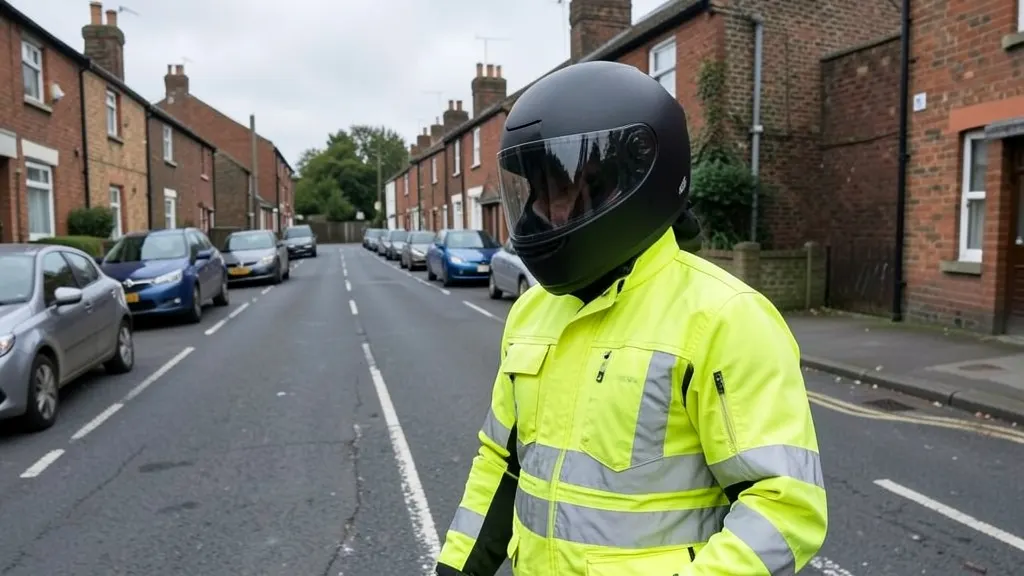
Ask a group of bikers about hi-vis clothing and you will hear the same claim again and again: it makes no difference, because drivers simply do not look for motorcyclists. It is the most common misconception in biking, and it is worth unpicking properly, because it puts riders off wearing gear that could genuinely help them.
The myth: hi-vis does nothing for motorcyclists
The argument usually runs like this. Drivers look for cars, not bikes, so the colour of your jacket is irrelevant. If a driver is going to pull out on you, a fluorescent yellow sleeve will not stop them.
There is a kernel of truth buried in there. Hi-vis will not fix a driver who never checks properly, and it will not make up for poor road positioning or riding too fast for the conditions. What it can do is reduce the chance of the ordinary, momentary failure to notice you. Those momentary failures are a large slice of motorcycle collisions at junctions, and being seen a fraction of a second earlier can be the difference between a driver waiting and a driver pulling into your path.
The evidence: what the Highway Code actually says
The Highway Code is straightforward on this point. Rule 86 says motorcyclists should make themselves as visible as possible from the side as well as the front and rear, and gives fluorescent clothing or strips as an example. Rule 87 goes further for riding in the dark, advising riders to wear reflective clothing or strips to improve visibility.
The distinction between those two rules matters when choosing a motorbike high visibility jacket. Fluorescent material works by converting ultraviolet light and by being an unusual, attention-grabbing colour, which is why it performs in daylight and poor light. It does not do much in darkness. Reflective, retroreflective material is what headlights pick up at night, and Highway Code Rule 3 notes that reflective materials can be seen by drivers using headlights up to three times as far away as non-reflective materials. A good jacket for a rider therefore needs both, and a black jacket with reflective panels is not a substitute for fluorescent coverage in daytime.
Three more myths worth clearing up
Myth 1: any bright jacket counts as hi-vis
A yellow or lime jacket from an ordinary clothing shop may look the part, but proper high visibility clothing is tested and classified. The standard is EN ISO 20471, which has three classes. Class 1 requires at least 0.14 square metres of fluorescent background material and 0.10 square metres of retroreflective material. Class 2 requires 0.50 and 0.13 square metres. Class 3, the highest, requires at least 0.80 square metres of fluorescent material and 0.20 square metres of retroreflective material. The best hi vis motorcycle jackets sit at class 2 or class 3, giving you enough fluorescent area to be picked out at distance. You can read more about the top tier in Class 3 hi vis jackets: myths and facts.
Myth 2: hi-vis only matters in winter
Dark, wet evenings are when you most need it, but summer rides bring their own visibility problems. Low sun behind you can render a dark rider almost invisible, and bright, busy urban streets are full of competing visual noise. A fluorescent jacket earns its keep in June as well as January.
Myth 3: once you own it, the job is done
Hi-vis degrades. Road grime builds up, retroreflective strips get scuffed, and the fluorescent fabric fades with washing and sunlight. Health and Safety Executive guidance on reusable PPE says hi-vis jackets must be cleaned regularly and kept in good condition, with workers told to report any obvious defect. That advice applies just as sensibly to riders. A dirty, washed-out jacket performs far below its tested rating, so inspect it and replace it when the reflective bands stop bouncing light back cleanly.
What to do instead
Choose a proper EN ISO 20471 class 2 or class 3 jacket with generous reflective banding around the torso and sleeves, not just a token strip. Check that it fits over or under your protective layer without restricting movement, and that it is rated for the weather you ride in. Remember that side visibility counts, per Rule 86, so look for panels that show from the flanks as well as front and rear. In the dark, add reflective strips or bands to boost the retroreflective area. Combine the jacket with sensible road position and working lights, since clothing is one layer of visibility, not the whole plan. For a wider look at the options, see our Motorcycle visibility kit guide, and if you are buying for other riders in the family too, start with our general guide to Hi-vis jackets: how to choose the right one.
Frequently asked questions
What class of hi-vis jacket should a motorcyclist wear?
Class 2 or class 3 under EN ISO 20471 is the sensible choice. Class 2 requires at least 0.50 square metres of fluorescent background material and 0.13 square metres of retroreflective material, while class 3 requires at least 0.80 and 0.20 square metres respectively. The larger the areas, the more likely you are to be picked out at distance.
Does a hi-vis jacket help at night?
The fluorescent part works mainly in daylight and poor light. At night it is the retroreflective bands that matter, because they return headlight light back to the driver. Highway Code Rule 3 notes that reflective materials can be seen by drivers using headlights up to three times as far away as non-reflective materials, and Rule 87 advises motorcyclists to wear reflective clothing or strips in the dark.
Is a bright jacket the same as a hi-vis jacket?
No. A genuinely high visibility jacket is tested to EN ISO 20471, which sets minimum areas of fluorescent background and retroreflective material across three classes. An ordinary brightly coloured jacket may help somewhat, but it has not been tested against those minimums.
How do I keep a hi-vis jacket working properly?
Clean it regularly, following the care label, because road grime and scuffing reduce performance. Check the reflective bands for wear and fading, and replace the jacket when the fluorescent fabric looks washed out or the retroreflective strips no longer bounce light back clearly.