Staying visible on your winter commute
Last updated
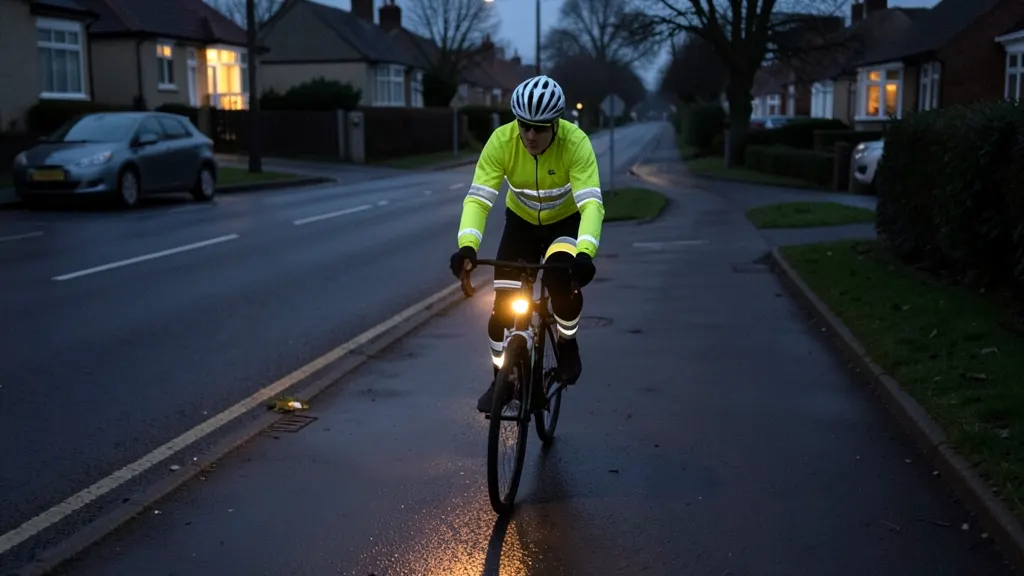
From late October until spring, many people in the UK travel to and from work or school in the dark. The morning trip might start in gloom and the return leg often finishes after sunset. Winter commute visibility is simply the business of making sure other road users can see you clearly during those dark journeys, whether you walk, cycle, ride a motorbike or drive for work.
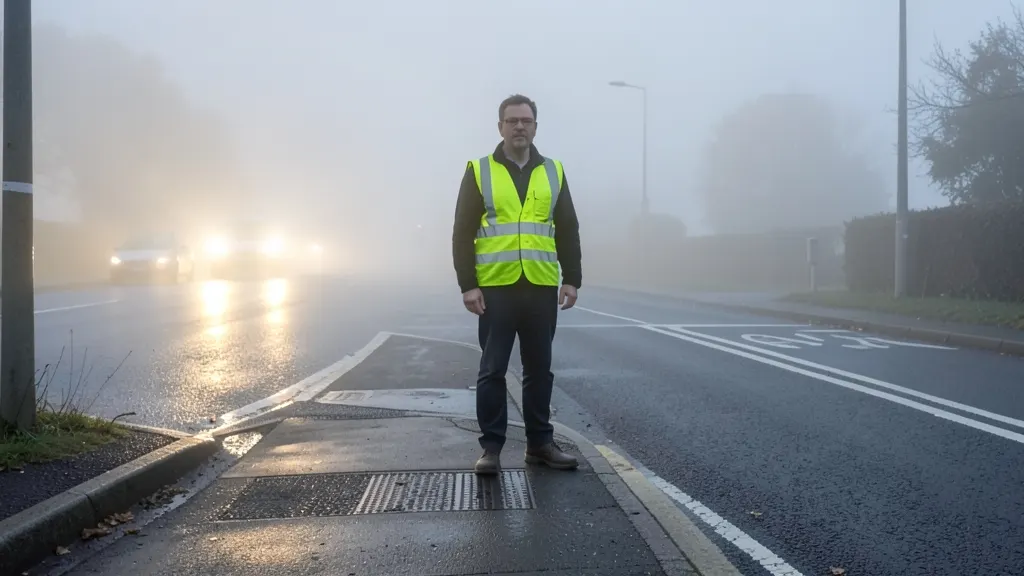
Why dark commute hi vis matters
Darkness reduces the time drivers have to react. A pedestrian in dark clothing at the side of an unlit road can be very hard to spot until the last moment. Hi-vis kit works in two ways. Fluorescent material stands out in daylight and poor light such as dawn and dusk. Retroreflective material bounces headlight beams straight back towards the driver, which is what makes the difference in true darkness.
For anyone cycling in the dark, this combination matters most. Fluorescent clothing helps on the grey, overcast stretch of a winter afternoon, and reflective panels take over once the light has gone.
What the rules say
The Highway Code is the main reference for road users in the UK, and several rules deal directly with visibility.
- Rule 3 tells all road users to help others see them. In the dark it says to use reflective materials such as armbands, sashes, waistcoats, jackets or footwear, which can be seen by drivers using headlights up to three times as far away as non-reflective materials.
- Rule 17 says that at night you should wear something reflective to make it easier for others to see you.
- Rule 59 advises cyclists that light-coloured or fluorescent clothing can help other road users see them in daylight and poor light, while reflective clothing or accessories, including belts and arm or ankle bands, can increase visibility in the dark.
- Rule 60 sets a legal requirement: at night a cycle must have white front and red rear lights lit, and a red rear reflector.
- Rule 69 reminds cyclists that they must obey all traffic signs and traffic light signals, so visibility kit never replaces lawful, predictable riding.
- Rules 86 and 87 cover motorcyclists. They should make themselves as visible as possible from the side as well as the front and rear, for example with fluorescent clothing or strips, and when riding in the dark they should wear reflective clothing or strips.
For people who commute for work, employment law is also relevant. Under the Personal Protective Equipment at Work Regulations 1992, employers must ensure suitable PPE is provided to workers exposed to a risk to their health or safety, unless the risk is adequately controlled by other means. Since 6 April 2022 these duties have also covered limb (b) workers, and the employer must provide the PPE free of charge. So if your job puts you on the road in the dark, visibility clothing may be something your employer has to supply rather than something you buy yourself. Delivery riders can read more in Do delivery drivers need hi vis? A practical guide.
Understanding hi-vis standards
When you shop for hi-vis clothing you will see references to EN ISO 20471. This standard has three classes, based on how much fluorescent and retroreflective material a garment contains.
- Class 1 is the lowest level, with a minimum fluorescent background area of 0.14 m2 and a minimum retroreflective area of 0.10 m2. Think arm bands and small accessories.
- Class 2 sits in the middle, with at least 0.50 m2 of fluorescent background material and 0.13 m2 of retroreflective material. Many vests and jackets for everyday road use fall here.
- Class 3 is the highest class, requiring at least 0.80 m2 of fluorescent background material and 0.20 m2 of retroreflective material. This is the level associated with the riskiest roadside situations.
For a plain-English walkthrough of the classes, see Hi-vis classes explained: EN ISO 20471 made simple.
There are also job-specific requirements. SATRA, a UK PPE testing body, states that rail standard RIS-3279-TOM requires an orange colour and garments that meet at least class 2 of EN ISO 20471. That matters if your commute crosses a railway line at a station or crossing where staff standards set the tone.
Putting it into practice on UK roads
A dark commute does not need a full wardrobe of specialist gear. A few sensible choices cover most journeys.
For walkers, a reflective band on the moving parts of your body works well. Ankle bands get picked out by headlights because your feet are constantly moving, and drivers notice the flashing effect. A sash or waistcoat over an ordinary coat is another option, as Rule 3 suggests. Dog walkers face their own challenges with leads and dark lanes, and How to be seen walking a dog at night goes into that in detail.
For cyclists, lights and a red rear reflector are the legal base line under Rule 60. Add reflective ankle bands and a jacket with retroreflective piping and you tick the advice in Rule 59 as well. Mount your lights securely, keep the lenses clean, and charge them regularly, because a flat battery on an unlit country lane is a genuine safety problem.
Runners commuting home should think about layering visibility over their normal kit. What to wear running in the dark: a practical guide covers fabric and accessory choices.
Motorcyclists should follow Rules 86 and 87 and think about visibility from the side, which is where many garments fall short. Fluorescent strips on sleeves and reflective panels on trousers all help. The page How to be seen on a motorbike: visibility guide covers this properly.
Horse riders on winter roads need visibility for horse and rider together, which Do horse riders need hi vis on the road? explains.
Looking after your kit
Hi-vis only works if it stays hi-vis. HSE guidance says reusable PPE must be cleaned and kept in good condition, and that hi-vis jackets, trousers and coveralls must be cleaned regularly. Grime and road film cut both fluorescence and reflectivity. Workers must also report any loss, destruction or obvious defect, and that is a habit worth copying on a personal commute. Check your gear at the start of winter, wash it through the season, and replace anything where the reflective strips have cracked or peeled.
Where to read more
The Highway Code itself is free to read online and is the definitive source for Rules 3, 17, 59, 60, 69, 86 and 87. The Health and Safety Executive publishes guidance on PPE at work, including the cleaning and maintenance duties described above. SATRA publishes information on PPE testing and the rail standard RIS-3279-TOM. Between those sources and the guides linked here, you should be able to plan a dark commute that keeps you seen all winter.
Frequently asked questions
Is hi-vis clothing a legal requirement for commuting?
For private travel, the Highway Code advises rather than requires. It recommends reflective materials at night under Rules 3 and 17, and reflective clothing or accessories for cyclists under Rule 59. The legal requirement for cyclists is lights: at night a cycle must have white front and red rear lights lit, plus a red rear reflector. If you commute for work and face a health or safety risk, your employer may be legally required to provide suitable PPE free of charge under the Personal Protective Equipment at Work Regulations 1992.
Do reflective strips actually make a difference at night?
Yes. According to Rule 3 of the Highway Code, reflective materials such as armbands, sashes, waistcoats, jackets or footwear can be seen by drivers using headlights up to three times as far away as non-reflective materials. That extra distance gives drivers more time to react and plan a safe pass.
What do the hi-vis classes mean?
EN ISO 20471 has three classes. Class 1 requires a minimum fluorescent background area of 0.14 m2 and 0.10 m2 of retroreflective material. Class 2 requires 0.50 m2 and 0.13 m2 respectively, and class 3, the highest, requires at least 0.80 m2 of fluorescent background material and 0.20 m2 of retroreflective material. Higher classes suit riskier roadside situations.
How often should hi-vis clothing be washed?
HSE guidance says hi-vis jackets, trousers and coveralls must be cleaned regularly and kept in good condition. Dirt and road grime reduce both fluorescence and reflectivity, so a wash schedule through winter is sensible. Check reflective strips for cracking or peeling and replace anything with obvious defects.