How often should you replace a hi-vis jacket?
Last updated
What replacing a hi-vis jacket actually means
A hi-vis jacket is not finished when it wears out in the way an ordinary coat does. It is finished when it stops doing its job, which is making you conspicuous against your surroundings. That job depends on two materials: the fluorescent background fabric, usually yellow or orange, and the retroreflective bands that bounce headlight beams straight back at drivers.
Both fade and degrade. Fluorescent fabric dulls with washing, sunlight and general grime. Reflective tape cracks, peels and loses its glass beads or microprisms. A jacket can still look like a jacket, hold together at the seams and keep the rain out, yet be useless as safety clothing. So the question of when to replace hi vis clothing is not really about holes and zips. It is about whether the garment still performs.
The Highway Code makes clear why this matters. Rule 3 advises road users to help others see them, and notes that in the dark reflective materials such as jackets and armbands can be seen by drivers using headlights up to three times as far away as non-reflective materials. A faded hi vis jacket gives away that advantage.
What the standards and rules say
Most hi-vis sold in the UK is certified to EN ISO 20471, the standard for high visibility clothing. It has three classes, based on how much fluorescent and retroreflective material a garment contains. Class 1 is the minimum, class 2 is what many work jackets offer, and class 3 is the highest, with at least 0.80 m2 of fluorescent background material and 0.20 m2 of retroreflective material. A waistcoat might only manage class 1, while a jacket with sleeves can reach class 2 or 3.
The standard is about performance at the point of testing, not a fixed expiry date. Nothing in EN ISO 20471 states that a jacket lasts, say, three years or five years. Instead, the standard sets minimum amounts of fluorescent and reflective material, and a jacket only meets it while those materials still perform to the required level. Once the tape has peeled off the arms or the yellow has gone grey, the garment no longer matches its original certification, whatever the label still says.
For workers, the legal framework is the Personal Protective Equipment at Work Regulations 1992. Employers must provide suitable PPE to workers exposed to a health or safety risk unless that risk is controlled by other means. Since 6 April 2022 those duties also cover limb (b) workers, and the employer must provide the PPE free of charge. Suitable means suitable at the time of use, which includes being clean and in good condition.
HSE guidance is specific on upkeep. Reusable PPE must be cleaned and kept in good condition, hi-vis jackets, trousers and coveralls must be cleaned regularly, and workers must report any loss, destruction or obvious defect. An obvious defect includes a faded background or missing reflective tape.
How this works in practice
In practice, most people replace a hi-vis jacket somewhere between six months and a few years of regular use, because lifespan depends on how the jacket is treated. Here is how to judge your own.
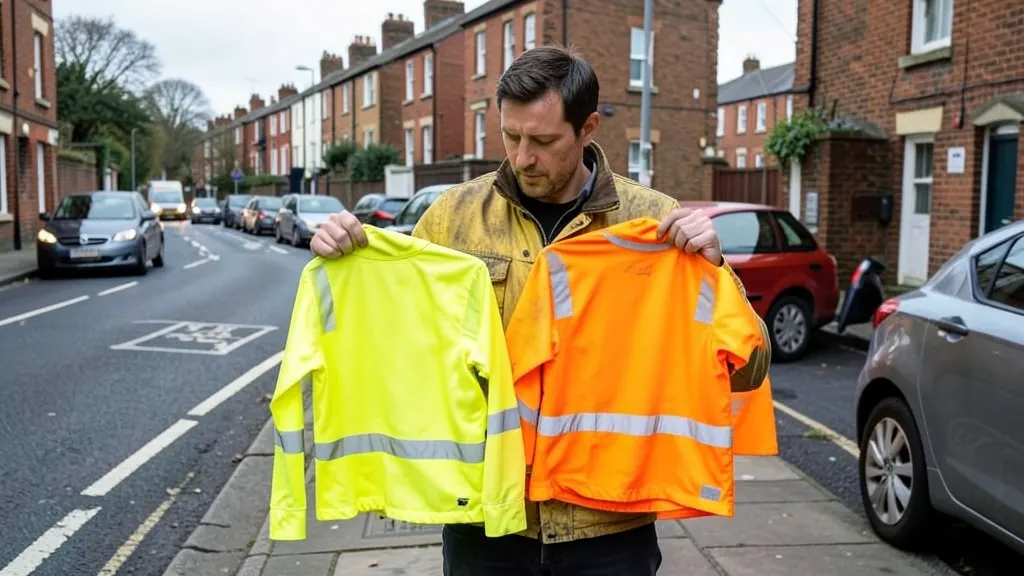
Check the colour. Hold the jacket up in daylight next to a newer hi-vis item or a fresh sheet of white paper. If the fluorescent background looks chalky, grey or generally tired rather than vivid, it has lost brightness. A faded hi vis jacket is the single most common reason to replace one.
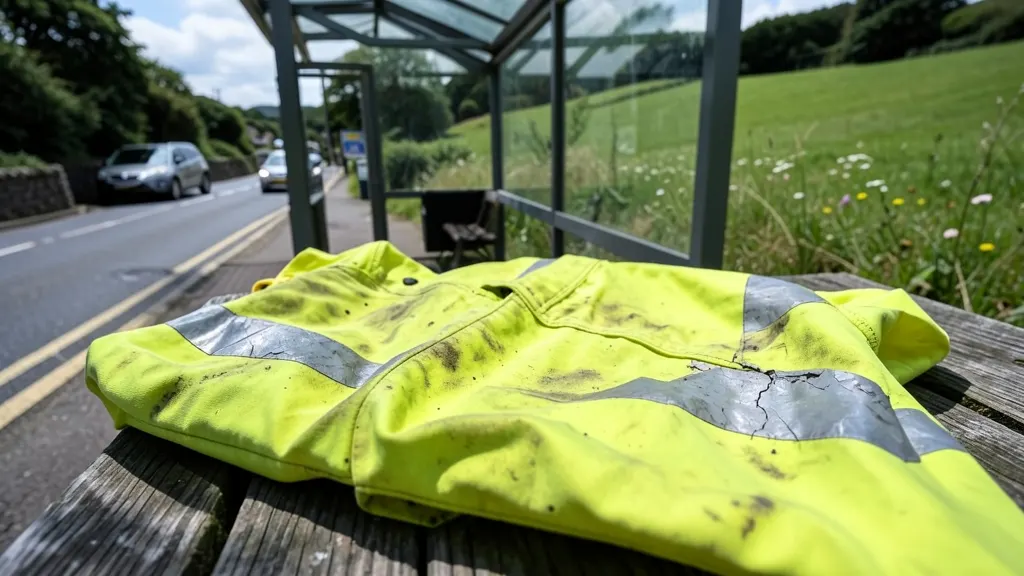
Check the tape. Shine a torch or phone light at the retroreflective bands in a dim room and see how brightly they bounce back. Cracked, peeling or dull bands will not reflect much of a driver's headlights. Missing bands are an instant write-off.
Check the fit and fabric. A jacket worn over other layers needs to stay close enough that the reflective material sits where drivers expect it. Worn-out cuffs, torn pockets and a drooping hem all reduce the useful reflective area.
Wash it properly. Follow the care label. Fabric conditioner is a common killer of reflective tape, because it coats the reflective surface. Wash inside out, close the fastenings, and never iron over the tape. Regular cleaning is not optional: ingrained dirt blocks fluorescence, and HSE guidance expects it.
Replace after heavy soiling or damage. Oil, tar, paint and certain chemicals can permanently dull fluorescent fabric. If a jacket will not come clean, retire it.
Where the rules bite hardest is at work. If your employer provides hi-vis, you are entitled to replacements when the old one fails the checks above, and free of charge if you are a limb (b) worker. On railways, SATRA notes that the rail standard RIS-3279-TOM requires an orange colour and garments meeting at least class 2 of EN ISO 20471, so railway workers cannot quietly downgrade to a worn-out garment. For everyday road users, the Highway Code advice is simpler but just as real. Rule 59 tells cyclists that light-coloured or fluorescent clothing helps in daylight and poor light, while reflective clothing or accessories increase visibility in the dark. Rules 86 and 87 give motorcyclists the same message, suggesting fluorescent clothing or strips for the daytime and reflective kit in the dark. A jacket that no longer delivers that performance is a missed opportunity, not a safety net.
There is more on everyday visibility in our guides on dog walking at night and reflective running kit, and if you wear hi-vis for work, see when hi-vis is required at work in the UK.
Where to read more
For the technical side, the EN ISO 20471 classes are explained simply in our guide to hi-vis classes explained. Workers wanting the legal detail can look up the Personal Protective Equipment at Work Regulations 1992 on the HSE website, and the Highway Code rules quoted here are freely available on GOV.UK. Our guides for delivery drivers and horse riders cover when hi-vis is expected in those specific situations.
Frequently asked questions
How long does a hi-vis jacket last?
There is no fixed lifespan set by EN ISO 20471 or by UK law. A jacket worn daily on a building site might need replacing within a year, while one worn occasionally for dog walks can last several years. Judge it by condition, not age: if the fluorescent colour has faded or the reflective bands have cracked or peeled, replace it.
Is a faded hi-vis jacket still legal to wear?
There is no law banning an individual road user from wearing a faded jacket, but at work the Personal Protective Equipment at Work Regulations 1992 require employers to provide suitable PPE, and HSE guidance requires it to be kept in good condition. A faded jacket no longer performs as certified, so an employer should replace it.
Can I wash a hi-vis jacket without ruining it?
Yes, and regular cleaning is expected. Wash it inside out, follow the care label, and skip fabric conditioner, because it coats the reflective tape and dulls it. Do not iron over reflective bands. If washing cannot restore the fluorescent brightness, the jacket has reached the end of its life.
Do I need to replace the jacket if the reflective strips have peeled off?
Yes. Retroreflective bands are what make you visible to headlights at night, and the Highway Code notes reflective materials can be seen up to three times further away than non-reflective ones. A jacket without functioning tape offers little benefit after dark, even if the fluorescent fabric still looks bright.
Do employers have to pay for replacement hi-vis?
Yes, for their workers. Under the Personal Protective Equipment at Work Regulations 1992, employers must provide suitable PPE, and since 6 April 2022 this also covers limb (b) workers, with the employer providing the PPE free of charge. Workers should report any loss or obvious defect so it can be replaced.