A practical guide to highway code hi vis rules
Last updated
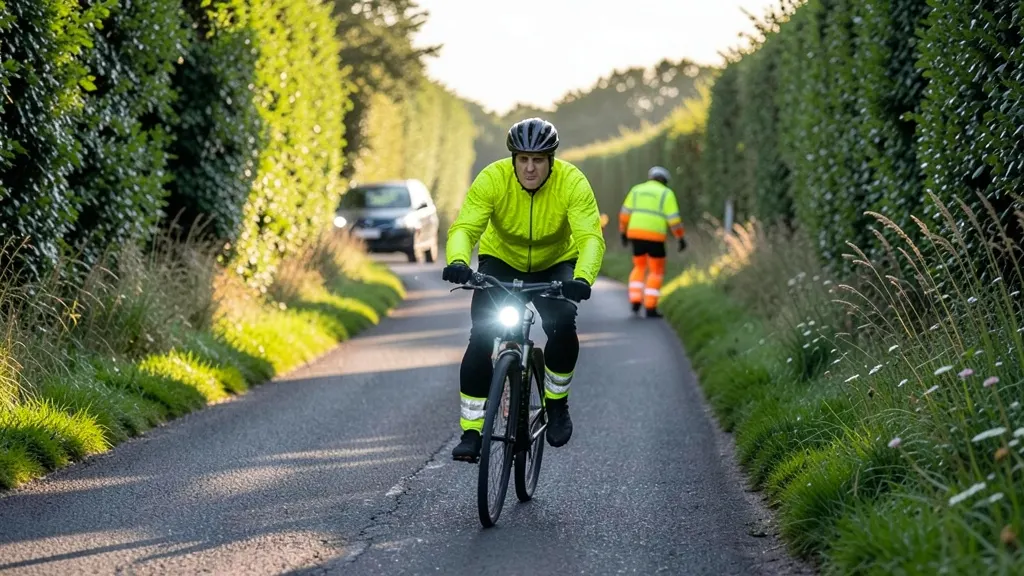
What you need to know and why it matters
The goal here is simple: follow the highway code hi vis guidance so that drivers see you sooner and have more time to react. The advice covers everyone, from walkers on unlit lanes to commuters who ride home after dark. The rules themselves ask very little of you. A reflective band, a fluorescent jacket or a pair of ankle straps can be seen by drivers using headlights up to three times further away than ordinary clothing, according to rule 3 of the highway code.
Before you start, gather what you need:
- Something reflective for the dark, such as armbands, sashes, waistcoats, jackets or footwear with reflective panels
- Something fluorescent for daylight and poor light, when the sun is low or the sky is grey
- For cyclists, working lights and reflectors, because reflective kit supplements legal lighting rather than replacing it
If you want to understand the classes behind the kit you buy, our guide to hi-vis classes explained covers the EN ISO 20471 system, which grades garments by the amount of fluorescent and retroreflective material they contain.
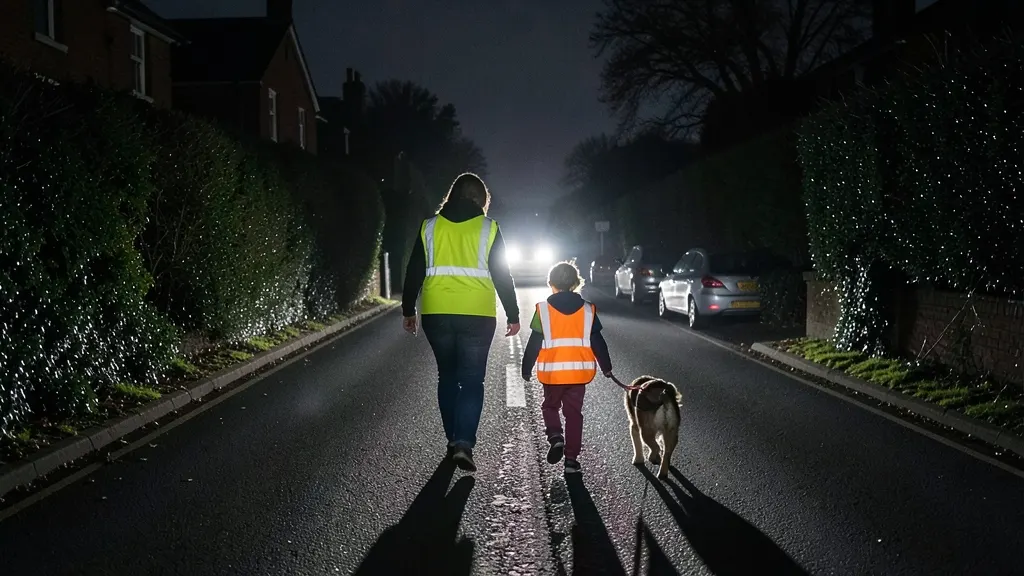
Follow the rules step by step
- Read rule 3 first. It is the general rule that sits behind all the others: help other road users to see you. In the dark, the rule points to reflective materials such as armbands, sashes, waistcoats, jackets or footwear, and notes the headlights benefit described above.
- Check the pedestrian rule. Rule 17 asks anyone walking at night to wear something reflective to make it easier for others to see you. A single reflective strip on a coat can make a real difference on a rural road with no street lighting.
- Apply the cycling rules. Rule 59 advises that light-coloured or fluorescent clothing helps other road users see a cyclist in daylight and poor light, while reflective clothing or accessories such as belts, arm bands or ankle bands increase visibility in the dark. Rule 60 sets a firm legal requirement for riding at night: a white front light, a red rear light, both lit, and a red rear reflector. Rule 69 reminds cyclists to obey all traffic signs and traffic light signals, so hi-vis never excuses poor road behaviour.
- Follow the motorcycling rules. Rule 86 says riders should make themselves as visible as possible from the side as well as from the front and rear, for example with fluorescent clothing or strips. Rule 87 adds that in the dark, motorcyclists should wear reflective clothing or strips.
- Check the work rules if you wear hi-vis for a job. Under the Personal Protective Equipment at Work Regulations 1992, employers must provide suitable PPE to workers exposed to a health or safety risk unless that risk is controlled by other means. Since 6 April 2022 these duties also cover limb (b) workers, and the employer must provide the PPE free of charge. Our guide to when hi-vis is required at work in the UK goes into more detail.
- Match your kit to the setting. If you work on or near the railways, SATRA, a UK PPE testing body, notes that the rail standard RIS-3279-TOM requires an orange colour and garments meeting at least class 2 of EN ISO 20471. For general road use, follow the highway code reflective clothing advice in the rules above rather than any single standard.
Common mistakes and how to fix them
Relying on fluorescent kit after dark. Fluorescent material needs daylight or poor light to do its job. In the dark you need retroreflective material that bounces headlight beams back. Fix: carry both, and switch from a fluorescent jacket to one with reflective bands, or add a sash.
Hiding the reflective bits. A rucksack, a long coat or a scarf can cover the very panels that make you visible. Fix: move reflective bands to your ankles or wrists, where movement catches a driver's eye, and keep panels on show.
Treating lights and reflectors as optional. Rule 60 is not advice; it is a requirement. Fix: check your cycle lights before every night ride and replace batteries in good time.
Forgetting your dog or your horse. Many riders and walkers remember their own kit but forget the animal. Our guides on do horse riders need hi vis on the road? and how to be seen walking a dog at night cover kit for both.
Never cleaning your kit. HSE guidance says reusable PPE must be cleaned and kept in good condition, and hi-vis jackets, trousers and coveralls must be cleaned regularly. Dirt and grime reduce both fluorescence and reflectivity. Fix: wash the garment as the label instructs and check it afterwards.
When to stop repairing and start replacing
Cleaning helps, but a garment only lasts so long. Replace hi-vis kit rather than fixing it when:
- The fluorescent background has faded to a dull yellow or pink, because the fabric has lost the brightness that made it work
- The retroreflective bands no longer shine when you test them with a torch or car headlights at night
- The fabric is torn, stretched or thinning where reflective tape was stitched, since a repair often covers or removes the tape
- The garment no longer meets the class you need, for example if a class 3 jacket with at least 0.80 m2 of fluorescent material and 0.20 m2 of retroreflective material has been cut down or damaged
At work, HSE guidance is clear that workers must report any loss, destruction or obvious defect, so tell your employer rather than patching it yourself. The same common sense applies at home. A worn garment gives a false sense of security, and the whole point of the highway code hi vis advice is that drivers see you with time to spare.
Frequently asked questions
Does the highway code legally require pedestrians to wear hi-vis?
The rules for pedestrians, such as rule 17 asking you to wear something reflective at night, are advisory rather than a legal requirement on its own. That said, the advice exists because reflective material can be seen by drivers using headlights up to three times as far away as non-reflective material, as noted in rule 3. Following it is simply good sense on unlit roads.
What is the difference between fluorescent and reflective clothing?
Fluorescent material helps you stand out in daylight and poor light, which is why rule 59 recommends it for cyclists during the day. Reflective material works in the dark by returning light from headlights, which is what rules 17 and 59 recommend for night use. Most proper hi-vis garments combine both.
Can reflective clothing replace bike lights?
No. Rule 60 requires a cycle ridden at night to have a white front light and red rear light lit, plus a red rear reflector. Reflective clothing and accessories add visibility, but they work only when a light source hits them, so they supplement your lights rather than replace them.
What class of hi-vis do I need?
It depends on the setting and any employer rules. EN ISO 20471 has three classes, based on the minimum area of fluorescent and retroreflective material, and class 3 is the highest. If you work near the railway, SATRA notes that the rail standard requires an orange garment meeting at least class 2.
How do I check whether my hi-vis still works?
Test the retroreflective bands with a torch or car headlights in the dark and look for a strong shine. Check that the fluorescent material still looks bright rather than faded, and follow HSE guidance to clean reusable garments regularly and report any obvious defect.