Hi-vis jackets for cycling and commuting in Cambridge
Last updated
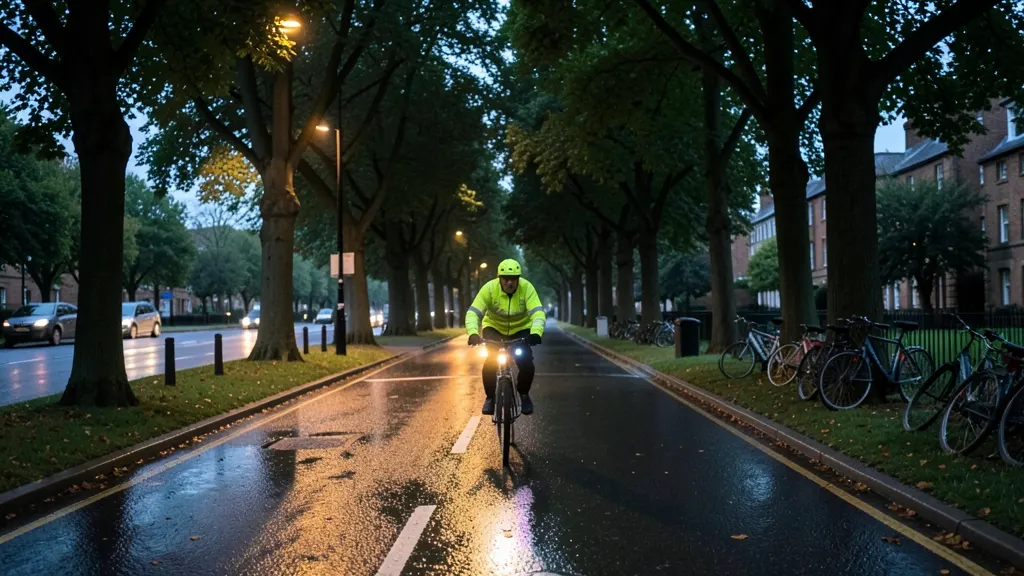
Cambridge is a city built around the bicycle. The land is fairly flat, and the city has the highest level of cycle use in the UK. Back in the 2001 census, 25% of residents travelled to work by bicycle, and the daily sight of bikes threaded through traffic remains the norm rather than the exception. Students, software and bioscience workers, and parents doing the school run all share the same roads and paths, often at both ends of a working day. That makes visibility a practical, everyday concern rather than a niche one, and a cycling hi vis jacket is one of the simplest ways to deal with it.
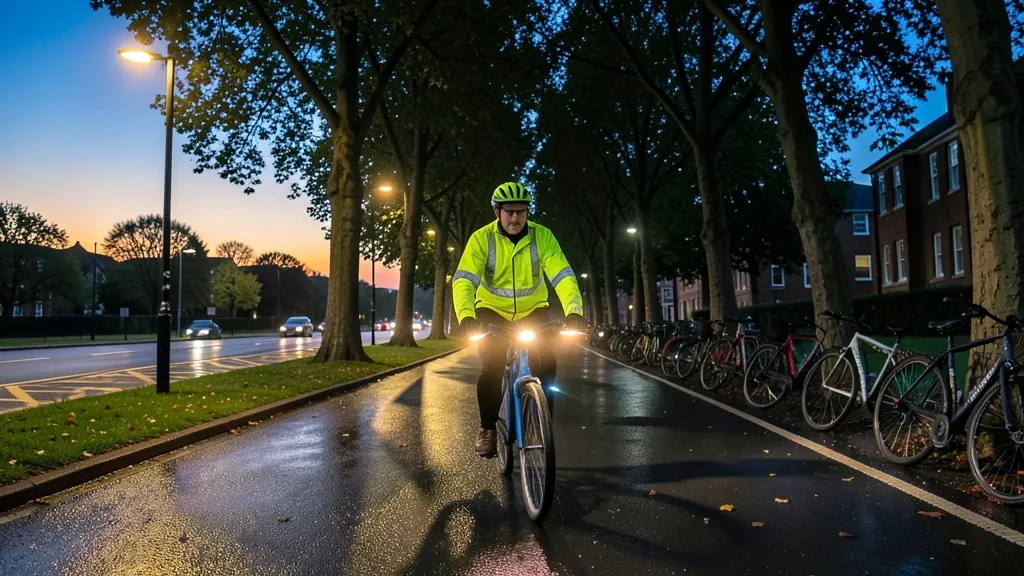
The questions commuters actually ask
Do I legally have to wear a high visibility cycling jacket?
No. There is no law requiring a cyclist to wear hi-vis in the UK. The Highway Code asks rather than compels. Rule 59 says light-coloured or fluorescent clothing can help other road users see a cyclist in daylight and poor light, while reflective clothing or accessories, such as belts or arm and ankle bands, can increase visibility in the dark. Rule 60, by contrast, is a legal matter: at night a cycle must have a white front light and red rear light lit, plus a red rear reflector. Lights are compulsory in the dark; a hi-vis jacket is strongly recommended.
Is a cycling hi vis jacket actually better than ordinary clothing?
In daylight and poor light, yes, in one specific way. Fluorescent material converts ultraviolet light into visible light, so it appears brighter than ordinary fabric under the same conditions. In the dark, fluorescent material does nothing on its own, because there is no UV to work with. What matters then is retroreflective material, which bounces light from car headlights straight back towards the driver. Rule 3 notes that reflective materials such as armbands, sashes, waistcoats, jackets or footwear can be seen by drivers using headlights up to three times as far away as non-reflective materials. That extra seeing distance is the whole point of the garment.
What do the EN ISO 20471 classes mean for cyclists?
EN ISO 20471 has three classes, based on the minimum area of fluorescent and retroreflective material. Class 1 needs at least 0.14 square metres of fluorescent background material, class 2 needs 0.50 and class 3 needs 0.80, with retroreflective minimums of 0.10, 0.13 and 0.20 square metres respectively. For commuting, class 2 is usually the sensible benchmark. Class 3, the highest, is the standard you would expect on roads with fast traffic, and some jackets reach it by adding reflective bands across body and sleeves. If you want detail on how the reflective strips do their job, our guide to how reflective material works explains it plainly.
Should I choose a waterproof hi vis jacket for riding in Cambridge?
If you commute year round, yes. Rain in this part of the country is rarely dramatic, but it is frequent, and wet winter commutes are common. A waterproof hi vis jacket solves two problems at once: it keeps you dry, and it keeps you visible. Do check that a jacket genuinely is waterproof rather than merely showerproof, and that any reflective detailing is still effective when the fabric is wet. Our piece on waterproof hi vis jackets separates the myths from the facts.
Where local conditions change the answers
Cambridge shortens the debate in one respect: the number of dark commuting hours is significant. On the winter solstice, sunrise in the city is at 08:06 and sunset is at 15:48, giving 7 hours and 42 minutes of daylight. In total there are 123 days a year when sunset comes before half past five in the evening or sunrise after quarter to eight in the morning, so a normal commute is partly in the dark. When the clocks go back on 25 October 2026, sunset that day is at 16:44, which catches many people on the ride home.
This is why reflective jackets, not just fluorescent ones, earn their place here. A yellow jacket that looks striking in the daylight on Parker's Piece will not glow under street lighting on its own. Retroreflective strips responding to headlights are what drivers actually see after dark, so look for jackets with generous reflective banding around the torso and sleeves.
One more local point in your favour: the flat terrain means many people ride at a steady, unhurried pace, and there are large green areas such as Jesus Green, Parker's Piece and Midsummer Common, with Sheep's Green among the water meadows. A jacket does not need to be tightly cut racing wear. A looser commuter cut with room for a jumper underneath works well for slow winter rides.
For anyone cycling out beyond the city, remember that Cambridge sits adjacent to the M11 and A14. Traffic approaching at motorway and dual carriageway speeds makes a strong case for class 3 coverage on those longer routes.
Quick recommendations
- Choose a class 2 cycling hi vis jacket as a minimum for commuting around town, and consider class 3, with at least 0.80 square metres of fluorescent material and 0.20 square metres of retroreflective material, if you ride on faster roads.
- Pick a waterproof hi vis jacket with sealed seams if you ride through the winter.
- Check the retroreflective strip layout before buying. Bands around the arms and waist show up from the side as well as front and rear, which matters at junctions.
- Fit legal lights regardless. A jacket complements lights, never replaces them.
- If you also walk or run in the dark, see our guide to hi-vis for running in Cambridge.
For more on the rules themselves, including what the Highway Code does and does not require, read what the highway code says about hi-vis, and for buying choices, our hi-vis jackets for cycling buyer's guide. The wider local picture is covered in our hi-vis clothing guide to Cambridge.
Frequently asked questions
Do I have to wear hi-vis when cycling in Cambridge?
No, there is no legal requirement for cyclists to wear hi-vis anywhere in the UK. Rule 59 of the Highway Code advises that light-coloured or fluorescent clothing helps other road users see you in daylight and poor light, and reflective clothing or accessories help in the dark. What is legally required at night is a white front light, a red rear light and a red rear reflector.
What class of hi vis jacket is best for commuting?
Class 2 under EN ISO 20471 is a good baseline for urban commuting, with at least 0.50 square metres of fluorescent material and 0.13 square metres of retroreflective material. Class 3 offers the most coverage, with at least 0.80 and 0.20 square metres respectively, and suits faster roads.
Is a fluorescent jacket enough for riding in the dark?
Fluorescent material works in daylight and poor light, not in full darkness. After dark, retroreflective strips are what drivers see, because they reflect headlight glare back to its source. For Cambridge winters, pick a jacket with both, and always use legal lights.
Why does a waterproof hi vis jacket matter in Cambridge?
Wet commutes are common in the region, and a waterproof hi vis jacket keeps you visible while keeping you dry. Check that the garment is fully waterproof rather than showerproof, and that the reflective detailing still works when the fabric is soaked.
How many dark commuting days does Cambridge have?
Cambridge has 123 days a year when sunset comes before half past five in the evening or sunrise after quarter to eight in the morning, so a normal commute is partly in the dark. On the winter solstice, sunrise is at 08:06 and sunset at 15:48.