Running in Cambridge with hi-vis: a day in the life
Last updated
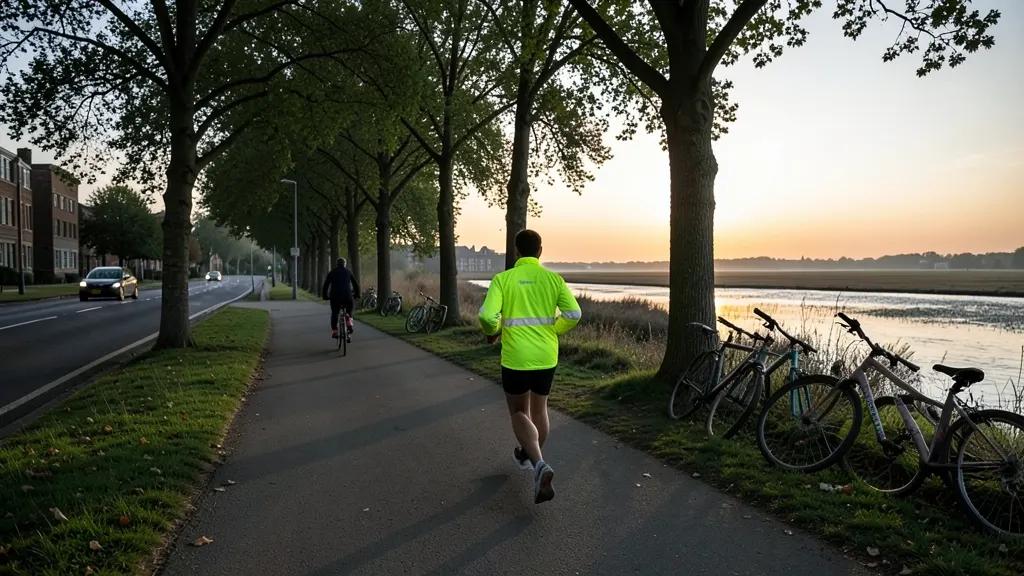
A runner's day in Cambridge
Cambridge is a city built for running. The centre has large green areas such as Jesus Green, Parker's Piece and Midsummer Common, and Sheep's Green is one of the water meadows within the city, so plenty of routes sit close to where people live and work. The land is fairly flat, which is one reason the city has the highest level of cycle use in the UK, and that same flatness makes it easy to plan a loop before work or a longer session at the weekend.
A typical runner here fits training around the working day. Many people in the city work in the industries of Silicon Fen, in fields such as software and bioscience, or at the Cambridge Biomedical Campus, one of the largest biomedical research clusters in the world. That often means a desk-bound day and a run squeezed into the edges of it, either before the commute or after it. Students and staff at the University of Cambridge, founded in 1209, and Anglia Ruskin University do much the same, running in the gaps between lectures and library sessions.
Here is where the local light becomes a problem. On the winter solstice in Cambridge, sunrise is at 08:06 and sunset is at 15:48, giving 7h 42m of daylight. In the city there are 123 days a year when sunset comes before half past five in the evening or sunrise after quarter to eight in the morning. A runner who works normal hours will therefore do at least part of their weekly training in the dark. The clocks go back on 25 October 2026, when sunset in Cambridge is at 16:44, and from that point the evening run and the drive home start to merge into the same window of gloom.
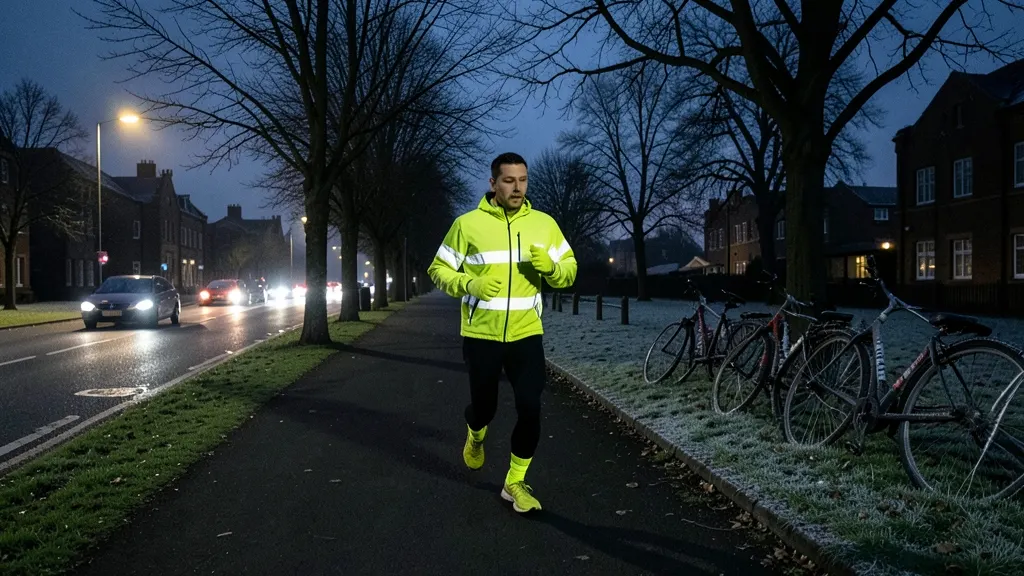
Moments when visibility matters most
Crossing and sharing the centre
Cambridge has exceptional numbers of cyclists, with 25% of residents travelling to work by bicycle according to the 2001 census. A runner on shared paths around Midsummer Common or Parker's Piece is moving among fast bicycle traffic, often in poor light. Reflective detail on your back and sides helps a cyclist spot you early and judge whether to pass or hold back.
Early starts and late finishes
Between October and the spring, a 7am run or a 5pm run is likely to be in low light or full darkness. The Highway Code's Rule 3 advises helping other road users to see you, and notes that reflective materials such as armbands, sashes, waistcoats, jackets or footwear can be seen by drivers using headlights up to three times as far away as non-reflective materials. Rule 17 puts it simply: at night, wear something reflective.
Roads out of the city
The city is adjacent to the M11 and A14, so some runners finish a long route on busier roads with fast traffic. This is the moment when maximum visibility earns its keep, because drivers at speed need to pick you out from the roadside clutter as early as possible.
Changeable weather
Flat terrain and water meadows mean fog, drizzle and low winter sun. Grey light flattens everything, and a runner in dark kit becomes part of the background. High visibility running gear with fluorescent yellow or orange panels is designed for exactly these daylight and poor light conditions.
Kit that fits each moment
A running hi vis jacket is the single most useful item for this city. Look for something lightweight and breathable enough to run in, with reflective panels at shoulders, sleeves and hem so you are visible from the side as well as front and back, not just a solid block of colour on the chest. If you want to understand what the reflective parts actually do, read How does reflective material work? A simple guide.
For the commute runner, a reflective running jacket carried in a work bag doubles as outerwear on the ride or walk home. Cyclists face the same conditions, and Hi vis jacket cycling Cambridge: a commuter guide covers the kit that works on two wheels.
Accessories fill the gaps. Reflective ankle bands move as you run, which catches the eye, and a bright hat or gloves puts fluorescent material at head height where drivers tend to look first. If you are weighing up jackets for the colder months, Winter hi vis jackets: a practical buyer's guide goes through the options, and Waterproof hi vis jackets: myths and facts is worth a read given how much rain this part of the country gets.
One thing runners often ask about is standards. EN ISO 20471 is the specification many people look for, and it has three classes based on the area of fluorescent and retroreflective material. Most running jackets sold for sport are not certified workwear, but the principle transfers: more fluorescent area helps in poor light, and more reflective area helps in headlights. If you want the detail, including what the Highway Code actually requires rather than merely suggests, see What the highway code says about hi-vis and Hi-vis jackets for running: how to choose.
Wrapping up
Cambridge gives runners flat ground, riverside paths and green space on the doorstep, but it also gives them dark evenings, heavy cycle traffic and changeable weather. The takeaway is simple: own a hi vis running jacket you actually like wearing, keep it by the door, and treat reflective detail as part of the route plan rather than an afterthought. For more on the city as a whole, see Hi-vis clothing in Cambridge: a local guide.
Frequently asked questions
Do I need hi-vis for running in Cambridge?
It is not a legal requirement for pedestrians or runners, but it makes practical sense here. Cambridge has the highest level of cycle use in the UK, so shared paths get busy, and the city has 123 days a year when sunset comes before half past five or sunrise after quarter to eight. A reflective running jacket helps cyclists and drivers pick you out in low light.
Fluorescent or reflective: which matters more for running?
They do different jobs. Fluorescent colours work in daylight and poor light such as drizzle or overcast grey, while retroreflective material only shines when a light source such as headlights or a bike lamp hits it. A good hi vis running jacket combines both, giving you cover across the whole day.
What does the Highway Code say about pedestrians wearing reflective kit?
Rule 3 advises helping other road users to see you, and notes that reflective materials such as armbands, sashes, waistcoats or jackets can be seen by drivers using headlights up to three times as far away as non-reflective materials. Rule 17 says that at night you should wear something reflective.
Is a running hi vis jacket the same as a work hi-vis jacket?
Not usually. Work jackets are often certified to EN ISO 20471, which has three classes with minimum areas of fluorescent and retroreflective material, and are cut for standing work rather than movement. Running versions are lighter and more breathable, with reflective detail placed to move with the body, but may not carry the certification.