Hi-vis clothing in the East of England
Last updated
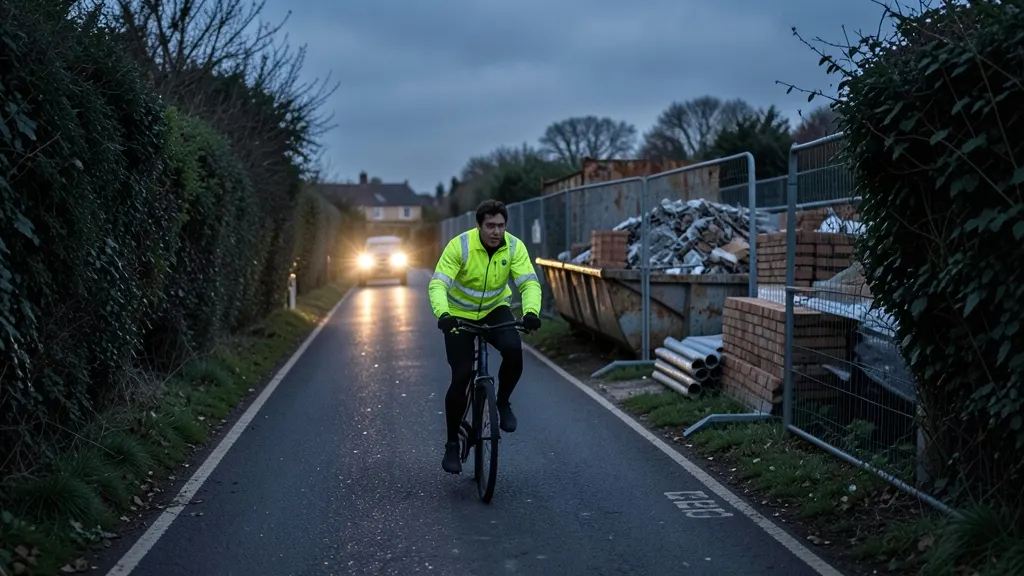
Visibility across the East of England
The East of England brings together flat, open landscapes, busy market towns and cathedral cities, long rural roads and some of the country's largest employment hubs. If you are looking for a hi vis jacket in the east of England, the same basic principles apply whether you work on a site, commute by bike or walk the dog along an unlit lane: daylight visibility comes from fluorescent material, and after dark you need retroreflective strips that light up in headlights.
What the places we cover have in common is a mix of urban commuting and rural routes that often lack street lighting. People travel between city centres, business parks and countryside on the same journey, so clothing that works in both settings matters. A garment certified to EN ISO 20471 class 2, with at least 0.50 square metres of fluorescent background material and 0.13 square metres of retroreflective material, is a sensible baseline for anyone near moving traffic. For higher-risk situations, class 3 offers at least 0.80 square metres of fluorescent material and 0.20 square metres of retroreflective material.
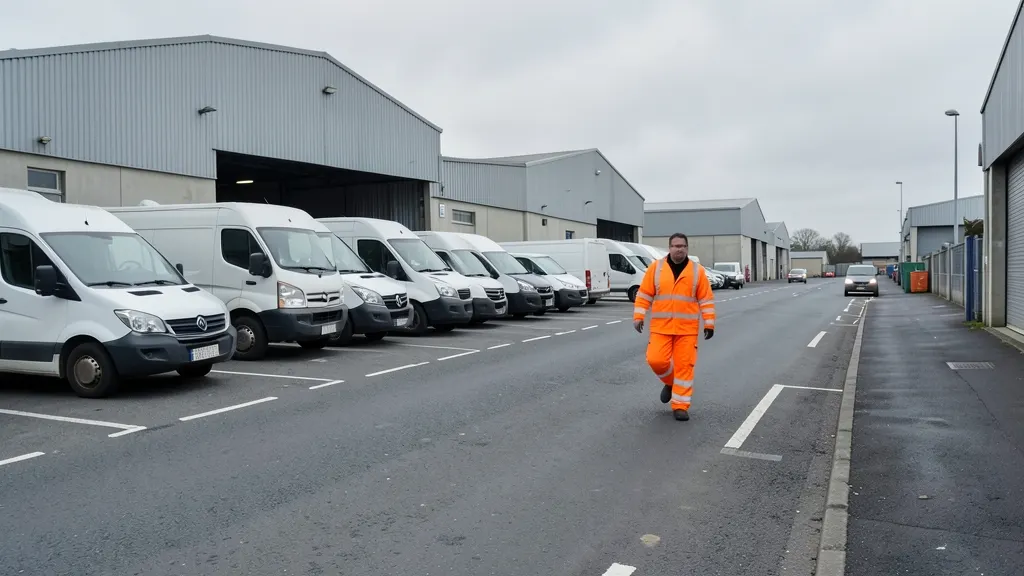
The places we cover
Cambridge
Cambridge has a population of 145,700 in the city itself, rising to 181,137 for the wider built-up area in the 2021 census. The area known as Silicon Fen is home to software and bioscience firms, and the Cambridge Biomedical Campus is one of the largest biomedical research clusters in the world. That concentration means laboratories, research support roles and construction around expanding sites, alongside one of the highest rates of cycling in the country. Our page on Hi-vis clothing in Cambridge goes into more detail.
Ipswich
Ipswich has an estimated population of 139,457. A key employment sector is insurance, covering both wholesale and retail, which brings office workers, warehouse staff and delivery drivers into the same area. See Hi-vis clothing in Ipswich for more.
Norwich
Norwich has a population of about 144,000 in the city, based on the 2021 estimate. Its largest employment sectors are business and financial services at 31% and public services at 26%, with retail at 12%, manufacturing at 8% and tourism at 7%. We cover the detail in Hi-vis clothing in Norwich.
Peterborough
Peterborough's urban area had a population of 192,178 at the 2021 census, and its main economic sectors are now financial services and distribution. Distribution work means early starts, late finishes and a lot of time around vehicles and loading bays. Our Hi-vis clothing in Peterborough page covers it.
Conditions to plan for
The region is known for big open skies, which is pleasant in summer but has a practical side in winter: wide horizons and low sun can make it genuinely hard for drivers to pick out a pedestrian or cyclist at dawn and dusk. Flat, exposed ground also means the wind can strip heat from you quickly on a bike or a long walk, so layering under your hi-vis makes sense.
Much of the road network between towns is rural, narrow and unlit. If you ride, walk or run on these roads after dark, the Highway Code is clear on the point. Rule 3 advises road users to help others see them, and notes that reflective materials such as armbands, sashes, waistcoats, jackets or footwear can be seen by drivers using headlights up to three times as far away as non-reflective materials. Rule 17 tells pedestrians to wear something reflective at night, and Rule 59 says light-coloured or fluorescent clothing helps other road users see a cyclist in daylight and poor light, while reflective belts, arm or ankle bands increase visibility in the dark.
Cyclists also need the right kit on the bike itself. Rule 60 requires a white front light and a red rear light, lit at night, plus a red rear reflector. Motorcyclists are covered by Rule 86, which recommends fluorescent clothing or strips to be visible from the side as well as front and rear, and Rule 87, which says riders should wear reflective clothing or strips in the dark.
For workers, the legal picture is straightforward. Under the Personal Protective Equipment at Work Regulations 1992, employers must provide suitable PPE to workers exposed to a health or safety risk unless that risk is adequately controlled by other means. Since 6 April 2022 those duties also cover limb (b) workers, and the employer must provide the PPE free of charge. HSE guidance adds that reusable PPE must be cleaned and kept in good condition, with hi-vis jackets, trousers and coveralls cleaned regularly, and workers must report any loss, destruction or obvious defect.
One more point for anyone working near railways: rail standard RIS-3279-TOM requires an orange colour and garments meeting at least class 2 of EN ISO 20471, according to SATRA, a UK PPE testing body.
Further reading
If you are unsure when hi-vis is actually required, rather than simply a good idea, start with our guide on When is high visibility clothing required in the UK?. For comparison with neighbouring regions, we also cover Hi-vis clothing in East Midlands and Hi-vis clothing in Greater Manchester.
Frequently asked questions
What class of hi-vis jacket do I need for commuting in this region?
For most commuting on lit urban roads, a class 2 garment is a good baseline, with at least 0.50 square metres of fluorescent material and 0.13 square metres of retroreflective material. On unlit rural roads, or where traffic is faster, class 3 offers more coverage, with at least 0.80 square metres of fluorescent material and 0.20 square metres of retroreflective material.
Is reflective or fluorescent clothing better after dark?
Fluorescent material helps in daylight and poor light, but it does little at night on its own. After dark you need retroreflective strips, which the Highway Code notes can be seen by drivers using headlights up to three times as far away as non-reflective materials.
Does my employer have to provide hi-vis clothing?
Under the Personal Protective Equipment at Work Regulations 1992, employers must provide suitable PPE to workers exposed to a health or safety risk unless the risk is controlled by other means. Since 6 April 2022 this also covers limb (b) workers, and the employer must provide the PPE free of charge.
How should I look after a hi-vis jacket?
HSE guidance says reusable PPE must be cleaned and kept in good condition, and hi-vis jackets, trousers and coveralls must be cleaned regularly. A dirty garment loses both fluorescence and reflectivity, so wash it as the label directs and report any loss or obvious defect to your employer.