Hi-vis clothing in Greater Manchester
Last updated
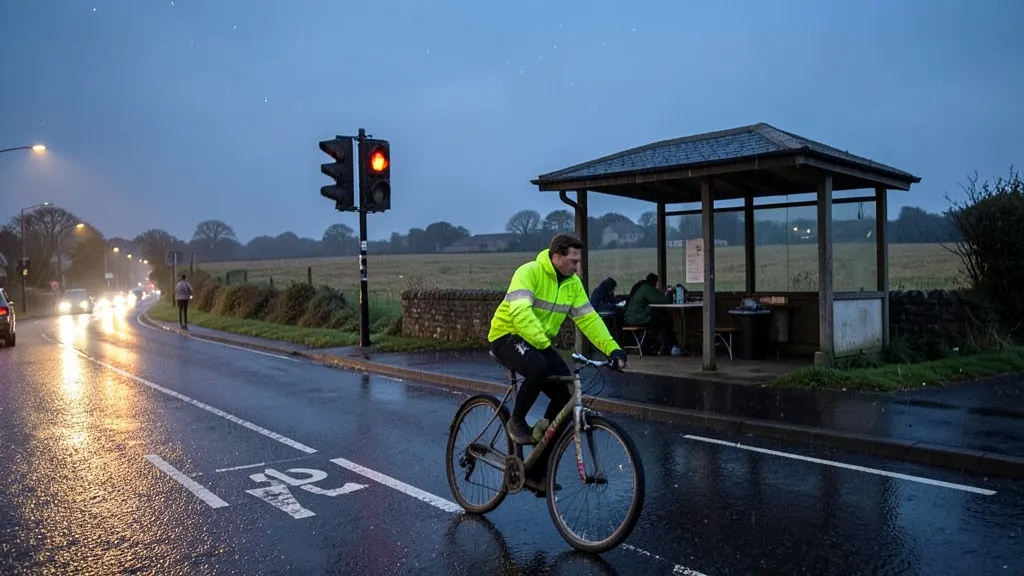
Greater Manchester is one of the busiest urban regions in the UK. It is built around the city of Manchester itself, which had a population of 552,000 at the 2021 census, surrounded by towns that grew up around industry, transport routes and the river valleys that run out towards the hills. Historically Manchester was a textile manufacturing city, so well known for its cotton mills that people called it cottonopolis, and Trafford Park became the world's first industrial estate. That industrial past still shapes the region today: a dense network of roads, railways, canals and business parks, all of which mix heavy traffic with people walking and cycling.
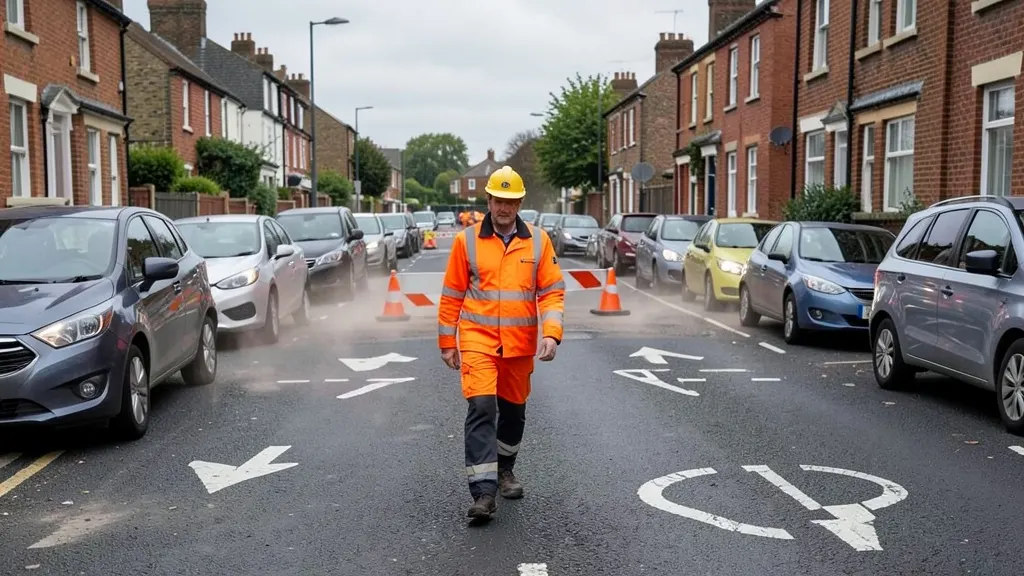
That mix is what hi-vis clothing is really about. Wherever you live in the region, the same few situations crop up. Workers step out of depots, building sites and warehouses onto roads shared with cars and lorries. Cyclists commute along busy radial routes in low light. Runners and dog walkers share park paths and towpaths with commuters. Horse riders use lanes on the edge of the built-up area. Parents and children make the school run on foot along roads that were never designed with modern traffic levels in mind. In every one of those cases, being seen early gives drivers more time to react.
Where we cover
Our guides are organised place by place, so you can find advice that fits where you actually travel. Start with the main hub for the city, which covers the centre and the districts around it: Hi-vis clothing in Manchester. The Manchester hub looks at commuting into the city centre, night work in a city that stays busy late, and cycling along the main routes in and out.
For readers who live on the other side of the region's western edge, or who travel over the county boundary for work, we also cover the neighbouring area in Hi-vis clothing in Merseyside. Beyond that, our other regional guides include Hi-vis clothing in North East England, Hi-vis clothing in Greater London and Hi-vis clothing in East of England: a regional guide, so the same practical approach is available wherever your journey takes you.
What conditions in this region mean for visibility
The urban parts of the region sit in a basin, with hills to the north and east. That geography brings grey skies, drizzle and damp air for much of the year, and it means daylight hours in winter are short. Commuters heading to work in the morning and home in the afternoon often travel in poor light or darkness for months on end. Rain, spray from wet roads and mist all cut the distance at which a driver can pick out a person, so colour and reflectivity matter more here than in a brighter county.
The road network adds its own problems. Many arterial roads carry high volumes of traffic past shops, schools and residential streets, and there are plenty of junctions, roundabouts and roadworks. Where work is being carried out on live roads, visibility becomes a safety requirement rather than a preference. Under the Personal Protective Equipment at Work Regulations 1992, employers must provide suitable PPE to workers exposed to a risk to their health or safety, unless the risk is adequately controlled by other means. Since 6 April 2022 those duties have also covered limb (b) workers, and the employer must supply the PPE free of charge.
For anyone choosing a hi-vis jacket, the key standard is EN ISO 20471, which has three classes. The minimum fluorescent background area is 0.14 square metres for class 1, 0.50 square metres for class 2 and 0.80 square metres for class 3, with minimum retroreflective areas of 0.10, 0.13 and 0.20 square metres respectively. Class 3 is the highest class, with at least 0.80 square metres of fluorescent background material and 0.20 square metres of retroreflective material, and it is the level to aim for on fast or busy roads in poor light. If you work in the region's rail sector, note that SATRA, a UK PPE testing body, states that rail standard RIS-3279-TOM requires an orange colour and garments meeting at least class 2 of EN ISO 20471.
Looking after the garment matters too. HSE guidance says reusable PPE must be cleaned and kept in good condition, and hi-vis jackets, trousers and coveralls must be cleaned regularly. A muddied jacket that never sees a wash loses much of its effect. Workers must report any loss, destruction or obvious defect.
For walkers, cyclists and riders
The Highway Code is clear about visibility, and its advice fits the region's conditions well. Rule 3 asks you to help other road users to see you, and notes that in the dark, reflective materials such as armbands, sashes, waistcoats, jackets or footwear can be seen by drivers using headlights up to three times as far away as non-reflective materials. Rule 17 simply says that at night you should wear something reflective.
Cyclists should know Rules 59 and 60. Fluorescent clothing helps other road users see you in daylight and poor light, while reflective clothing or accessories such as belts and arm or ankle bands increase visibility in the dark. At night a cycle must also have a white front light and a red rear light lit, plus a red rear reflector. Rule 69 requires cyclists to obey all traffic signs and traffic light signals. Motorcyclists are covered by Rules 86 and 87: make yourself as visible as possible from the side as well as the front and rear, for example with fluorescent clothing or strips, and when riding in the dark wear reflective clothing or strips.
Where to read next
For the detail on standards and legal duties, see When is high visibility clothing required in the UK?, which explains when employers must supply hi-vis and what class of garment the law expects. Then dip into the place guides, beginning with Hi-vis clothing in Manchester, to find advice shaped to your own routes.
Frequently asked questions
What class of hi-vis jacket do I need in Greater Manchester?
For roadside work or cycling on busy main roads, aim for class 3 under EN ISO 20471, which requires at least 0.80 square metres of fluorescent background material and 0.20 square metres of retroreflective material. Class 2, with 0.50 square metres of fluorescent background, suits lower-risk areas. Rail workers should check RIS-3279-TOM, which SATRA states requires an orange colour and at least class 2.
Does my employer have to provide hi-vis clothing?
Under the Personal Protective Equipment at Work Regulations 1992, employers must provide suitable PPE to workers exposed to a health or safety risk unless it is controlled by other means. Since 6 April 2022 these duties also cover limb (b) workers, and the employer must provide the PPE free of charge.
How far away can drivers see reflective clothing at night?
Rule 3 of the Highway Code states that reflective materials such as armbands, sashes, waistcoats, jackets or footwear can be seen by drivers using headlights up to three times as far away as non-reflective materials. In the dark and wet conditions common in this region, that extra distance gives drivers vital extra reaction time.
How often should a hi-vis jacket be washed?
HSE guidance says reusable PPE must be cleaned and kept in good condition, and hi-vis jackets, trousers and coveralls must be cleaned regularly. Dirt and grime reduce both fluorescence and reflectivity. Workers must also report any loss, destruction or obvious defect.