Hi-vis clothing in Merseyside
Last updated
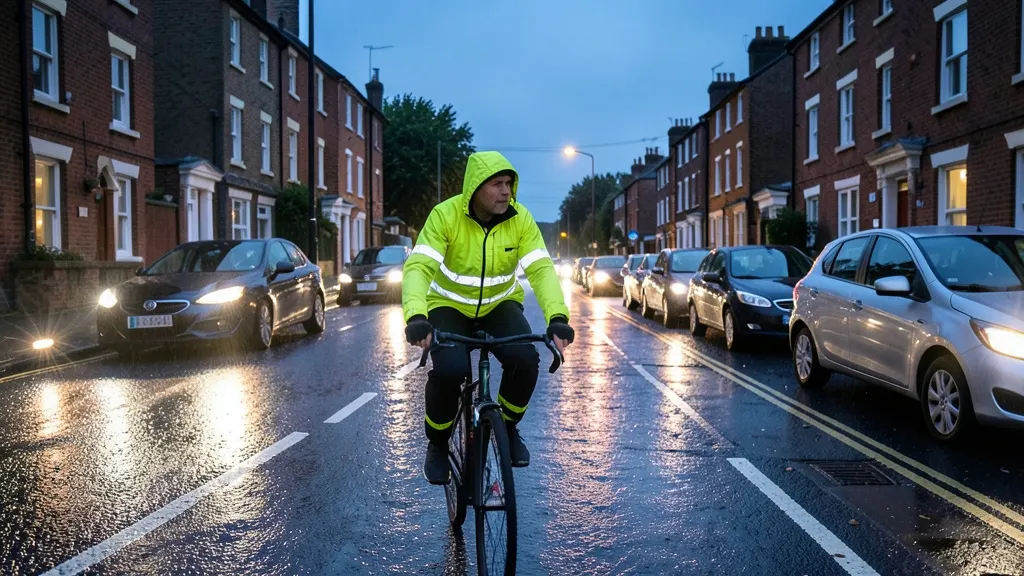
Merseyside is a compact, busy metropolitan county in the north west of England. Its defining feature, for anyone thinking about visibility, is that daily life tends to happen near traffic. Commuters walk and cycle into the city centre, shift workers start and finish in the dark for much of the year, and the roads carry a steady mix of buses, vans and lorries alongside people on foot. Liverpool itself, with a population of 486,100 at the 2021 census, is the centre of it all, and the surrounding towns share the same rhythm of urban roads, industrial estates and coastal winds.
What the places in this region have in common is a need to be seen at either end of the working day. Whether you are a site worker, a cyclist, a dog walker or a parent doing the school run, the same logic applies: fluorescent material helps drivers spot you in daylight and poor light, while reflective strips catch headlights after dark. The Highway Code makes the point directly. Rule 3 asks all road users to help others see them, noting that in the dark reflective materials such as armbands, sashes, waistcoats, jackets or footwear can be seen by drivers using headlights up to three times as far away as non-reflective materials.
The places we cover
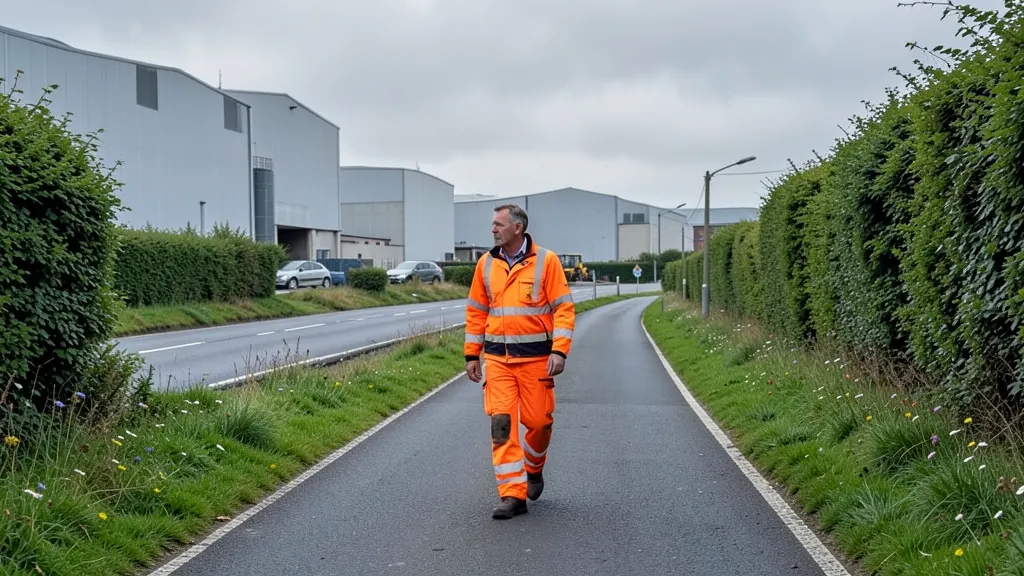
We are building this guide place by place. At the moment, our focus is on the largest centre of population and employment.
Liverpool
Liverpool's economy spans tourism, culture, maritime activity, hospitality, healthcare, life sciences, advanced manufacturing and the creative and digital sectors. That mix matters for visibility because it puts people on the roads at all hours: port and logistics shifts, hospital workers travelling before dawn, hospitality staff walking home late, and a steady stream of cyclists and commuters crossing a dense urban street network. If you work or travel in the city, our Hi-vis clothing in Liverpool page goes into more detail on the local streets, the shift patterns and the sort of garment that suits each.
Conditions that shape visibility in the region
The north west of England is known for grey skies and rain, and that has a real effect on how visible you are. Overcast days cut contrast, so a fluorescent yellow or orange jacket stands out far better than a dark coat. Rain makes things worse in two ways: it dims colours on the road surface, and it encourages drivers to keep their headlights on, which in turn means reflective material earns its keep even during the day.
In winter, the region's latitude means short days and long periods of dusk. Many workers commute in near-darkness at both ends of the day, so a garment with decent retroreflective coverage is worth more than a bigger patch of fluorescent colour alone. Windy conditions near the coast also favour fitted garments, such as a jacket with cuffs and a drawcord, over loose tabards that flap about.
For employers, the legal baseline is the Personal Protective Equipment at Work Regulations 1992, which require suitable PPE to be provided to workers exposed to a risk to health or safety unless that risk is adequately controlled by other means. Since 6 April 2022 those duties also cover limb (b) workers, and the employer must provide the PPE free of charge. Garments should be chosen against EN ISO 20471, which has three classes. Class 1 requires at least 0.14 m2 of fluorescent background material, class 2 at least 0.50 m2, and class 3, the highest class, at least 0.80 m2 of fluorescent background and 0.20 m2 of retroreflective material. Most roadside and construction work calls for class 2 as a minimum, with class 3 for high-risk settings such as motorway work.
HSE guidance adds a maintenance duty: reusable PPE must be cleaned and kept in good condition, hi-vis jackets, trousers and coveralls must be cleaned regularly, and workers must report any loss, destruction or obvious defect. A grubby hi-vis jacket that has lost its fluorescence is not doing its job, so washing it properly and replacing it when it fades is part of compliance, not vanity.
Advice by activity
Cyclists should follow the Highway Code's rules on lights and visibility. Rule 59 says light-coloured or fluorescent clothing can help other road users see a cyclist in daylight and poor light, while reflective clothing or accessories such as belts, arm or ankle bands increase visibility in the dark. Rule 60 requires a white front light and red rear light lit at night, plus a red rear reflector. Rule 86 and Rule 87 give motorcyclists similar advice: make yourself visible from the side as well as front and rear with fluorescent clothing or strips, and wear reflective material when riding in the dark. Horse riders and walkers are covered by Rule 3 and Rule 17, which says simply that at night you should wear something reflective to make it easier for others to see you.
If you work on or near the railways, note that rail standard RIS-3279-TOM requires an orange colour and garments meeting at least class 2 of EN ISO 20471, as stated by SATRA, a UK PPE testing body.
Where to read next
For the wider picture on when hi-vis is legally required, read When is high visibility clothing required in the UK?. We also cover other regions, including Hi-vis clothing in Greater Manchester, Hi-vis clothing in North East England and Hi-vis clothing in Greater London. If you are further south, see our Hi-vis jacket East Midlands: a regional guide or the Hi-vis clothing in East of England: a regional guide.
Frequently asked questions
What class of hi-vis jacket do I need in Merseyside?
For most work near traffic or on construction sites, a class 2 garment under EN ISO 20471 is the usual minimum, giving at least 0.50 m2 of fluorescent background material. Class 3, with at least 0.80 m2 of fluorescent background and 0.20 m2 of retroreflective material, is the highest class and suits higher-risk settings such as motorway work. For cycling, walking or dog walking, there is no legal class requirement, though a jacket with both fluorescent and reflective panels is the practical choice.
Does my employer have to provide a hi-vis jacket for free?
Under the Personal Protective Equipment at Work Regulations 1992, employers must provide suitable PPE to workers exposed to a risk to health or safety unless the risk is adequately controlled by other means. Since 6 April 2022, these duties also cover limb (b) workers, and the employer must provide the PPE free of charge.
Do I legally need reflective clothing for cycling at night?
The Highway Code does not make reflective clothing a legal requirement, but Rule 59 says light-coloured or fluorescent clothing helps other road users see a cyclist in daylight and poor light, and reflective clothing or accessories increase visibility in the dark. What is legally required at night, under Rule 60, is a lit white front light, a lit red rear light and a red rear reflector on the cycle.
How do I look after a hi-vis jacket?
HSE guidance says reusable PPE must be cleaned and kept in good condition, and that hi-vis jackets, trousers and coveralls must be cleaned regularly. Workers must report any loss, destruction or obvious defect. Wash the garment according to its label, keep it out of unnecessary sunlight when stored, and replace it once the fluorescent colour fades or the reflective strips stop catching headlights.