Hi-vis clothing in Greater London
Last updated
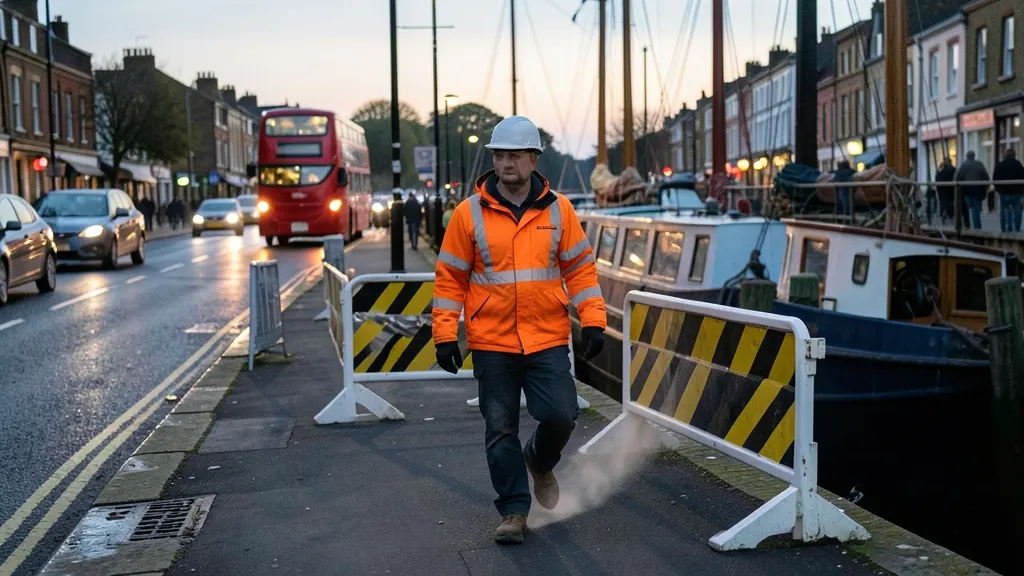
Greater London is the sort of place where being seen matters as much as getting there. With a population estimated at 9,122,909 in 2025, the city mixes dense streets, fast-moving traffic and crowded pavements in a way few UK regions can match. Its industries, including finance, media and tourism, form Europe's largest city economy and one of the world's major financial centres, which means construction, maintenance and delivery work never really stops.
What the places in this region share is constant exposure. Workers step from lit depots onto busy roads, cyclists share space with buses and taxis, and runners, dog walkers and parents on the school run all move through the same congested streets, often in poor light. High visibility clothing is the common thread that ties these groups together.
Why visibility counts in the capital
The Highway Code sets out the basics clearly. Rule 3 asks all road users to help others see them, and notes that in the dark, reflective materials such as armbands, sashes, waistcoats, jackets or footwear can be seen by drivers using headlights up to three times as far away as non-reflective materials. Rule 17 says that at night, wear something reflective to make it easier for others to see you.
For cyclists, Rule 59 recommends light-coloured or fluorescent clothing in daylight and poor light, and reflective clothing or accessories such as belts, arm or ankle bands in the dark. Rule 60 adds that at night a cycle must have white front and red rear lights lit, and a red rear reflector. Rule 86 advises motorcyclists to make themselves as visible as possible from the side as well as the front and rear, for example with fluorescent clothing or strips, and Rule 87 says that when riding in the dark, motorcyclists should wear reflective clothing or strips.
Places we cover in Greater London
Our local hub gathers the practical guidance for the city in one place. If you work, cycle or walk in the capital, read the Hi-vis clothing in London page for advice shaped around urban streets, night shifts and the school run. It explains what to look for in a hi-vis jacket for London conditions and how the different classes of garment compare.
We also cover other UK regions, and the same standards apply wherever you travel for work. If your job takes you further afield, see our guides for the Hi-vis clothing in East of England: a regional guide, the Hi-vis jacket East Midlands: a regional guide or the Hi-vis jacket North East England: local guide.
Understanding hi-vis classes
EN ISO 20471 has three classes. The minimum fluorescent background area is 0.14 m2 for class 1, 0.50 m2 for class 2 and 0.80 m2 for class 3, with minimum retroreflective areas of 0.10, 0.13 and 0.20 m2 respectively. Class 3 is the highest class, with at least 0.80 m2 of fluorescent background material and 0.20 m2 of retroreflective material.
For most street work in London, class 2 is the common choice for jackets and vests, while class 3 suits those working near faster traffic or in low light for long shifts, such as roadside crews and night workers. SATRA, a UK PPE testing body, states that rail standard RIS-3279-TOM requires an orange colour and garments meeting at least class 2 of EN ISO 20471, which matters if you work on or near the rail network.
The law for workers
Under the Personal Protective Equipment at Work Regulations 1992, employers must ensure suitable PPE is provided to workers exposed to a risk to health or safety, unless the risk is adequately controlled by other means. Since 6 April 2022 these duties also cover limb (b) workers, and the employer must provide the PPE free of charge. If you are employed in the capital and your role exposes you to traffic, your employer should supply and maintain your hi-vis.
Looking after the garment is your part of the deal. HSE guidance says reusable PPE must be cleaned and kept in good condition, and that hi-vis jackets, trousers and coveralls must be cleaned regularly. Workers must report any loss, destruction or obvious defect. A jacket caked in city grime reflects far less light than a clean one, so regular washing is not just about appearances.
Where to read next
For the rules on when hi-vis is needed at work in the UK, read When is high visibility clothing required in the UK?. It covers employer duties, risk assessment and how the EN ISO 20471 classes fit into everyday decisions. Our guides for Hi-vis clothing in Greater Manchester and Hi-vis clothing in Merseyside: a regional guide follow the same format if you want to compare regions or plan work across the country.
Frequently asked questions
What class of hi-vis jacket do I need in London?
It depends on the risk. EN ISO 20471 class 2, with a minimum of 0.50 m2 of fluorescent background material and 0.13 m2 of retroreflective material, is a common choice for general street and site work. Class 3, with at least 0.80 m2 of fluorescent material and 0.20 m2 of retroreflective material, suits higher-risk settings such as work near faster traffic or night shifts. If you work on or near the railway, SATRA states that rail standard RIS-3279-TOM requires an orange colour and garments meeting at least class 2.
Does my employer have to provide hi-vis clothing?
Yes, where there is a risk to health or safety. Under the Personal Protective Equipment at Work Regulations 1992, employers must provide suitable PPE unless the risk is adequately controlled by other means. Since 6 April 2022 these duties also cover limb (b) workers, and the employer must provide the PPE free of charge.
Is hi-vis clothing useful for cyclists in London?
The Highway Code's Rule 59 says light-coloured or fluorescent clothing can help other road users see a cyclist in daylight and poor light, while reflective clothing or accessories such as belts or arm and ankle bands can increase visibility in the dark. Rule 60 adds that at night a cycle must have white front and red rear lights lit, and a red rear reflector.
How should I look after a hi-vis jacket?
HSE guidance says reusable PPE must be cleaned and kept in good condition, and hi-vis jackets, trousers and coveralls must be cleaned regularly. Workers must report any loss, destruction or obvious defect. Dirt and grime reduce how well the fabric reflects light, so a regular wash keeps the garment working properly.