Hi-vis for the school run: children in Bristol
Last updated
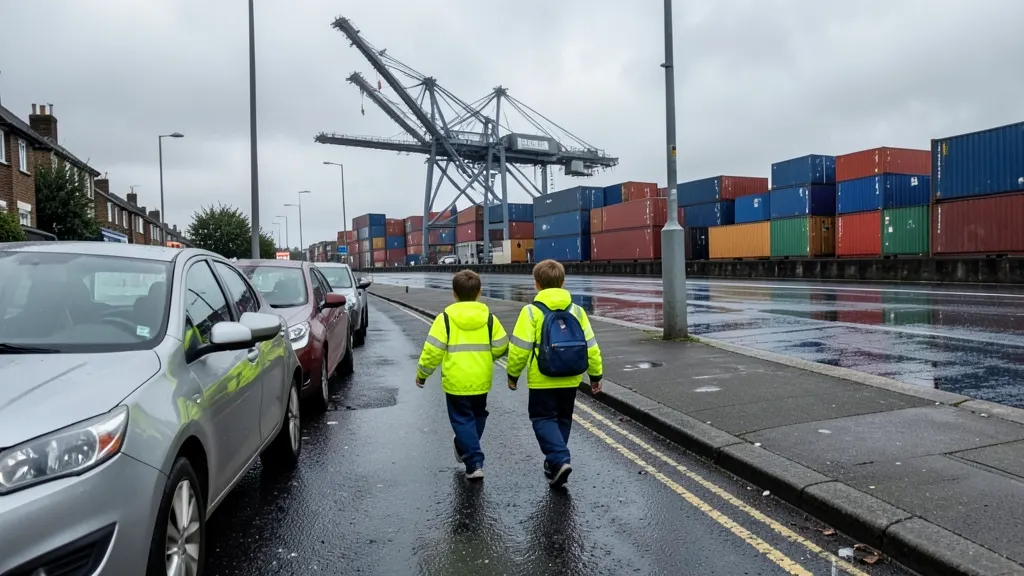
Bristol is a busy port city in South West England with a population of 494,399 (2024 estimate), and like most big cities its residential streets get crowded at drop-off and pick-up times. Many families live in narrow, hilly streets where parked cars line the kerbs and children dart between vehicles and lamp posts. A childs hi vis jacket is one of the simplest ways to make sure a small person is spotted, especially in the darker months. This page answers the questions parents in Bristol actually ask when they are choosing a school hi vis jacket.
The questions parents ask
Does my child actually need a hi-vis jacket for the walk to school?
There is no law requiring a child to wear one, so this is a judgement call rather than a rule. What is beyond doubt is that visibility drops fast in a Bristol winter. On the winter solstice, sunrise in Bristol is at 08:13 and sunset is at 16:03, which means the afternoon school run often happens in the dark. Bristol has 119 days a year when sunset comes before half past five in the evening or sunrise after quarter to eight in the morning, so for a large part of the year a normal walk to school happens partly in poor light. A kids hi vis jacket helps because the fluorescent material stands out in daylight and grey conditions, while the reflective bands light up under headlights after dark.
What is the difference between fluorescent and reflective?
Fluorescent colours work by converting ultraviolet light into visible light, which makes the material appear brighter than its surroundings in daylight or poor light. Reflective material works differently: it bounces light from a source such as headlamps straight back towards the driver. They do two different jobs, which is why a proper childrens high visibility jacket combines both. If you want the science in plain terms, see our guide on How does reflective material work? A simple guide.
Which colour should I pick, yellow or pink?
Yellow-green is the classic choice because that part of the visible spectrum is where human eyes notice contrast against most backgrounds. Pink, orange and lime are all widely sold, and the brightest colour is the one your child will happily wear every day. On a grey Bristol morning with rain in the air, any fluorescent colour does the job better than a dark coat. If your child refuses to wear a jacket at all, reflective arm bands or a rucksack cover with reflective panels is a workable compromise.
Do school hi vis jackets follow a standard?
The main standard for high visibility clothing is EN ISO 20471, which has three classes based on how much fluorescent background material and retroreflective material a garment contains. Class 1 is the lowest, with at least 0.14 m2 of fluorescent background material and 0.10 m2 of retroreflective material. Class 2 requires at least 0.50 m2 of fluorescent background material and 0.13 m2 retroreflective. Class 3, the highest, needs at least 0.80 m2 of fluorescent background material and 0.20 m2 of retroreflective material. For a childs hi vis jacket Bristol weather and traffic make a class 2 garment a sensible target, since it offers a good balance of visibility and comfort for a small body. Class 3 is more common in adult workwear for high-risk roads and professional settings, and is rarely necessary for a six-year-old walking to school.
How Bristol conditions change the answers
Bristol's geography matters more than you might think when choosing hi-vis for children.
Darkness arrives early
The clocks go back on 25 October 2026, when sunset in Bristol is at 16:56. From that point, afternoon collection happens in dusk or full darkness. Check the garment has genuine reflective bands rather than just bright fabric, because after dark the reflective strips are what a driver sees first. For more on the rules of the road, our page on What the highway code says about hi-vis covers Rule 3, which says reflective materials can be seen by drivers using headlights up to three times as far away as non-reflective materials, and Rule 17, which advises wearing something reflective at night.
Rain and damp change everything
A port city on a river estuary means damp, drizzly mornings. Wet roads scatter light and make everyone harder to see, so reflective material earns its keep. A waterproof childrens high visibility jacket also stops the usual moaning about wearing a coat. We cover the practical myths around this in Waterproof hi vis jackets: myths and facts.
Hills and parked cars block sightlines
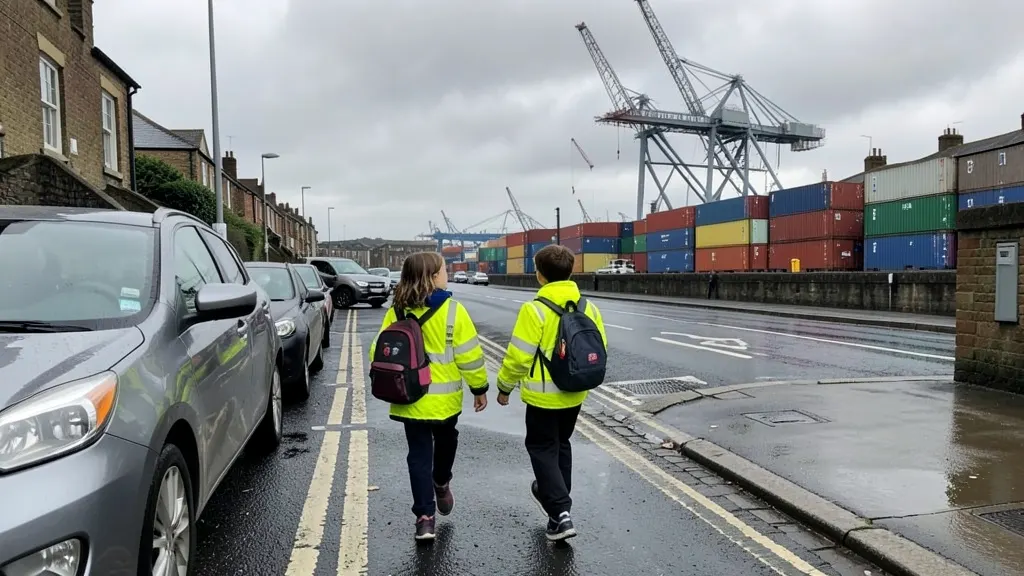
Bristol's residential streets are often steep and narrow, with cars parked on both sides. Drivers inching uphill with limited forward vision need every bit of warning that a child is about to step out. A jacket with reflective bands around the sleeves is worth having, because side visibility matters when a child crosses between parked cars.
Some children cycle or scoot
Plenty of Bristol families use the school run to build cycling confidence, and the city has off-road options such as the Bristol and Bath Railway Path, a 15-mile (24 km) footpath and cycleway that forms part of National Cycle Route 4. The Highway Code says at night a cycle must have a white front light, a red rear light lit and a red rear reflector (Rule 60), and Rule 59 says light-coloured or fluorescent clothing helps in daylight and poor light, while reflective belts, arm or ankle bands increase visibility in the dark. For commuting parents, see Hi-vis for cycling and commuting in Bristol.
Quick recommendations
- Choose a class 2 garment where you can, and check the label for the standard.
- Prioritise real reflective bands over bright fabric alone, especially for the walk home after dark.
- Look for a waterproof option for wet mornings, or layer a hi-vis vest over a warm coat.
- Get reflective arm bands or a sash as a backup for the days the jacket is forgotten.
- Let your child pick the colour. A jacket worn every day beats a perfect jacket left at home.
For more on the city generally, see our main page on Hi-vis clothing in Bristol, and for a deeper look at what works and what is marketing, read Kids hi vis jackets: myths and facts. Our wider guide on How to keep children visible walking to school has more detail on routines and habits, and Winter hi vis jackets: a practical buyer's guide helps if you want something that lasts the whole season.
Frequently asked questions
At what age should a child start wearing hi-vis on the school run?
There is no set age. Many parents start with a harness or vest attached to a coat at toddler age and move to a proper kids hi vis jacket once a child walks independently. Whatever the age, the aim is the same: making a small person easier to spot near traffic.
Is a childs hi vis jacket a legal requirement in the UK?
No. There is no law requiring children to wear high visibility clothing. The Highway Code advises wearing something reflective at night (Rule 17) and says reflective materials can be seen by drivers using headlights up to three times as far away as non-reflective materials, but it is advice rather than a legal duty.
What does EN ISO 20471 mean on a child's jacket label?
It means the garment has been assessed against the high visibility clothing standard, which has three classes based on the areas of fluorescent and retroreflective material. Class 1 is the lowest, class 2 is the middle tier and class 3 is the highest, requiring at least 0.80 m2 of fluorescent background material and 0.20 m2 of retroreflective material.
Do reflective strips work in the rain?
Yes, reflective material bounces light back from headlights regardless of damp conditions, though heavy rain does reduce what any driver can see. That is exactly why reflective bands matter on wet Bristol mornings, since wet roads and grey skies lower overall visibility for everyone.
How do I keep a hi-vis jacket effective?
Wash it as the label instructs, because grime and wear reduce both fluorescence and reflectivity. Check the reflective strips still glow when a torch or car headlights hit them, and replace the jacket if the strips crack or peel. The Health and Safety Executive's guidance on cleaning reusable hi-vis applies to workwear, but the same principle holds at home: a clean garment works better.