Hi-vis for cycling and commuting in Bristol
Last updated
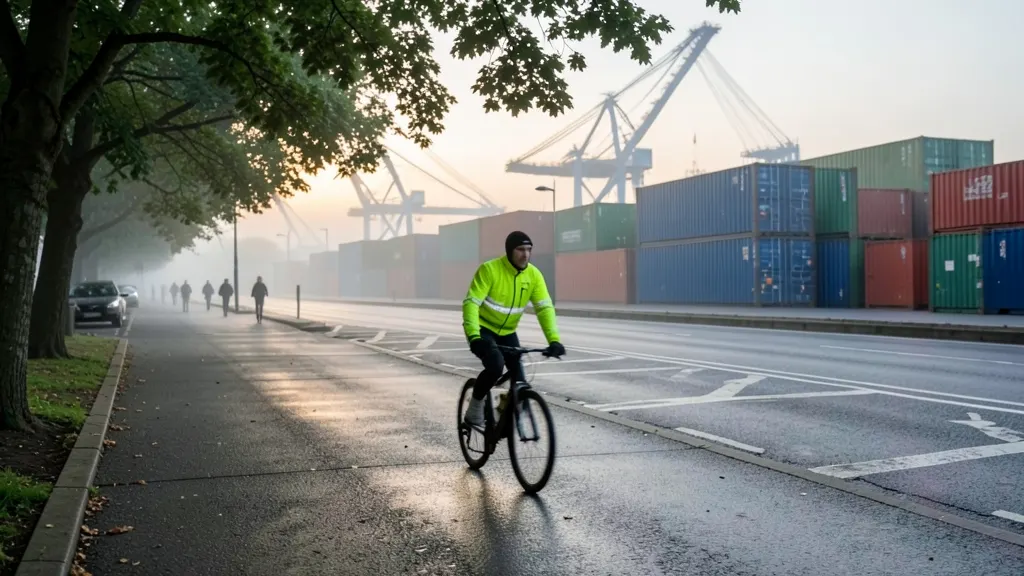
A commuter's morning in Bristol
It is a grey Tuesday in late November and the alarm goes off before seven. In Bristol at this time of year, the sun is still well below the horizon, and on the winter solstice it does not rise until 08:13. Our commuter, a graphic designer who works near the centre, pulls on a base layer, grabs the pannier with a laptop in it, and opens the front door onto a dark street.
The bike comes out of the hallway. Lights are checked first: white front light, red rear light, red rear reflector, all required at night under Rule 60 of the Highway Code. Then the high visibility cycling jacket goes on over everything. It is fluorescent yellow with retroreflective bands around the chest and sleeves, and it is the single most visible thing about the rider as they set off.
For the first ten minutes the route runs through residential streets where parked cars, delivery vans and school traffic share the road. Headlights sweep across junctions. This is where a cycling hi vis jacket earns its keep, because drivers approaching from side roads get a bright block of colour in their headlights long before they would pick out a dark jacket.
Then the commute reaches the Bristol and Bath Railway Path. This is a 15-mile (24 km) off-road cycleway and footpath, part of National Cycle Route 4, and for many people who ride to work it is the spine of the daily journey. Being off-road changes the risk. There are no cars here, but there are pedestrians, dog walkers, other cyclists, and students heading for the University of Bristol or the University of the West of England. A reflective jacket still matters, because in the dark the retroreflective panels light up in other riders' headlights and let them judge speed and distance. Bell, decent front beam, and a steady pace are the tools for this stretch.
By the time the last stretch of road before the office arrives, the sky is starting to grey towards dawn. The reflective panels still catch the headlights, but the fluorescent yellow is also doing quieter work, making the rider stand out against wet tarmac and stone walls.
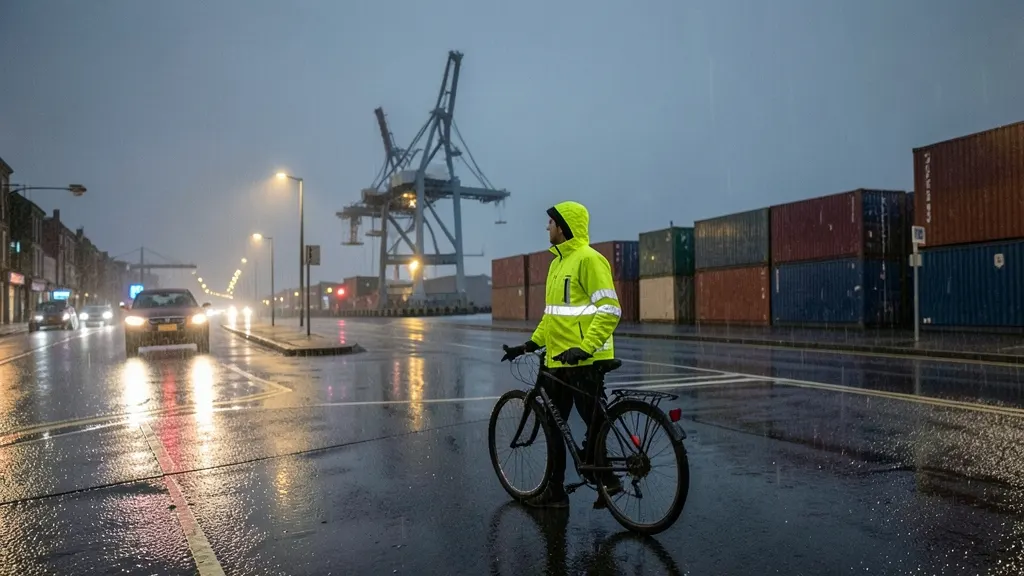
When visibility matters most
There are two or three moments on every Bristol commute when being seen really counts.
Roundabouts and junctions. Drivers are watching for cars, not bikes. A rider in dark clothing sitting in a driver's blind spot simply is not there until the last moment.
The changeover from shared path to road. Stepping off the railway path onto a road junction means a sudden mix of pedestrians, riders and vehicles. Bright clothing helps everyone read the situation faster.
Grey, wet afternoons. Bristol sees plenty of drizzle. Rain shortens the distance at which a driver can pick out a shape, and spray and misted windscreens make it worse. Rule 59 of the Highway Code says it plainly: light-coloured or fluorescent clothing can help other road users see a cyclist in daylight and poor light, while reflective clothing or accessories, such as belts, arm or ankle bands, can increase visibility in the dark.
The evening return. With sunset in Bristol as early as 16:03 on the shortest day, the ride home is almost always in full darkness. On 119 days a year here, sunset falls before half past five or sunrise comes after quarter to eight, so a normal commute runs partly in the dark. The reflective material is what counts then, because it can be seen by drivers using headlights up to three times as far away as non-reflective materials, as Rule 3 explains.
Kit that fits each moment
The right jacket depends on when and where you ride.
A standard cycling hi vis jacket with fluorescent background material and retroreflective bands covers most commuting. If you want a certified garment, EN ISO 20471 has three classes, with a minimum fluorescent background area of 0.14 m2 for class 1, 0.50 m2 for class 2 and 0.80 m2 for class 3, plus minimum retroreflective areas of 0.10, 0.13 and 0.20 m2. For riding on roads, a class 2 jacket is a sensible level.
A waterproof hi vis jacket is worth having for winter. A soaked commuter arrives cold and miserable, and a wet jacket can also flatten the contrast that makes hi-vis work. A breathable waterproof shell in fluorescent colour, with taped seams and reflective piping, keeps the rider dry and visible. Our waterproof hi vis jacket guide separates the myths from the facts, and our winter hi vis jacket guide covers what to look for in the colder months.
Lights and extras. Legal lights are non negotiable at night, and ankle bands are underrated: the pedalling motion of a reflective band around the ankle draws the eye in a way a static patch does not.
If you ride to work and want to understand the rules in full, our page on what the highway code says about hi-vis sets them out. For wider local advice, see our overview of hi-vis clothing in Bristol.
Wrapping up
A Bristol commuter's day, from a pre-dawn departure to a ride home in the dark, is full of moments where a driver's first split-second glance decides everything. Fit the kit to the moment: fluorescent colour for grey daylight, reflective panels for headlights, waterproofing for rain, and legal lights whenever darkness falls. The one takeaway is simple. Be boring to look at on the street and impossible to miss in the headlights.
Frequently asked questions
What should I look for in a hi vis jacket for cycling in Bristol?
Look for a fluorescent background colour plus retroreflective bands, because Bristol commutes often mix grey daylight with dark evenings. If you want a certified garment, EN ISO 20471 class 2, with at least 0.50 m2 of fluorescent background material, is a sensible level for road riding. A waterproof version is useful given how wet the winters are.
Do I still need bike lights if I wear a high visibility jacket?
Yes. Under Rule 60 of the Highway Code, at night a cycle must have a white front light, a red rear light lit, and a red rear reflector. Hi-vis clothing helps drivers see you, but lights are a legal requirement and also let you see the path ahead on dark stretches.
How many days a year is my Bristol commute in the dark?
In Bristol there are 119 days a year when sunset comes before half past five in the evening or sunrise comes after quarter to eight in the morning. On the winter solstice, sunrise is at 08:13 and sunset is at 16:03, so midwinter commutes run almost entirely in darkness.
Is a hi vis jacket useful on off-road paths like the railway path to Bath?
It is. The Bristol and Bath Railway Path is off-road, so there is no traffic, but it is shared with pedestrians, dog walkers and other riders. Reflective panels light up in other riders' headlights, helping everyone judge distance and speed in the dark.
Does reflective material really make a difference to drivers?
Yes. Under Rule 3 of the Highway Code, reflective materials such as armbands, sashes, waistcoats, jackets or footwear can be seen by drivers using headlights up to three times as far away as non-reflective materials. That extra distance gives a driver more time to react.