Hi-vis for running in Brighton and Hove
Last updated
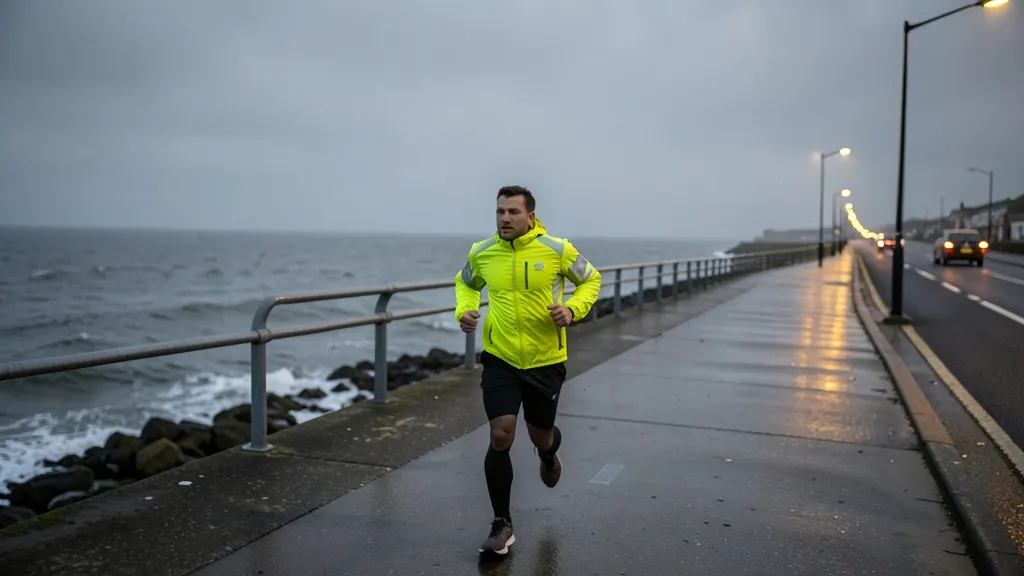
If you run in Brighton and Hove through the autumn and winter, you will spend a lot of your time in the dark. On the winter solstice the sun rises at 08:00 and sets at 15:56, giving just 7 hours and 57 minutes of daylight. Across the year there are 121 days when sunset falls before half past five in the evening or sunrise comes after quarter to eight in the morning. Anyone who squeezes a run in before work or after the school run will be out in low light or full darkness for much of that stretch.
The city makes this problem sharper. Brighton and Hove sits in the South Downs National Park, so runners mix coastal and downland routes with busier city streets. The A23 and A27 serve the city, and traffic to and from the industrial port at Portslade-by-Sea adds lorries to local roads. A dark morning run from a residential street onto a main road, or an evening loop that crosses traffic on the way back from the seafront, puts you close to drivers who may be dealing with low winter sun, rain on the windscreen and headlights in their eyes. A dark running top does almost nothing to help them.
What the dark winter commute means for your running kit
The clocks go back on 25 October 2026, and sunset in Brighton and Hove that day is at 16:48. From that point on, evening runs are dark runs. What you wear needs to work in two different situations, and this is where many runners go wrong.
In daylight and poor light, fluorescent colours do the work. A bright yellow or pink running hi vis jacket catches attention in grey, drizzly conditions, which Brighton and Hove gets plenty of. In darkness the job changes. Fluorescent material fades into the background under headlights. What matters then is retroreflective material, which bounces light from headlamps straight back to the driver. The Highway Code makes the point plainly: Rule 3 says that in the dark, reflective materials such as armbands, sashes, waistcoats, jackets or footwear can be seen by drivers using headlights up to three times as far away as non-reflective materials. Rule 17 simply says that at night, you should wear something reflective to make it easier for others to see you.
If your reflective running jacket has large panels of retroreflective material on the chest, back, sleeves and lower legs area, a driver sees a moving human shape rather than a vague smudge. Movement itself is a strong signal, which is why reflective strips at joints work so well.
Choosing a running hi vis jacket that solves it
A running jacket is not the same as a work site jacket. You need visibility, but you also need to move, breathe and stay comfortable. Here is what to look for.
Both fluorescent and reflective areas. The best high visibility running gear combines a bright fluorescent background with retroreflective detailing. If you can only choose one for a dark commute, put reflective panels first, since that is what headlights will pick up.
Reflective panels that move. Look for strips on the sleeves, across the shoulders and around the hem. A static panel on the chest disappears when you turn, so coverage on multiple sides matters.
Breathable, lightweight fabric. You heat up quickly when running, and a heavy jacket that makes you sweat will get left at home. A good running jacket is light enough to tie around your waist if you warm up.
Some weather resistance. Sea air, drizzle and wind off the water are part of running here. A jacket that shrugs off light rain is worth having, though in heavy rain you may want more specialised protection. Our guide to waterproof hi vis jackets covers the trade-offs, and for colder months the winter hi vis jacket buyer's guide goes into warmth in more detail.
A bright colour you will actually wear. Neon yellow shows up well, but some runners prefer bright pink or orange. Any strongly fluorescent colour does the daylight job, and the reflective panels do the night job, so pick something you will put on without hesitation.
For more detail on fit and features, see Hi-vis jackets for running: how to choose. If you want to understand why reflective tape works the way it does, How does reflective material work? A simple guide explains it simply.
Care, washing and knowing when to replace
Retroreflective material does not last forever. Dirt, sweat and repeated washing slowly dull the glass beads or microprisms that bounce light back. Health and Safety Executive guidance for workplace kit makes the sensible point that hi-vis garments must be cleaned regularly and kept in good condition, with any obvious defect reported. Runners should take a similar attitude, since a muddied jacket that no longer reflects is just a jacket.
Wash your jacket according to its label, usually a cool, gentle cycle with ordinary detergent. Skip fabric conditioners, which can leave a film that clouds reflective surfaces, and avoid tumble drying unless the label says otherwise. Let it dry naturally rather than on a radiator, which can damage the coating.
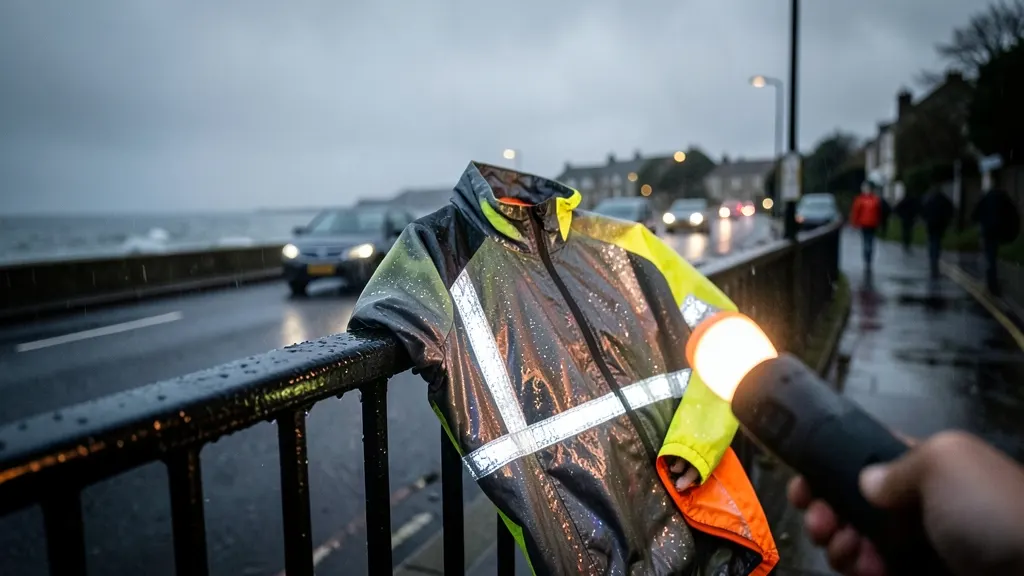
Check the jacket now and then in a dark room with a torch or phone light. If the reflective strips look dim or patchy, or the fluorescent fabric has faded grey, it is time to replace it. Also check the fit: a jacket worn over a thicker winter base layer needs a bit of room.
A worn jacket is not just untidy, it is a safety issue on dark roads. Replacing it costs less hassle than an incident on a wet evening.
Getting started in Brighton and Hove
Whether you run along the seafront, up onto the downland edge of the South Downs National Park, in Preston Park, or around the campuses of the University of Sussex and University of Brighton, the principle is the same: assume drivers cannot see you until your clothing proves otherwise. Our What to wear running in the dark: a practical guide covers the full kit list beyond the jacket, including lights and accessories. Cyclists in the city face the same winter problem, and Hi-vis jacket cycling in Brighton and Hove covers that in detail. For a broader look at visibility kit across the city, see Hi-vis clothing in Brighton and Hove.
Frequently asked questions
Do I need a hi vis jacket for running in Brighton and Hove?
There is no law requiring it, but with 121 days a year when sunset falls before half past five or sunrise comes after quarter to eight, most commuters will run in darkness at some point. The Highway Code advises wearing reflective material in the dark, and a hi vis running jacket is the easiest way to do that. It is especially sensible on routes near the A23 or A27, or around port traffic at Portslade-by-Sea.
Is a fluorescent jacket enough for running in the dark?
Fluorescent colours work best in daylight and poor light. Under headlights at night, retroreflective material is what drivers actually see, and the Highway Code notes reflective material can be picked up up to three times as far away as non-reflective fabrics. Look for a jacket with both fluorescent background and plenty of reflective panels.
How should I wash a reflective running jacket?
Wash it cool with ordinary detergent and skip fabric conditioner, which can leave a film over reflective strips. Dry it naturally rather than on a radiator. If the reflective panels look dull when you shine a light on them in a dark room, the jacket has reached the end of its useful life.
When does it start getting too dark for evening runs in Brighton and Hove?
On the winter solstice, sunset is at 15:56 and sunrise is at 08:00, so midwinter runs before or after work are almost entirely in the dark. Once the clocks go back in late October, with sunset at 16:48 that day, evening runs need reflective kit straight away.