Choosing a hi-vis jacket for dog walking in Brighton and Hove
Last updated
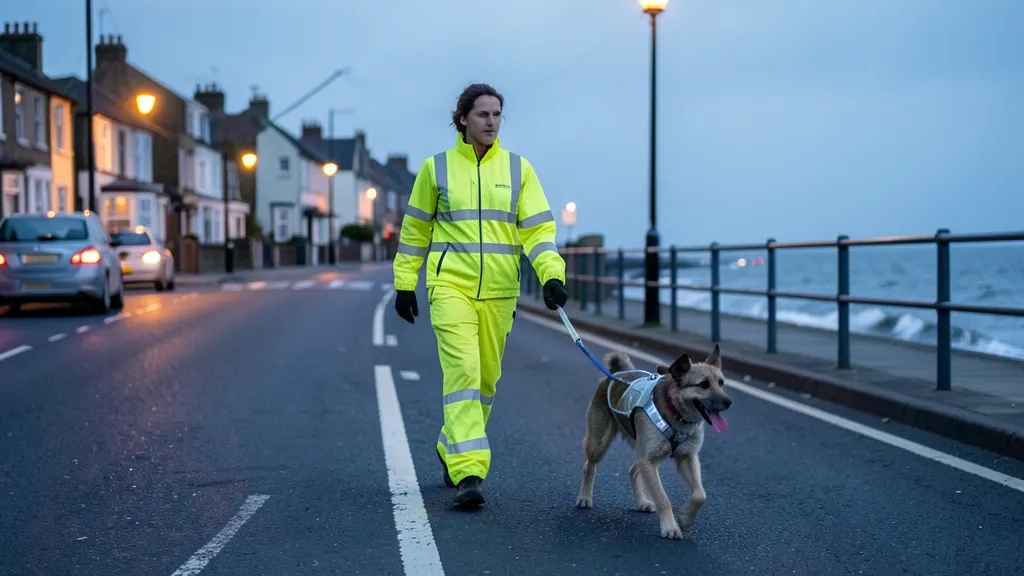
Dog walking in Brighton and Hove has a visibility problem that most people only notice in November. On the winter solstice in Brighton and Hove, sunrise is at 08:00 and sunset is at 15:56, giving just 7 hours and 57 minutes of daylight. If your dog needs an hour's walk in the morning and another in the evening, both walks will happen in the dark or half dark for a large part of the year. There are 121 days a year here when sunset comes before half past five in the evening or sunrise after quarter to eight in the morning, so even a quick stroll fits into low light.
The city's layout adds to the problem. Brighton and Hove sits in the South Downs National Park, so there is plenty of downland and open green space to enjoy, including Preston Park, which covers 63 acres and is one of the city's largest parks. But getting to those routes often means crossing or walking beside the A23 or the A27, two busy roads that serve the city. Drivers on those roads are moving fast and may not expect a walker in dark clothing at half past four in the afternoon.
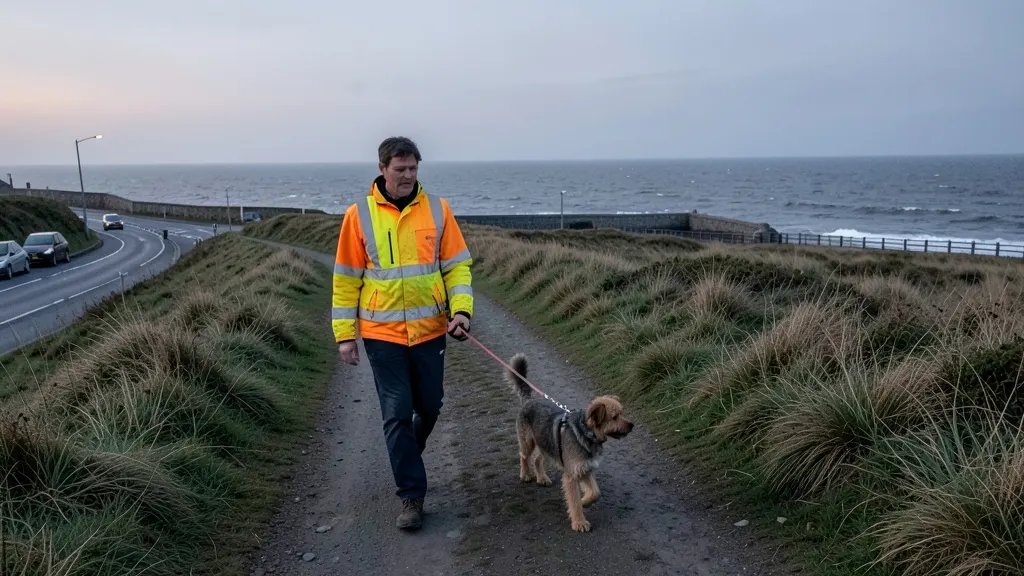
What the dark winter walks mean for what you wear
The Highway Code is blunt about this. Rule 17 says that at night, wear something reflective to make it easier for others to see you. Rule 3 explains why it matters: reflective materials such as armbands, sashes, waistcoats, jackets or footwear can be seen by drivers using headlights up to three times as far away as non-reflective materials. On a road with fast traffic, that extra distance is the difference between a driver having time to slow down and not.
For a dog walker, a jacket alone is not quite the whole answer. A lead, a poo bag, a torch and a dog that stops every ten metres all mean your hands are busy, so a jacket you can put on and forget about beats loose accessories that get left in the car. High visibility dog walker clothing works best when it stays on you for the whole walk, not just the road sections.
If you also cycle to work, the same logic applies on the school run or the commute, as our page on hi-vis for cycling and commuting in Brighton and Hove explains.
Choosing a dog walking hi vis jacket
The main choice is between fluorescent material and reflective material, and a good jacket gives you both.
Fluorescent fabric, usually yellow or orange, works in daylight and poor light such as dusk and drizzle. It absorbs ultraviolet light and gives it back as visible brightness, which is why it seems to glow on a grey afternoon. Reflective material works differently. It bounces light straight back to its source, so it shines brightly in headlights but does little in ordinary daylight.
Most proper dog walking hi vis jackets are certified to EN ISO 20471, which has three classes. Class 1 is the minimum, with 0.14 square metres of fluorescent background and 0.10 square metres of retroreflective material. Class 2 raises this to 0.50 and 0.13 square metres, and class 3, the highest, requires 0.80 square metres of fluorescent material and 0.20 square metres of retroreflective material. For a dog walker mixing park paths with stretches of main road, a class 2 jacket is usually the sensible choice. Save class 3 for walks that regularly take you along fast roads with no pavement.
A few practical features matter more than they sound:
- Deep pockets that fasten, so treats and poo bags do not fall out mid walk
- A two-way zip, so the jacket does not bunch when you sit or bend
- Reflective bands around the sleeves as well as the chest, so drivers see movement at the side of the road
- A hood that fits over a hat but does not block your view when checking for traffic
For more detail on features and fit, see hi-vis jackets for dog walking: how to choose.
Coastal weather
Being a coastal city, Brighton and Hove serves up wind, drizzle and salt air. Wet fabric loses some of its reflectivity, so a showerproof or waterproof outer layer is worth having for winter walks. It also keeps the reflective tape underneath dry and bright. Read waterproof hi vis jackets: myths and facts before you buy.
The clocks go back on 25 October 2026, and sunset in Brighton and Hove that day is at 16:48. From that weekend, the evening walk is a dark walk, so check your winter kit in early October rather than late November. Our winter hi vis jackets buyer's guide has more on seasonal choices.
Care and replacement
Hi-vis does not last forever. Health and Safety Executive guidance on workplace hi-vis says such garments must be cleaned regularly and kept in good condition, and the same logic applies at home. Dirt, mud and dog hair on the fluorescent fabric cut its brightness, and scratched or peeling reflective tape stops bouncing light back.
A few habits will keep a jacket working:
- Wash it at the temperature on the care label, usually a cool wash, and avoid fabric conditioner, which can coat reflective tape
- Do not tumble dry unless the label says it is fine
- Mud is best brushed off when dry rather than rubbed in wet
- Check the reflective strips under torchlight or car headlights every month or two
Replace the jacket when the fluorescent fabric looks grey rather than yellow or orange, when tape is cracked or lifting, or when repeated washing has left it permanently dull. If the reflective strip no longer lights up under headlights at a distance, the jacket is a normal coat, not a safety garment. Our guide on how reflective material works explains what is going on inside the tape.
And do not forget the dog. If you walk on unlit paths in the downland around the city, a reflective lead, collar or harness means you can spot your dog the instant a car or another walker's torch sweeps past. For evening route planning, how to be seen walking a dog at night covers lighting and positioning in more depth.
Frequently asked questions
Do I legally need to wear hi-vis when walking my dog in Brighton and Hove?
No law requires ordinary walkers to wear hi-vis, including the Personal Protective Equipment at Work Regulations 1992, which apply to employers providing PPE to workers rather than to the public. The Highway Code is still clear in its advice. Rule 17 says that at night, wear something reflective to make it easier for others to see you, and Rule 3 notes that drivers using headlights can see reflective materials up to three times as far away as non-reflective ones.
What class of hi-vis jacket is best for dog walking?
Class 2 is usually enough for dog walking, with 0.50 square metres of fluorescent background and 0.13 square metres of retroreflective material under EN ISO 20471. Choose class 3, with 0.80 and 0.20 square metres respectively, if your routes regularly take you along fast roads such as the A23 or A27. Class 1 is best reserved for short walks on quiet, well-lit paths.
Why does my hi-vis jacket seem less bright in the rain?
Water scatters light and can dull both fluorescent fabric and reflective tape, so a wet jacket is less effective. A showerproof hi-vis jacket, or a waterproof outer layer over your hi-vis, keeps the reflective material working in coastal drizzle. Dry the jacket properly afterwards and wash off salt and mud regularly.
How often should I replace a dog walking hi vis jacket?
Replace it when the fluorescent fabric looks grey or permanently dull, when reflective tape is cracked, peeling or missing, or when repeated washing has worn it out. HSE guidance for workplace hi-vis requires regular cleaning and good condition, and the same standard is sensible at home. A jacket that no longer lights up under car headlights is no longer doing its job.
Should my dog wear reflective gear too?
Yes, it is worth it. A reflective lead, collar or harness helps you keep track of your dog in torchlight or headlights on unlit paths, and it helps drivers see that there is a walker attached. On dark downland routes around the city it also makes it easier for other path users to spot your dog before a close encounter.