Hi-vis clothing in Brighton and Hove
Last updated
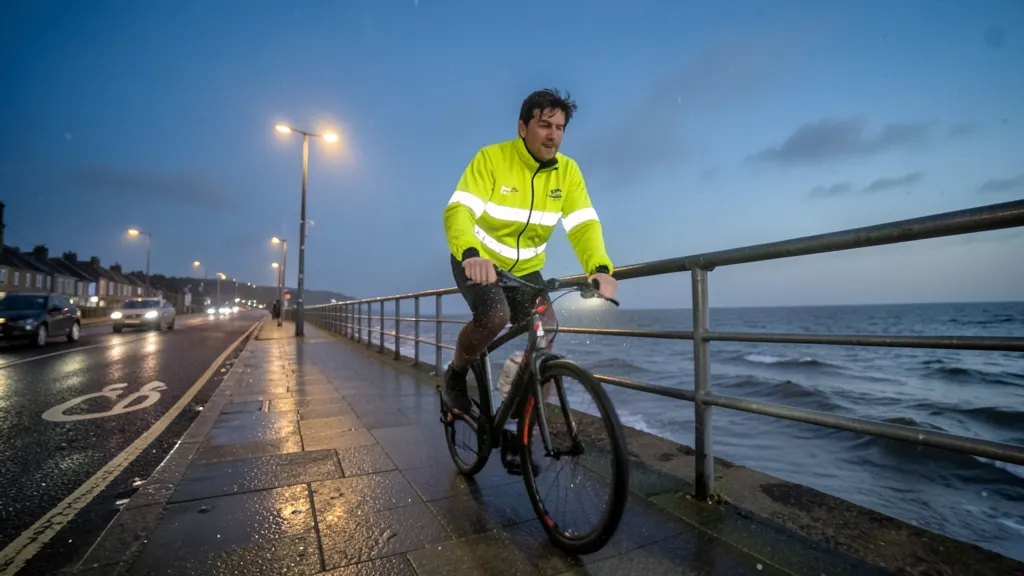
Brighton and Hove is a coastal city in East Sussex with an estimated population of 284,170 in 2025. It sits where the South Downs meet the sea, which shapes how people get around. Cyclists share busy roads, runners head for the seafront and the downland edge, and dog walkers spread out across the parks and open ground. The A23 and A27 carry commuter traffic into and around the city, and a significant digital economy means plenty of people travelling to offices at either end of the day.
The light, or the lack of it, is the real issue. On the winter solstice the sun rises at 08:00 and sets at 15:56 in Brighton and Hove, leaving just 7 hours and 57 minutes of daylight. There are 121 days a year here when sunset falls before half past five in the evening or sunrise comes after quarter to eight in the morning. In plain terms, a normal commute is often done partly in the dark, and the clocks going back on 25 October 2026, when sunset that day is at 16:48, marks the point where that becomes the weekly routine rather than the exception.
What this guide covers
This page is the hub for hi-vis clothing in Brighton and Hove. We have separate guides for each of the main activities people do here, and each one looks at the specific demands of the city and its surroundings.
Cycling and commuting
With the A23 and A27 serving the city, and university populations from the University of Sussex and the University of Brighton adding to daily traffic, plenty of journeys happen on busy shared roads. Our Hi-vis for cycling and commuting in Brighton and Hove page covers jacket choice, reflective positioning on the bike, and what the Highway Code asks of cyclists after dark. If you want broader background before you buy, the Hi-vis jackets for cycling: a buyer's guide page is worth a read.
Running
The seafront and the edge of the South Downs are popular with runners, and winter training means early mornings or evenings in poor light. See our Hi-vis jackets for running: how to choose guide for advice on fit, breathability and reflective detailing.
Dog walking
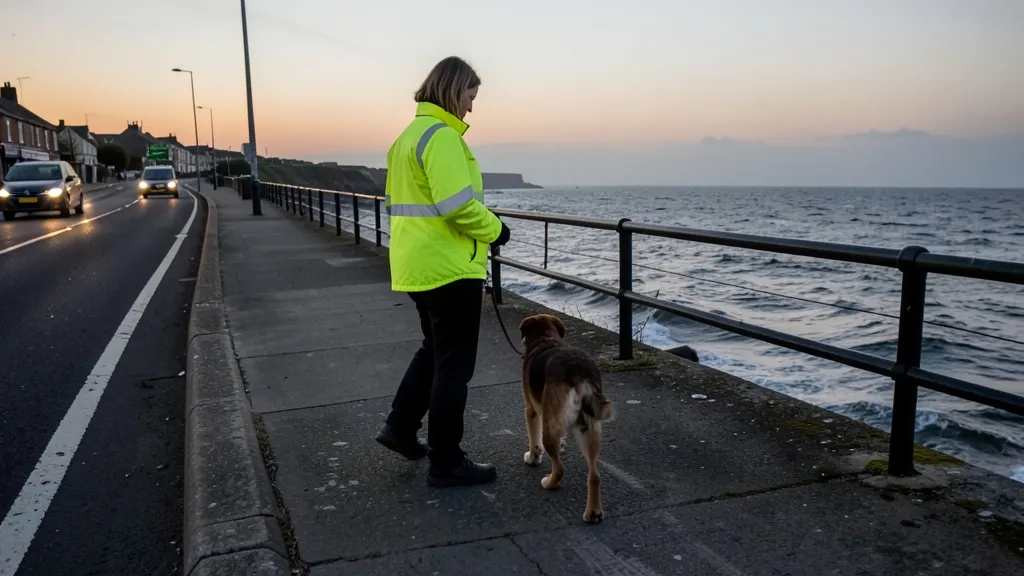
Parks and open downland give dog walkers plenty of routes, including Preston Park, which covers 63 acres and is one of Brighton's largest parks. Our Hi-vis for dog walking in Brighton and Hove page and the general Hi-vis jackets for dog walking: how to choose guide cover jackets with handy pockets, waterproofing and reflective panels for low light.
General hi-vis guidance for Brighton and Hove
A few principles hold true whatever you are doing, and they are worth getting right before you worry about anything else.
Fluorescent works in daylight, reflective works in the dark. The two do different jobs. Fluorescent yellow, orange and pink stand out in daylight and poor light, but they do little at night on their own. Retroreflective material is what catches headlights, and the Highway Code notes that reflective materials can be seen by drivers using headlights up to three times as far away as non-reflective materials. Rule 3 of the Highway Code puts it simply: help other road users to see you, and in the dark use reflective items such as armbands, sashes, waistcoats, jackets or footwear.
Match the garment to the speed of the traffic around you. EN ISO 20471, the standard behind hi-vis clothing, has three classes. Class 1 requires a minimum of 0.14 m2 of fluorescent background material, class 2 requires 0.50 m2 and class 3, the highest, requires at least 0.80 m2 of fluorescent material plus 0.20 m2 of retroreflective material. For cycling on faster roads such as the A27, a class 3 jacket or a class 2 jacket with extra reflective bands is the safer choice. For a jog along a lit seafront promenade or a wander round Preston Park, a lighter garment with good reflective detailing may be enough, though more is rarely a mistake.
Think about movement. Reflective strips placed at the knees, ankles and elbows work because they move, and a moving flash of light is easier for drivers to read as a person. Ankle and arm bands are a cheap way to add this to any outfit. Rule 59 of the Highway Code specifically mentions belts, arm and ankle bands for cyclists.
Layer for the weather. A coastal city brings wind, drizzle and the occasional proper soaking, so a waterproof hi-vis outer layer is often the practical answer through winter. Our Waterproof hi vis jackets: myths and facts page separates what waterproof ratings actually mean from the marketing talk, and the Winter hi vis jackets: a practical buyer's guide page looks at insulation and layering for the coldest months.
Look after what you buy. Reflective material works less well when it is filthy, and fluorescent fabric fades. HSE guidance says reusable PPE must be cleaned and kept in good condition, and that hi-vis jackets, trousers and coveralls must be cleaned regularly. That advice makes sense for everyday wear too. Wash hi-vis items inside out, avoid fabric conditioner on reflective strips where the label warns against it, and replace anything where the reflective banding has visibly worn away.
Check the legal basics. Cyclists should remember Rule 60 of the Highway Code: at night a cycle must have white front and red rear lights lit, and a red rear reflector. Clothing helps drivers see you, but lights are a legal requirement. Motorcyclists have their own guidance, with Rule 86 suggesting fluorescent clothing or strips to be visible from the side, and Rule 87 recommending reflective clothing when riding in the dark.
Where to read next
Start with the pages that match what you actually do:
- Hi-vis for cycling and commuting in Brighton and Hove
- Hi-vis for dog walking in Brighton and Hove
- Hi-vis jackets for running: how to choose
If your journeys take you beyond the city, our Hi-vis clothing in South East England: a regional guide covers hi-vis choices across the wider region. Whatever you wear, the aim is the same: make sure that in the short winter days of a downland and coastal city, other people can see you early enough to give you room.
Brighton and Hove at a glance
- Nation: England
- Region: South East England
- Population: 284170
| Measure | Time |
|---|---|
| Sunrise on the winter solstice | 08:00 |
| Sunset on the winter solstice | 15:56 |
| Daylight on the winter solstice | 7h 57m |
| Sunset when the clocks go back (2026-10-25) | 16:48 |
| Days a year with a dark commute | 121 |
Frequently asked questions
Do I legally need to wear hi-vis in Brighton and Hove?
No law requires ordinary cyclists, pedestrians or dog walkers to wear hi-vis clothing. Cyclists do need a white front light, a red rear light and a red rear reflector at night under Rule 60 of the Highway Code. Wearing reflective clothing is strongly recommended, and Rules 3 and 17 of the Highway Code advise it, but it is guidance rather than a legal requirement for the general public.
How many hours of daylight does Brighton and Hove get in winter?
On the winter solstice the sun rises at 08:00 and sets at 15:56, giving 7 hours and 57 minutes of daylight. There are 121 days a year when sunset comes before half past five in the evening or sunrise comes after quarter to eight in the morning, so commutes and evening exercise often happen in the dark.
What class of hi-vis jacket do I need for cycling on busy roads?
For cycling on faster or busier roads, EN ISO 20471 class 3 is the safest option, with at least 0.80 m2 of fluorescent material and 0.20 m2 of retroreflective material. Class 2, with a minimum of 0.50 m2 of fluorescent background, is a common middle ground for town cycling. You can also add reflective arm and ankle bands to boost visibility.
Is fluorescent or reflective clothing better for dark evenings?
Reflective is what matters after dark, because it bounces headlight beams straight back to the driver. The Highway Code notes that reflective materials can be seen by drivers using headlights up to three times as far away as non-reflective materials. Fluorescent colours work best in daylight and poor light, so the best jacket for commuting does both jobs.
How should I care for a hi-vis jacket?
Clean it regularly, because dirt and grime reduce both fluorescence and reflectivity. HSE guidance says hi-vis jackets, trousers and coveralls must be cleaned regularly and kept in good condition, and workers must report any loss or obvious defect. Follow the care label, wash inside out where advised, and replace the garment when reflective strips wear away.