Hi-vis jackets for children on the Bournemouth school run
Last updated
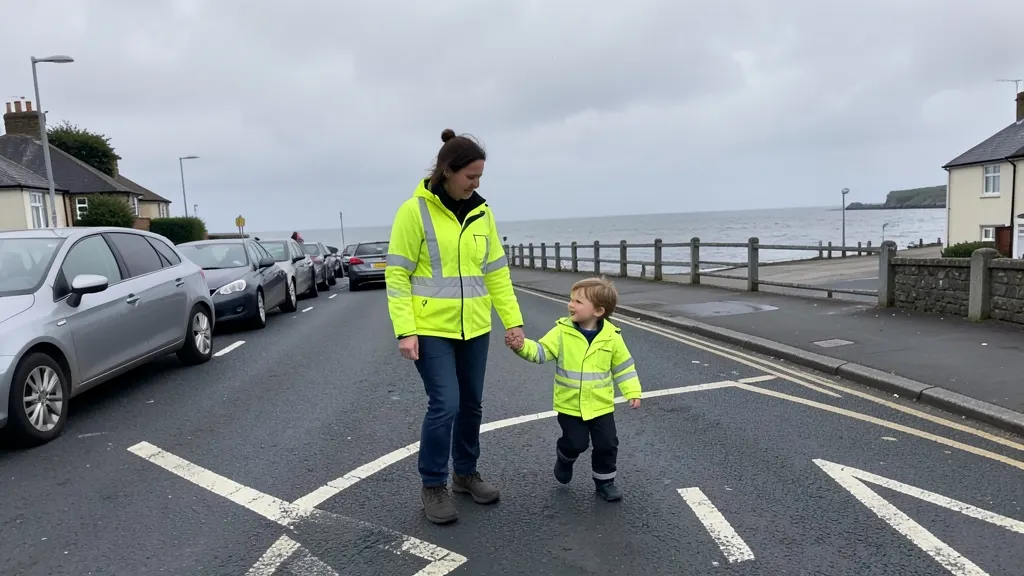
Why the school run is a visibility problem in Bournemouth
If you walk your children to school in Bournemouth, you will know how quickly the light disappears in winter. On the winter solstice here, sunrise is at 08:06 and sunset is at 16:04, giving under eight hours of daylight. That means much of the morning drop-off and the afternoon collection happens in poor light or in the dark.
The numbers back this up across the whole year. In Bournemouth there are 117 days a year when sunset comes before half past five in the evening or sunrise comes after quarter to eight in the morning. A school run in late autumn and winter is very likely to be partly in the dark, especially if your child attends an after-school club or has a later pickup.
The town adds its own complications. Bournemouth is a coastal resort with a built-up area population of 196,455, and tourism plays a significant part in the local economy. In the peak season, roads around schools and routes to the seafront, which stretches for seven miles of sand, carry extra traffic from visitors who do not know the area. Suburban streets around schools can be busy with parked cars, delivery vans and other parents driving at exactly the moment children are crossing roads. A child in a dark coat is genuinely hard to spot in that mix.
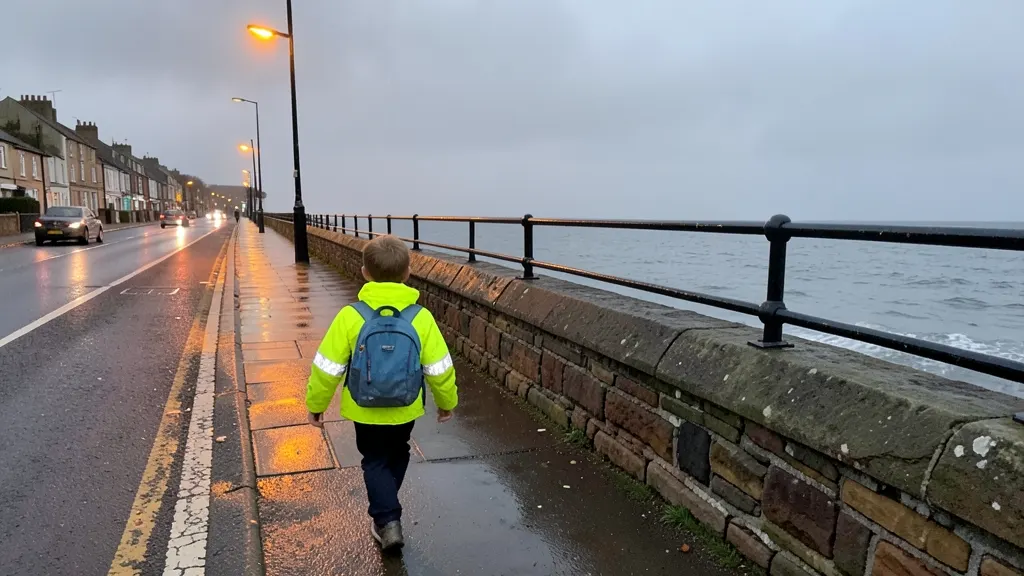
What this means for what your child wears
The Highway Code is direct about this. Rule 3 advises helping other road users to see you, and notes that reflective materials such as armbands, sashes, waistcoats, jackets or footwear can be seen by drivers using headlights up to three times as far away as non-reflective materials. Rule 17 says that at night you should wear something reflective. For a child walking on a pavement and crossing roads, that is the difference between being spotted at a glance and being noticed late.
A child needs two things, and they do different jobs. Fluorescent material works in daylight and poor light, such as a grey drizzly morning. Retroreflective material only comes into its own when light hits it, so it matters most after dark when headlights are on. A kids hi vis jacket that combines both covers the whole school day.
If your child cycles, Rule 59 confirms the same logic for riders, and Rule 60 requires a white front light, a red rear light and a red rear reflector at night. The jacket is a support act, not a replacement for proper lights. For more on the official wording, see What the highway code says about hi-vis.
Choosing a school hi vis jacket
A few practical points will get you the right childrens high visibility jacket.
- Fit. It should be snug enough not to flap about or slip off a shoulder, but roomy enough to go over a school jumper or a winter coat. If your child will wear it over a coat, size for the outer layer.
- Coverage. The more fluorescent and reflective area the better, in general terms. For context, the workplace standard EN ISO 20471 sets minimum areas of fluorescent background material and retroreflective material, and class 2 requires 0.50 m2 of fluorescent material, while class 3, the highest, requires at least 0.80 m2 of fluorescent and 0.20 m2 of retroreflective material. Children's garments will not reach those adult areas, but the principle holds: more visible material means more chance of being seen.
- Reflective placement. Look for strips around the body, arms and cuffs. Reflective bands that move as a child walks catch attention better than one flat panel.
- Closures. A front zip is easier for younger children to manage themselves than toggles or poppers.
Bournemouth weather brings rain off the sea and cold winds off the cliffs, so consider a waterproof option. See Waterproof hi vis jackets: myths and facts for what that means in practice. There are plenty of misconceptions about children's hi-vis generally, and Kids hi vis jackets: myths and facts is worth a read before you buy. If your budget stretches to it, Winter hi vis jackets: a practical buyer's guide explains insulation options for colder mornings.
Care and replacement
Hi-vis only works if it stays clean and intact. Health and Safety Executive guidance on workplace PPE says hi-vis garments must be cleaned regularly and kept in good condition, and that is sensible advice for children's jackets too. A mucky jacket loses fluorescence, and a scuffed or peeling reflective strip stops bouncing light back to drivers.
Wash the jacket according to its label, usually a cool machine wash, and avoid fabric conditioner, which can leave a film over reflective material. Do not tumble dry unless the label says it is fine. Hang it up in the porch or on a hook by the door so it dries properly and is always in the same place on the way out.
Check it each half term. Look for greyed-out fluorescent fabric, cracked or missing reflective strips, broken zips and stains that will not shift. Children grow, too, so a jacket that reached the wrists in September may ride up by February. Replace it rather than making do, and keep a spare lightweight vest in the school bag for trips home in the dark after clubs. If you also ride a motorcycle on the school run, have a look at our page on Hi-vis for motorcyclists in Bournemouth.
For more on the wider local picture, start with our Hi-vis clothing in Bournemouth | A local guide, and for general tips see How to keep children visible walking to school.
Frequently asked questions
At what age can a child wear a hi-vis jacket?
There is no minimum age, and toddlers upwards can wear one. The main points are fit and comfort, so the jacket stays on rather than being pulled off. Choose a smaller vest style for very young children and a full zip jacket once they can manage fastenings themselves.
Is fluorescent or reflective material more important for the school run?
Both, because they work in different conditions. Fluorescent material helps drivers see your child in daylight and poor light, while reflective material works after dark in headlights. A good kids hi vis jacket combines both, which matters in Bournemouth on the many days each year when the school run happens partly in the dark.
Do children's hi-vis jackets meet EN ISO 20471?
Some do, but the standard's minimum areas of fluorescent and reflective material are set with adult workers in mind, so small children's garments may not reach the higher classes. Check the label or product description. For a child on a pavement rather than on a road site, the practical aim is simply as much visible material as possible.
How often should I wash my child's hi-vis jacket?
Wash it regularly through the winter, roughly every week or two of daily wear, following the label. Avoid fabric conditioner and be careful with tumble drying, as both can dull reflective strips. A clean, intact jacket is much more effective than a faded one.
How long does a childrens high visibility jacket last?
Expect to replace it every one to two winters, sooner if your child has a growth spurt. Inspect it each half term for greyed fabric, cracked reflective strips and broken fastenings, and replace it if any of those appear. A worn jacket gives a false sense of security.