Hi-vis clothing in Bournemouth: a local guide
Last updated
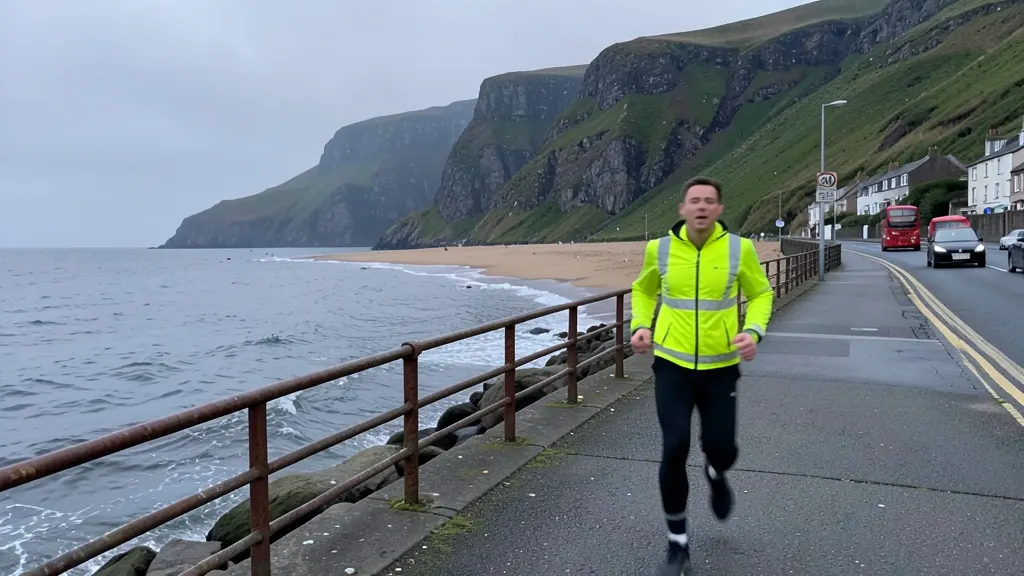
Bournemouth is a coastal town in South West England with a population of 196,455 in its built-up area, according to the 2021 census. Tourism and financial services play a significant role in the local economy, so the streets mix commuters, visitors and outdoor workers throughout the year. The seafront is a seven-mile stretch of golden sand, with cliffs cut by chines giving access to the shore, and a long distance path ends at Poole Harbour and continues towards Milford on Sea. Add the Lower, Central and Upper Gardens, all Grade II* public parks, and you have a place where a great deal of daily life happens outdoors.
That outdoor life is exactly why visibility matters here. On the winter solstice in Bournemouth, sunrise is at 08:06 and sunset is at 16:04, giving just 7 hours and 58 minutes of daylight. There are 117 days a year in Bournemouth when sunset comes before half past five in the evening or sunrise after quarter to eight in the morning, which means a normal commute is partly in the dark for a large chunk of the year. When the clocks go back on 25 October 2026, sunset that day is at 16:55. Anyone who walks, runs, rides or cycles around town will spend time on the roads in low light, and that is where the right clothing earns its keep.
What this guide covers
This page is the hub for hi-vis clothing in Bournemouth. Below you will find our themed pages, each one written for the way this town is actually used.
Running
Runners here get out along the seafront and the paths above it, often early in the morning or after work in the darker months. Our page on hi-vis for running in Bournemouth looks at what to wear for coastal routes in wind, spray and short winter days. For a wider look at jacket features, see our general guide to hi-vis jackets for running.
Motorcycling
Riders are drawn to the coastal roads and the lanes of the nearby national park, which covers 566 square km of Hampshire and Wiltshire. Riders on two wheels are narrower and harder to pick out than cars, so bright kit is worth serious thought. Read our page on hi-vis for motorcyclists in Bournemouth and our wider guide to motorcycle hi vis jackets for the myths and facts.
Children and the school run
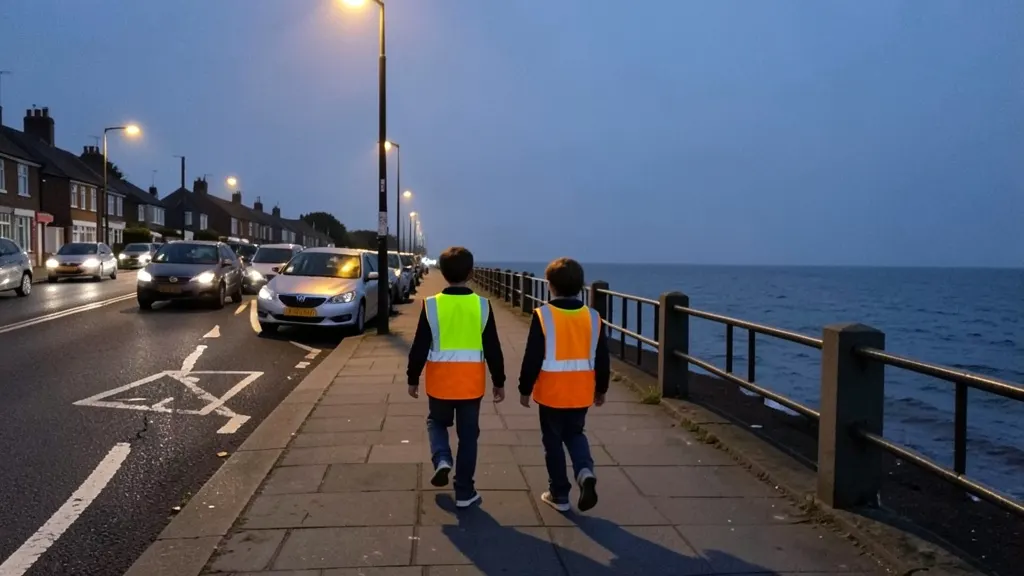
Suburban streets around schools get busy at drop-off and pick-up times, often in low winter light. If you walk your children to school in the dark, or want them to be seen on the pavement and at crossings, our guide to kids hi vis jackets covers what actually helps and what is just decoration.
Hi-vis guidance that applies to everyone
Whatever activity brings you out in low light, the same principles hold.
Fluorescent for daytime, reflective for the dark. Fluorescent colours work by converting ultraviolet light into visible light, so they stand out in daylight and poor light such as grey coastal overcast. They do almost nothing at night. In true darkness, retroreflective material is what counts, because it bounces headlight beams straight back to the driver. Many people buy a fluorescent jacket and assume they are covered after dark, when the reflective strips are doing the real work.
Fit matters as much as colour. A flapping jacket or loose trousers blur your outline. A close but comfortable fit keeps the reflective material moving predictably, which makes you easier for a driver to read at a glance.
Think about the standard. EN ISO 20471 has three classes. The minimum fluorescent background area is 0.14 m2 for class 1, 0.50 m2 for class 2 and 0.80 m2 for class 3, with minimum retroreflective areas of 0.10, 0.13 and 0.20 m2 respectively. Class 3 is the highest, and it is what you should look for on fast roads or night work. A casual running jacket may carry no standard at all, which is acceptable for the pavement but less ideal beside a busy road.
The Highway Code agrees. Rule 3 advises road users to help others see them, noting that in the dark reflective materials such as armbands, sashes, waistcoats, jackets or footwear can be seen by drivers using headlights up to three times as far away as non-reflective materials. Rule 59 makes the same point for cyclists, recommending light-coloured or fluorescent clothing in daylight and poor light, and reflective belts, arm or ankle bands in the dark. For motorcyclists, Rule 86 recommends fluorescent clothing or strips to be visible from the side as well as the front and rear, and Rule 87 says riders in the dark should wear reflective clothing or strips.
Look after the garment. Hi-vis only works if it is clean and intact. Guidance from the Health and Safety Executive on workplace kit applies to your own jacket too: reusable PPE must be cleaned and kept in good condition, and any obvious defect means it should be replaced. Grimy fluorescent fabric quickly loses its brightness, and dirt over reflective strips kills their performance.
Light yourself up too. Clothing works alongside lights, not instead of them. Cyclists should remember Rule 60: at night a cycle must have white front and red rear lights lit, plus a red rear reflector.
Where to read next
Start with the pages written specifically for this area:
- Hi-vis for running in Bournemouth
- Hi-vis for motorcyclists in Bournemouth
For the surrounding region, our guide to hi-vis clothing in South West England covers the wider picture. If your main concern is the cold rather than visibility alone, our winter hi vis jackets guide and our piece on waterproof hi vis jackets are worth a read, because coastal weather rarely stays dry for long.
Bournemouth at a glance
- Nation: England
- Region: South West England
- Population: 196455
| Measure | Time |
|---|---|
| Sunrise on the winter solstice | 08:06 |
| Sunset on the winter solstice | 16:04 |
| Daylight on the winter solstice | 7h 58m |
| Sunset when the clocks go back (2026-10-25) | 16:55 |
| Days a year with a dark commute | 117 |
Frequently asked questions
What class of hi-vis jacket should I choose in Bournemouth?
For everyday walking, running or the school run, a garment with reflective panels that you actually wear is better than a high-spec one left at home. For fast roads or night-time use, class 3 under EN ISO 20471 offers the most protection, with at least 0.80 m2 of fluorescent background material and 0.20 m2 of retroreflective material. Class 2, with 0.50 m2 of fluorescent material, suits most urban commuting and casual use.
Is a fluorescent jacket enough for running after dark?
Not on its own. Fluorescent material needs daylight or at least some daylight to work, so it does little at night. After dark you need retroreflective material, which can be seen by drivers using headlights up to three times as far away as non-reflective material. Look for jackets with generous reflective panels, and consider adding ankle bands because the movement catches the eye.
Do motorcyclists really need hi-vis clothing?
The Highway Code advises it. Rule 86 says motorcyclists should make themselves as visible as possible from the side as well as the front and rear, for example with fluorescent clothing or strips. Rule 87 adds that riders in the dark should wear reflective clothing or strips. Nothing beats a bright, well-lit silhouette on a bike.
How short are winter days in Bournemouth?
On the winter solstice, sunrise is at 08:06 and sunset is at 16:04, giving 7 hours and 58 minutes of daylight. There are 117 days a year when sunset comes before half past five in the evening or sunrise after quarter to eight in the morning, so a normal commute is partly in the dark.
How should I care for a hi-vis jacket?
Wash it regularly and follow the label, because dirt dulls fluorescent fabric and coats reflective strips. Check for worn or cracked reflective panels and replace the garment if they have failed. The same HSE guidance used for workplace kit, that hi-vis garments must be cleaned and kept in good condition with defects reported, is a sensible rule for personal jackets too.