High visibility clothing for workwear in Birmingham
Last updated
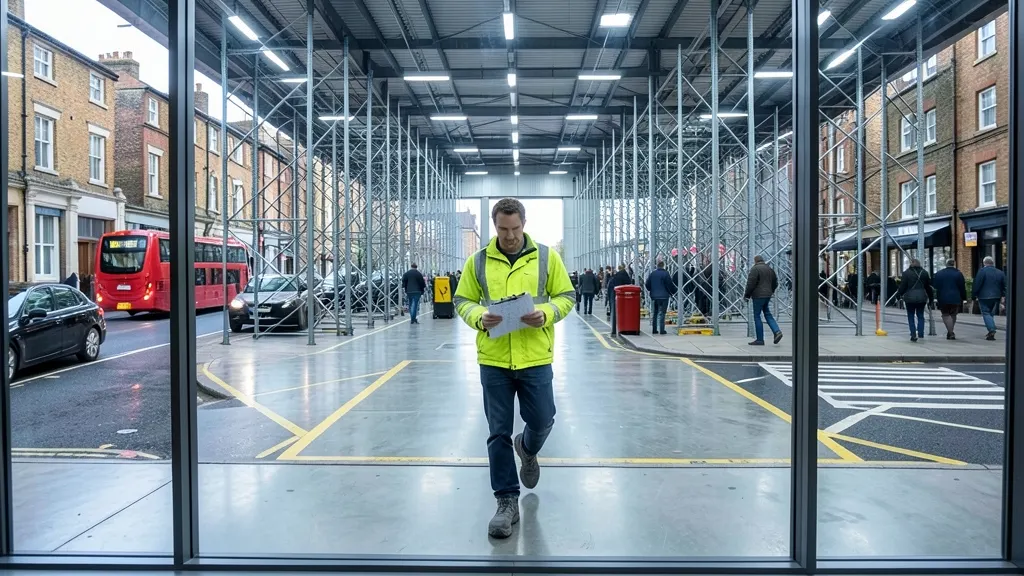
Birmingham is a working city. The 2021 census put its population at 1,144,900, and behind the service sector there is still a strong manufacturing and engineering heritage that shows up in the sorts of jobs people do around the city. Sites, warehouses, depots and maintenance rounds all need people who can be seen. If you work in one of those roles, or you employ people who do, this page answers the questions we hear most often about hi-vis workwear in Birmingham.
The questions people actually ask
What class of hi-vis do I need for site work?
EN ISO 20471 has three classes. Class 1 is the lowest, with a minimum of 0.14 m2 of fluorescent background material and 0.10 m2 of retroreflective material. Class 2 needs at least 0.50 m2 of fluorescent background and 0.13 m2 retroreflective. Class 3 is the highest, with at least 0.80 m2 of fluorescent background and 0.20 m2 retroreflective material. Most site and warehouse work calls for class 2 as a baseline. If you work on or near fast traffic, dual carriageways or motorways, class 3 is the usual requirement because it gives the largest visible area. Our EN ISO 20471 classes explained guide breaks this down in more detail.
Does my employer have to supply my hi-vis?
Under the Personal Protective Equipment at Work Regulations 1992, employers must ensure suitable PPE is provided to workers exposed to a risk to health or safety, unless the risk is adequately controlled by other means. Since 6 April 2022, those duties also cover limb (b) workers, and the employer must provide the PPE free of charge. So if you are on the books or working as a limb (b) worker, your hi-vis jacket should be supplied, not bought out of your own pocket. If you are self-employed, you are responsible for your own kit. More on this in our guide to when hi-vis is required at work in the UK.
Yellow or orange hi vis jacket?
For most construction and warehouse roles in Birmingham, yellow is the common default and it shows up well under artificial lighting. An orange hi vis jacket is often specified where there is a rail connection, because the rail standard RIS-3279-TOM requires an orange colour and garments that meet at least class 2 of EN ISO 20471, as stated by SATRA, a UK PPE testing body. If your depot or site sits next to railway lines, expect orange. Some workplaces also choose orange simply to tell their crews apart from the public. Check your site rules before you buy.
Which fabric suits Birmingham weather?
Rain falls on 132.5 days a year here (days with 1.0 mm or more, based on Winterbourne station normals from 1991 to 2020), so a shell that keeps the wet out earns its keep. A fleece hi vis jacket is a comfortable mid layer for cold, dry days in a warehouse or on a quiet site. A softshell hi vis jacket handles showery weather and wind. For sustained rain, you want a properly waterproof hi vis jacket rather than a softshell, and our article on waterproof hi vis jackets: myths and facts explains the differences plainly.
How do I look after it?
HSE guidance says reusable PPE must be cleaned and kept in good condition, and that hi-vis jackets, trousers and coveralls must be cleaned regularly. Dirt and grime kill the fluorescent effect faster than anything else. Workers must report any loss, destruction or obvious defect, so if your jacket has gone grey or the reflective bands are scuffed, say so and get it replaced. Faded hi-vis is not doing the job you wear it for.
What Birmingham conditions add to the picture
The dark is the big one. On the winter solstice in Birmingham, sunrise is at 08:15 and sunset at 15:55, giving just 7h 39m of daylight. There are 121 days a year in the city when sunset comes before half past five in the evening or sunrise after quarter to eight in the morning, so a normal commute is partly in the dark. If your shift starts early or runs late, your hi-vis is doing most of its work in low light.
The roads raise the stakes too. Birmingham is served by the M5, M6, M40 and M42 motorways, including Spaghetti Junction at the Gravelly Hill Interchange, plus an Inner Ring Road. High-speed traffic means anyone working roadside around the city should be thinking class 3, not class 2. And with the clocks going back on 25 October 2026, when sunset in Birmingham that day is at 16:51, the darker half of the year arrives quickly. Winter-weight options are covered in our winter hi vis jackets buyer's guide.
Quick recommendations
- Start with the right class: class 2 for general site and warehouse work, class 3 near fast traffic.
- Match the fabric to the season: fleece hi vis jacket for cold dry days, softshell hi vis jacket for wind and showers, a proper waterproof shell for steady rain.
- Follow the standard on colour: yellow for general work, orange if rail rules apply.
- Clean it regularly and report defects rather than patching them up.
- If you also cycle or walk through the city to work, see our broader guide to hi-vis clothing in Birmingham, and parents on the school run have their own page on childs hi vis jackets in Birmingham.
Choosing the right hi vis workwear jacket comes down to class, colour and cloth. Get those three right and the Birmingham weather does the rest of the testing for you.
Frequently asked questions
Do employers in Birmingham have to provide hi-vis for free?
Under the Personal Protective Equipment at Work Regulations 1992, employers must provide suitable PPE to workers exposed to a health or safety risk, unless that risk is controlled by other means. Since 6 April 2022 the duty also covers limb (b) workers, and the PPE must be provided free of charge. Self-employed workers need to sort their own kit.
What hi vis class do I need for warehouse work?
EN ISO 20471 class 2, with at least 0.50 m2 of fluorescent background material and 0.13 m2 of retroreflective material, is the usual choice for warehouses and general sites. Class 3, which needs at least 0.80 m2 of fluorescent and 0.20 m2 retroreflective material, is reserved for higher-risk settings such as work near fast traffic.
Why do some workers in Birmingham wear an orange hi vis jacket?
An orange hi vis jacket is standard where rail rules apply. SATRA, a UK PPE testing body, states that rail standard RIS-3279-TOM requires an orange colour and garments meeting at least class 2 of EN ISO 20471. Some employers also use orange to distinguish their crews from the public.
How often should hi-vis workwear be washed?
HSE guidance says hi-vis jackets, trousers and coveralls must be cleaned regularly, and reusable PPE must be kept in good condition. Dirt and fading reduce visibility long before a garment falls apart. Workers must report any loss, destruction or obvious defect so the item can be replaced.
Is a softshell hi vis jacket good enough for Birmingham winters?
A softshell hi vis jacket copes with wind and light showers, but rain falls on 132.5 days a year here, so a fully waterproof hi vis jacket is the safer winter choice. A fleece hi vis jacket works well as a warm mid layer on cold, dry days. Check the garment's class remains suitable for your site.