Hi-vis clothing in the West Midlands: what the region needs
Last updated
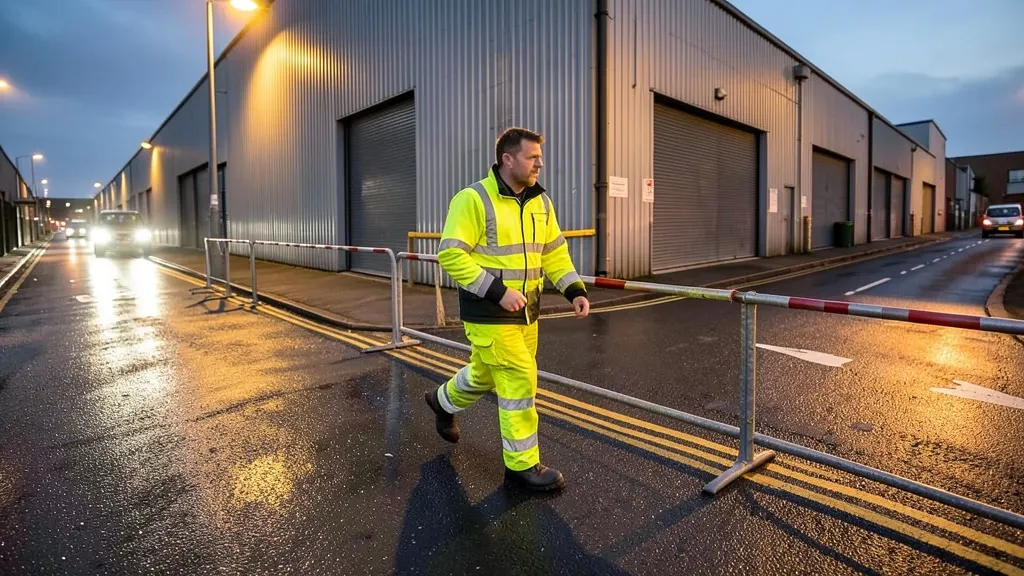
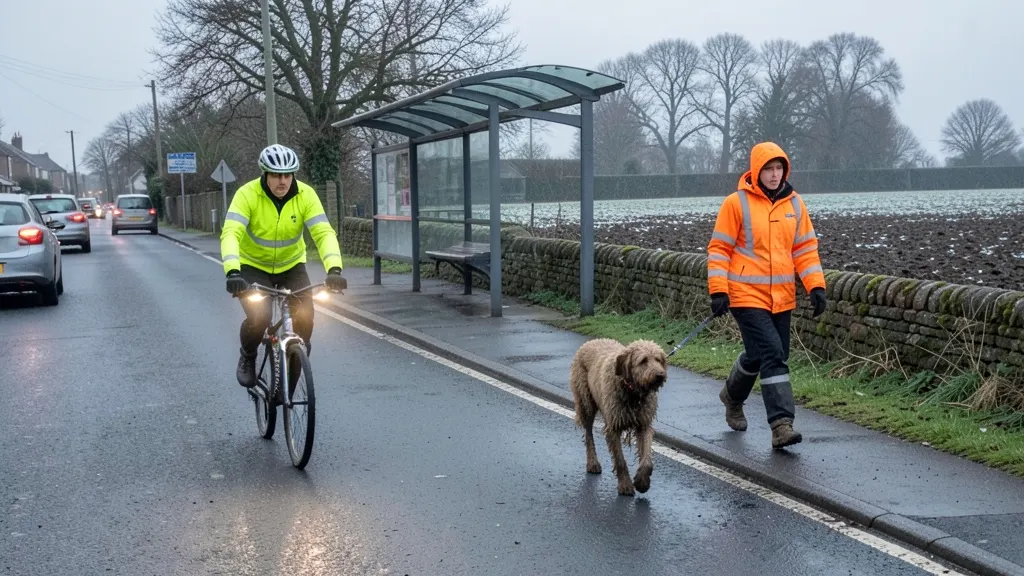
The West Midlands is one of England's built-up regions, a cluster of cities and towns with working roads, busy industrial sites and a strong commuter culture. People here are outdoors for all sorts of reasons. Construction workers and warehouse staff spend shifts near moving vehicles. Cyclists and motorcyclists filter through city traffic. Runners, dog walkers and parents on the school run share streets with drivers, often in poor light. The thread running through all of it is visibility. A good hi vis jacket is the single most useful garment most people in this region can own.
The region's cities share a practical character shaped by their working pasts. Birmingham, with a population of 1,144,900 at the 2021 census, grew on manufacturing and engineering, and today the service sector provides 88% of city employment, with manufacturing at 8%. Coventry, home to 345,324 people at the same census, was a centre of motor and cycle manufacturing, and its two large universities became the biggest drivers of its economy by the 2010s. Stoke-on-Trent, with an estimated population of 259,965 in 2025, built its name on industrial-scale pottery manufacturing from the 17th century onwards and is now a centre for service industries and distribution centres. Wolverhampton, population 263,700 in 2021, still has an economy based on engineering, including a large aerospace industry, alongside a service sector. In every case the mix of logistics, engineering, education and services means people working near traffic, plant and fork-lift trucks.
Where this guide covers
We have written a dedicated hub for each of the region's main cities:
- Hi-vis clothing in Birmingham covers the biggest city in the region, with guidance for the many service, construction and transport workers who move around it.
- Hi-vis clothing in Coventry looks at a city shaped by its motor, cycle and university heritage, and what that means for commuting and campus work.
- Hi-vis clothing in Stoke-on-Trent focuses on distribution and warehousing, where hi-vis is part of daily working life.
- Hi-vis clothing in Wolverhampton covers an engineering and aerospace city where factory and yard work make visibility a daily requirement.
Each hub goes into local detail. This page gives you the regional picture and the rules that apply everywhere in the West Midlands.
What the classes and the law actually mean
When you buy a hi vis jacket in the West Midlands, or anywhere in the UK, the standard to look for is EN ISO 20471. It has three classes. Class 1 is the minimum, with at least 0.14 square metres of fluorescent background material and 0.10 square metres of retroreflective material. Class 2, the most common choice for work near traffic, needs at least 0.50 square metres of fluorescent material and 0.13 square metres of retroreflective strips. Class 3 is the highest, with at least 0.80 square metres of fluorescent background material and 0.20 square metres of retroreflective material. Class 3 suits the riskiest settings, such as motorway work or night shifts beside fast traffic.
For workers, the Personal Protective Equipment at Work Regulations 1992 require employers to provide suitable PPE to workers exposed to a risk to health or safety, unless the risk is adequately controlled by other means. Since 6 April 2022 those duties also cover limb (b) workers, and the employer must provide the PPE free of charge. If you work on a site in Birmingham or a distribution yard in Stoke-on-Trent, that jacket your employer handed you is not a favour. It is a legal duty.
HSE guidance adds a practical point that is easy to forget: reusable PPE must be cleaned and kept in good condition, and hi-vis jackets, trousers and coveralls must be cleaned regularly. Grime kills both fluorescence and reflectivity. Workers must report any loss, destruction or obvious defect, so a torn or faded jacket gets replaced rather than worn out.
Road users: what the Highway Code asks of you
The Highway Code is plain about visibility. Rule 3 asks all road users to help others see you, and notes that in the dark, reflective materials such as armbands, sashes, waistcoats, jackets or footwear can be seen by drivers using headlights up to three times as far away as non-reflective materials. Rule 17 repeats the message for pedestrians: at night, wear something reflective.
Cyclists get specific advice. Rule 59 says light-coloured or fluorescent clothing can help other road users see a cyclist in daylight and poor light, while reflective clothing or accessories, such as a belt, arm or ankle bands, can increase visibility in the dark. Rule 60 adds that at night a cycle must have a white front light and a red rear light lit, plus a red rear reflector, and Rule 69 reminds cyclists to obey all traffic signs and traffic light signals. Lights and hi-vis work together, and one does not replace the other.
Motorcyclists are covered too. Rule 86 says riders should make themselves as visible as possible from the side as well as the front and rear, for example with fluorescent clothing or strips. Rule 87 goes further for riding in the dark, advising reflective clothing or strips to improve visibility.
One more point for rail and trackside workers: rail standard RIS-3279-TOM, as SATRA, a UK PPE testing body, states, requires an orange colour and garments meeting at least class 2 of EN ISO 20471. If your work touches the railways crossing the region, orange is not a style choice, it is the standard.
Where to read next
For a fuller picture of when hi-vis is legally required at work, read When is high visibility clothing required in the UK?. We also cover other regions, including the Hi-vis jacket East Midlands: a regional guide and Hi-vis clothing in East of England: a regional guide. For city-level detail, start with the Birmingham, Coventry, Stoke-on-Trent and Wolverhampton hubs linked above.
Frequently asked questions
What class of hi vis jacket do I need for road work in the West Midlands?
It depends on the risk. EN ISO 20471 class 2, with at least 0.50 square metres of fluorescent background material and 0.13 square metres of retroreflective material, is the common choice for work near traffic. Class 3, with at least 0.80 and 0.20 square metres respectively, suits higher-risk settings such as night work near fast roads. Your employer's risk assessment should set the class.
Does my employer have to supply my hi-vis clothing?
Yes, where you are exposed to a risk to health or safety that is not adequately controlled by other means. Under the Personal Protective Equipment at Work Regulations 1992, employers must provide suitable PPE. Since 6 April 2022 this duty also covers limb (b) workers, and the PPE must be provided free of charge.
Is a hi-vis jacket enough for cycling at night?
A reflective jacket helps, but it is not the whole answer. The Highway Code says a cycle must have a white front light and a red rear light lit at night, plus a red rear reflector. Reflective accessories such as arm or ankle bands add visibility, and fluorescent clothing helps in daylight and poor light.
Why do rail workers wear orange rather than yellow hi-vis?
Rail standard RIS-3279-TOM requires an orange colour and garments that meet at least class 2 of EN ISO 20471, according to SATRA, a UK PPE testing body. Anyone working trackside in the West Midlands, or anywhere on the UK network, should be in orange.
How often should hi-vis clothing be cleaned?
HSE guidance says reusable PPE must be cleaned and kept in good condition, and that hi-vis jackets, trousers and coveralls must be cleaned regularly. Dirt reduces both the fluorescent and reflective performance. Report any loss, destruction or obvious defect so the garment can be replaced.