Hi-vis clothing in Birmingham: work, school runs and winter commutes
Last updated
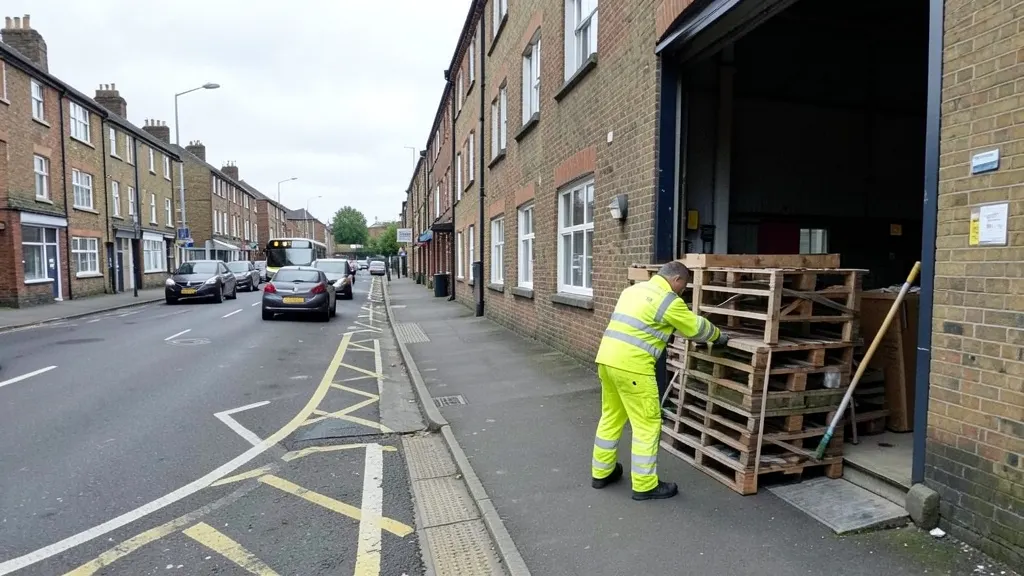
Birmingham is the largest city in the West Midlands, with a population of 1,144,900 at the 2021 census. It is a working city with a long manufacturing and engineering heritage, and the service sector provided 88% of city employment in 2012, with manufacturing at 8%. For anyone in a site, warehouse or logistics role, or simply getting to work and back in the darker months, being seen is a daily practical matter.
The city's geography shapes that need. Birmingham is served by the M5, M6, M40 and M42 motorways, and junctions such as Spaghetti Junction (the Gravelly Hill Interchange) and the Inner Ring Road carry heavy traffic at peak times. Rain plays its part too: the Winterbourne station records 132.5 days a year with 1.0 mm or more of rain, based on the 1991 to 2020 averages, so wet and grey conditions are common.
Daylight is short in winter. On the winter solstice in Birmingham, sunrise is at 08:15 and sunset is at 15:55, giving 7 hours and 39 minutes of daylight. There are 121 days a year when sunset comes before half past five in the evening or sunrise comes after quarter to eight in the morning, which means a normal commute is partly in the dark for a large part of the year.
What this guide covers
This page is a hub. It introduces the main reasons people in Birmingham look for hi-vis clothing and links to dedicated pages with more detail.
Work and site wear
Manufacturing, construction and distribution businesses in and around Birmingham employ many people in roles where high visibility clothing is part of the daily kit. If you work on a site, in a warehouse or around moving vehicles, our workwear page explains the standards and classes you need to understand. See Hi-vis for work and site wear in Birmingham for the local picture, and High visibility clothing workwear: choosing a hi vis jacket for general guidance.
The school run and children
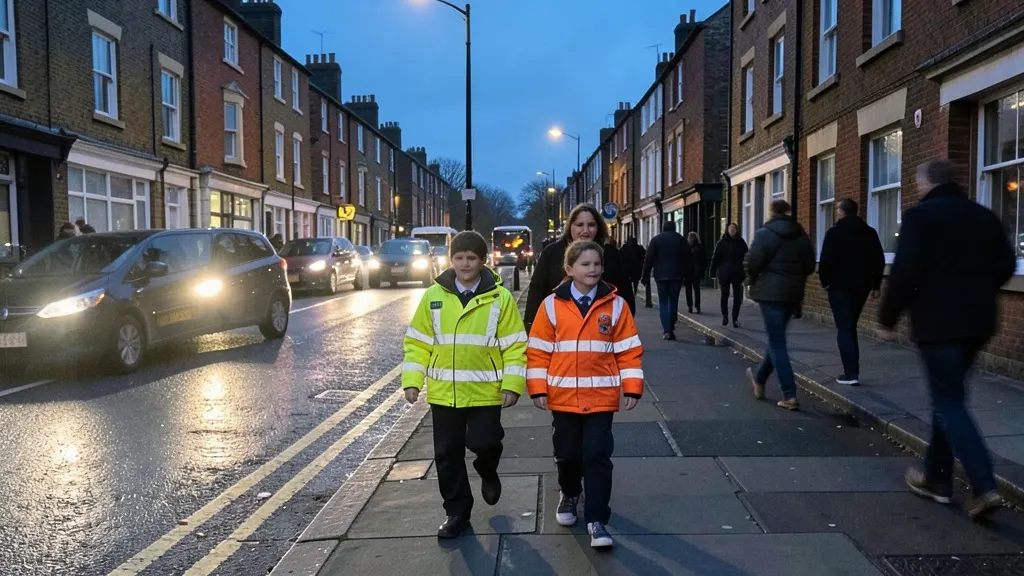
Birmingham is a large and varied city with plenty of busy school-run routes on built-up roads. A bright jacket or some reflective accessories can make a real difference on a winter afternoon. Our page on Hi-vis for the school run and children in Birmingham covers the practical options, and you can also read Kids hi vis jackets: myths and facts.
Dark winter commutes
Winter commutes on the ring roads and inner streets often start or end in the dark. Cyclists, motorcyclists, walkers and drivers all benefit from being seen earlier. Our page on Hi-vis for dark winter commutes in Birmingham goes into detail, and Winter hi vis jackets: a practical buyer's guide covers what to look for when buying.
General hi-vis guidance
A few principles apply whatever your reason for wearing hi-vis in Birmingham.
Fluorescent by day, reflective by night
Fluorescent colours help in daylight and poor light, but they do little in the dark. Retroreflective material, the silver striping on hi-vis garments, is what catches headlights. The Highway Code advises that reflective materials can be seen by drivers using headlights up to three times as far away as non-reflective materials. For cyclists, Rule 59 recommends light-coloured or fluorescent clothing in daylight and poor light, plus reflective clothing or accessories such as belts, arm or ankle bands after dark.
Know the classes if you need them for work
EN ISO 20471 has three classes, based on how much fluorescent and retroreflective material a garment contains. A class 1 jacket has a minimum fluorescent background area of 0.14 m2 and 0.10 m2 of retroreflective material. Class 2 requires 0.50 m2 of fluorescent background material and 0.13 m2 of retroreflective material. Class 3, the highest, needs at least 0.80 m2 of fluorescent background material and 0.20 m2 of retroreflective material. Many site jobs ask for class 2 as a minimum, and rail work follows the RIS-3279-TOM standard, which requires an orange colour and garments meeting at least class 2.
Under the Personal Protective Equipment at Work Regulations 1992, employers must provide suitable PPE to workers exposed to a health or safety risk, unless the risk is adequately controlled by other means. Since 6 April 2022, these duties also cover limb (b) workers, and the employer must provide the PPE free of charge.
Look after what you have
Hi-vis only works if it is clean and in good condition. HSE guidance says reusable PPE must be cleaned and kept in good condition, and hi-vis jackets, trousers and coveralls must be cleaned regularly. A garment caked in dirt or grease loses much of its fluorescent and reflective effect. Workers must report any loss, destruction or obvious defect.
Plan for the wet and the dark
With well over a hundred rain days a year and long stretches of the year when commutes fall outside daylight hours, waterproof and reflective clothing earns its keep in Birmingham. A jacket that keeps its reflective panels visible in the rain, rather than hiding them under a plain coat, is worth choosing. See Waterproof hi vis jackets: myths and facts for more on this.
Think about your whole journey
Cyclists should remember that visibility clothing supplements lights, not replaces them. Rule 60 of the Highway Code says a cycle must have white front and red rear lights lit at night, along with a red rear reflector. Sustrans National Cycle Route 5 goes through central Birmingham, connecting with Route 81 at Smethwick, and Route 535 runs from Sutton Coldfield, so there are useful traffic-free and quieter options, but lit and reflective kit remains essential on shared roads.
Where to go next
If you want the wider regional picture, start with Hi-vis clothing in West Midlands: a regional guide. For specific needs, use the Birmingham pages on work and site wear, the school run, or dark winter commutes, or the general guides to workwear, children's, winter, waterproof and cycling hi-vis jackets linked above. Birmingham also has numerous canals, known as the Birmingham Canal Navigations, and 571 parks, more than any other European city, including Sutton Park, a national nature reserve, so walkers, runners and dog walkers have plenty of places where visibility matters near water and traffic alike.
Choose the right garment for what you actually do, keep it clean, and replace it when the reflective striping starts to wear. That is the whole of the practical advice, and it holds whether you are on a building site, walking children to school or cycling home at half past four in the rain.
Birmingham at a glance
- Nation: England
- Region: West Midlands
- Population: 1144900
| Measure | Time |
|---|---|
| Sunrise on the winter solstice | 08:15 |
| Sunset on the winter solstice | 15:55 |
| Daylight on the winter solstice | 7h 39m |
| Sunset when the clocks go back (2026-10-25) | 16:51 |
| Days a year with a dark commute | 121 |
Frequently asked questions
What class of hi vis jacket do I need for work in Birmingham?
It depends on your role and your employer's risk assessment. EN ISO 20471 has three classes: class 1 has a minimum fluorescent background area of 0.14 m2, class 2 has 0.50 m2, and class 3 has 0.80 m2. Many site and warehouse roles require class 2 as a minimum, and rail work requires orange garments meeting at least class 2 under the RIS-3279-TOM standard.
Does my employer have to provide my hi-vis jacket?
Under the Personal Protective Equipment at Work Regulations 1992, employers must provide suitable PPE to workers exposed to a health or safety risk, unless the risk is adequately controlled by other means. Since 6 April 2022 the duties also cover limb (b) workers, and the employer must provide the PPE free of charge.
How dark does Birmingham get in winter?
On the winter solstice, sunrise in Birmingham is at 08:15 and sunset is at 15:55, giving 7 hours and 39 minutes of daylight. There are 121 days a year when sunset comes before half past five in the evening or sunrise comes after quarter to eight in the morning, so many commutes are partly in the dark.
Is a fluorescent jacket enough for walking children to school in the dark?
Fluorescent material works well in daylight and poor light but does little at night. Reflective material is what catches headlights, and the Highway Code notes that reflective materials can be seen by drivers up to three times as far away as non-reflective materials. A jacket with good reflective banding, or added items such as reflective armbands or ankle bands, is the better choice.
How should I care for a hi-vis jacket?
HSE guidance says reusable PPE must be cleaned and kept in good condition, and hi-vis jackets, trousers and coveralls must be cleaned regularly. Dirt and grease reduce both fluorescent and reflective performance. Workers must report any loss, destruction or obvious defect, and a garment with worn striping should be replaced.