Hi-vis jackets for Birmingham children and the school run
Last updated
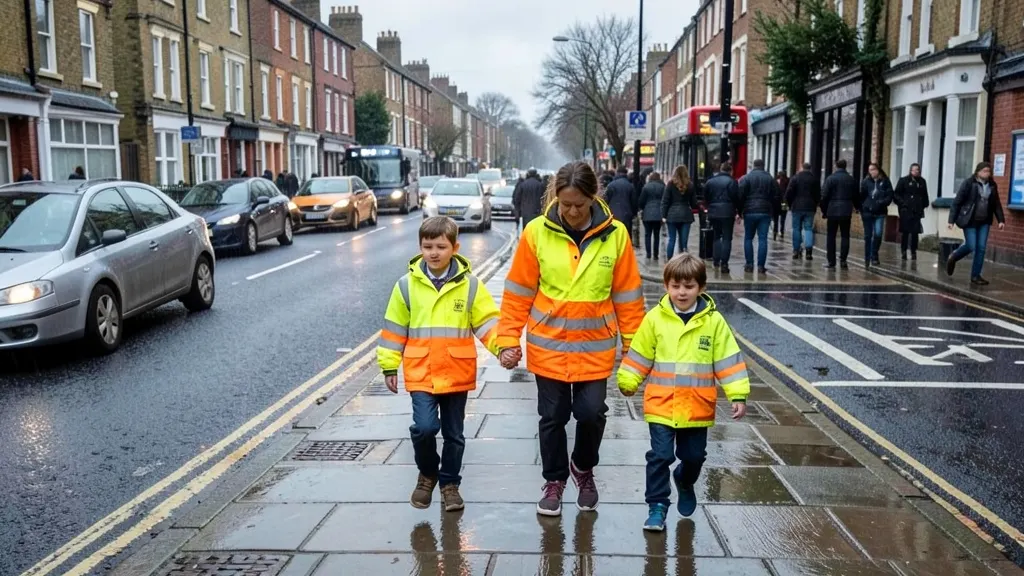
Birmingham is a big city, home to more than 1.1 million people at the 2021 census, and many of those households include children who walk, scoot or cycle to school on built-up roads. Term-time mornings and afternoons put families on pavements next to commuter traffic, buses and vans, often at exactly the times of day when drivers are rushed and light is poor. In winter it gets genuinely dark early here. The winter solstice gives Birmingham just 7 hours and 39 minutes of daylight, with sunrise at 08:15 and sunset at 15:55. That means the afternoon school run can happen in full darkness for weeks at a time.
There are 121 days a year in Birmingham when sunset comes before half past five or sunrise after quarter to eight, so a normal school journey is partly in the dark for a large part of the year. Add the weather and the problem grows. The Winterbourne weather station recorded 132.5 days a year with 1 mm or more of rain between 1991 and 2020, and grey, wet conditions cut contrast on top of cutting light. A child in a dark coat on a wet pavement next to a line of traffic is simply harder to pick out than many parents realise.
What the dark school run means for what your child wears
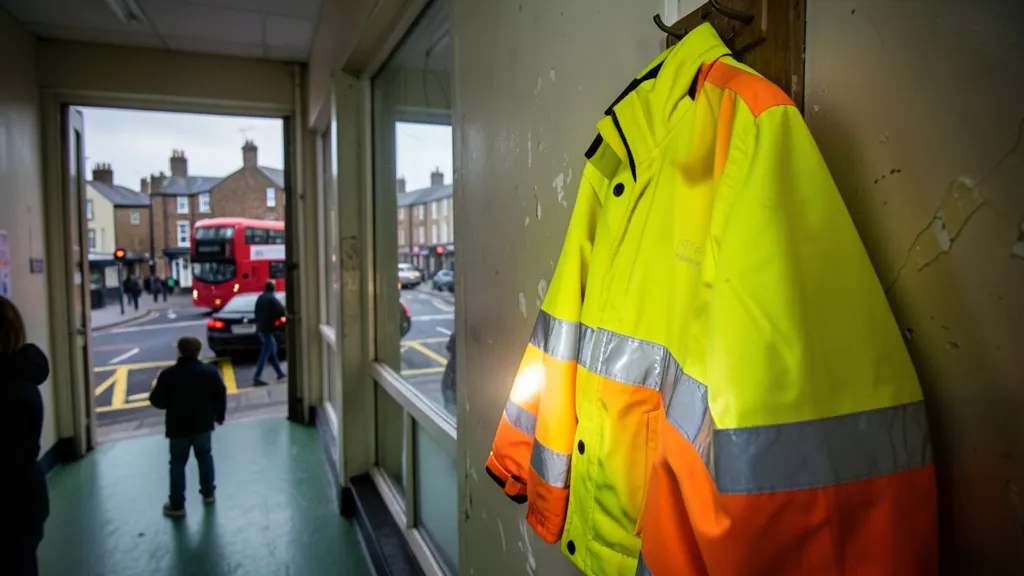
The two things that help a driver spot a child are different, and it is worth understanding the difference. Fluorescent material works in daylight and poor light. It converts ultraviolet light into visible glow and makes a child stand out on a grey drizzly morning. Reflective material works in the dark. It bounces headlight beams straight back towards the driver. The Highway Code is plain about this. Rule 3 says reflective materials such as armbands, sashes, waistcoats, jackets or footwear can be seen by drivers using headlights up to three times as far away as non-reflective materials, and Rule 17 says at night, wear something reflective to make it easier for others to see you.
So a good kids hi vis jacket needs both. A fluorescent yellow or pink shell for the walk to school in morning gloom, and reflective bands that light up on the walk home in the dark. For children who cycle, Rule 59 makes the same point for riders, and Rule 60 requires a white front light, red rear light and red rear reflector on the bike itself after dark. The jacket supports those lights but does not replace them.
If your child walks a route that crosses the paths of city traffic, it also helps to look at how the jacket is built. Birmingham's school run sits inside a ring of major roads, with the Inner Ring Road in the centre and the M5, M6, M40 and M42 feeding traffic in from outside. Local streets carry the spillover, and side visibility matters as much as front and back. Reflective strips that wrap around sleeves and hem do a better job of a driver pulling out of a side road or turning across a crossing.
Choosing a school hi vis jacket that actually solves it
Look for a proper childrens high visibility jacket rather than a fashion version with a small patch of reflective trim. Check the label for EN ISO 20471. This standard has three classes, and class 1 is the lowest, with a minimum of 0.14 m2 of fluorescent background material and 0.10 m2 of retroreflective material. For a childrens jacket, aim for something closer to the class 2 level, which requires 0.50 m2 of fluorescent background and 0.13 m2 of retroreflective material. That is enough coverage for a small body to register quickly at the kerb without making the jacket stiff or bulky.
Sizing matters more here than with ordinary coats. A hi-vis jacket only works if the reflective bands sit clear of bags, scarves and hoods, so choose a fit that layers over a school jumper without hanging loose. Cuffs should stay clear of the hands so children can grip scooter handles and bike brakes. A hood that folds away is better than an attached cap, and a full-length zip is easier for small fingers than poppers.
Rain is a constant in Birmingham, so a waterproof hi-vis jacket is worth considering for the winter terms. You can read more about what waterproof hi vis claims really mean in our guide to waterproof hi vis jackets, and our winter hi vis jackets buyer's guide covers insulation and fit for cold months. Some parents worry that fluorescent claims are often exaggerated, and we separate the myths from the facts in kids hi vis jackets: myths and facts.
Care and replacement
Hi-vis does not last forever, and children are harder on coats than most workers are. Wash the jacket regularly following the care label, because dirt and grime dull both the fluorescent background and the reflective bands. HSE guidance on hi-vis clothing is clear that such garments must be cleaned regularly and kept in good condition, and that principle applies just as sensibly at home as it does on a work site.
Check the jacket at the start of each term. Hold it under a torch or a car's headlights and look at the reflective strips. If they no longer glow strongly, if the fluorescent fabric has faded to a washed-out green, or if the jacket is two sizes too small so the bands sit under a bag, replace it. Our guide to how to keep children visible walking to school goes into more detail on building good habits, and if you are also sorting your own kit for dark mornings, see our page on hi-vis for dark winter commutes in Birmingham.
A childs hi vis jacket is a small, simple thing that makes a real difference on Birmingham's roads. Given how early the dark arrives here, it earns its keep from October through to March. For wider local information, see our main page on hi-vis clothing in Birmingham.
Frequently asked questions
Does my child need a hi-vis jacket in summer?
Fluorescent material still helps on dull, grey days, which Birmingham gets plenty of with 132.5 days of rain a year on the 1991 to 2020 averages. In bright summer daylight a hi-vis jacket is less critical, but many parents keep one in the bag for poor weather and evening activities. Reflective material only matters once it is dark.
What does class mean on a childrens hi-vis jacket?
EN ISO 20471 has three classes. Class 1 is the lowest, requiring 0.14 m2 of fluorescent material and 0.10 m2 of retroreflective material, while class 2 requires 0.50 m2 and 0.13 m2 respectively. For a school jacket, class 2 level coverage is a sensible target because it gives clear coverage without being bulky.
Is reflective better than fluorescent for the school run?
They do different jobs. Fluorescent material helps in daylight and poor light, so it suits the morning trip. Reflective material works in the dark, which matters for the journey home in Birmingham winters when sunset can come as early as 15:55 around the solstice. The best school hi vis jacket has both.
How often should I replace my child's hi-vis jacket?
Check it each term. HSE guidance says hi-vis garments must be cleaned regularly and kept in good condition, and that is a good habit to copy at home. If the reflective strips no longer shine under headlights, the fluorescent colour has faded, or the fit hides the reflective bands, buy a new one.
Does a hi-vis jacket replace bike lights for my child?
No. Under Highway Code Rule 60, a cycle used at night must have a white front light, a red rear light and a red rear reflector. A hi-vis jacket adds to that, it does not replace it. Rule 59 notes that light-coloured or fluorescent clothing helps in daylight and poor light, while reflective gear increases visibility in the dark.