Hi-vis jackets for dark winter commutes in Birmingham
Last updated
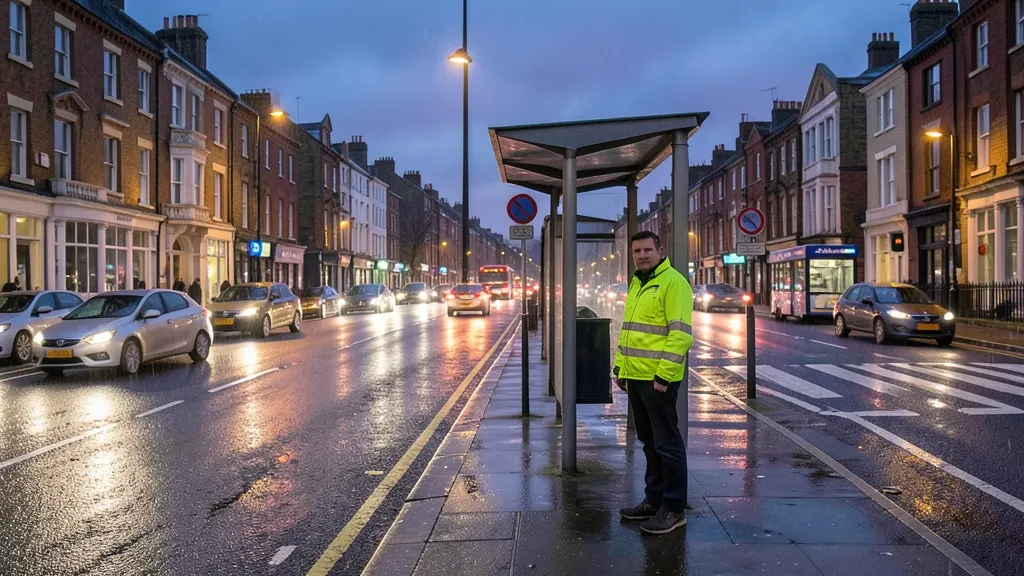
A Birmingham commute in the depths of winter
It is a little after seven in the morning in January, still properly dark, and the first commuters are stepping out of terraced streets on the edge of the city. Birmingham is a big place, home to 1,144,900 people at the 2021 census, and a large share of them travel in the hour before sunrise. The service sector provided 88% of city employment in 2012, so most of those journeys end at a desk, a counter, a hospital ward or a depot rather than a factory gate, but that does not change the beginning. It is dark when you leave the house.
Take a fairly typical journey. You walk ten minutes to a bus stop on a busy road near the Inner Ring Road, ride into the centre, then walk the last stretch to the office. On the winter solstice, sunrise in Birmingham is not until 08:15 and sunset is at 15:55, which gives only 7 hours and 39 minutes of daylight. The same trip home at half past five is done in full darkness. Across the year there are 121 days in Birmingham when sunset comes before half past five in the evening or sunrise comes after quarter to eight in the morning, so a normal commute is partly in the dark, not just on the shortest days.
The weather plays its part too. Winterbourne station recorded 132.5 days a year with 1.0 mm or more of rain across the 1991 to 2020 period, so drizzle and proper rain are both regular companions. Add headlights, wet road surfaces that scatter light, and the mix of cars, buses, bikes and pedestrians around Spaghetti Junction and the motorway approaches, and it is easy to see why visibility becomes a daily question rather than an occasional one.
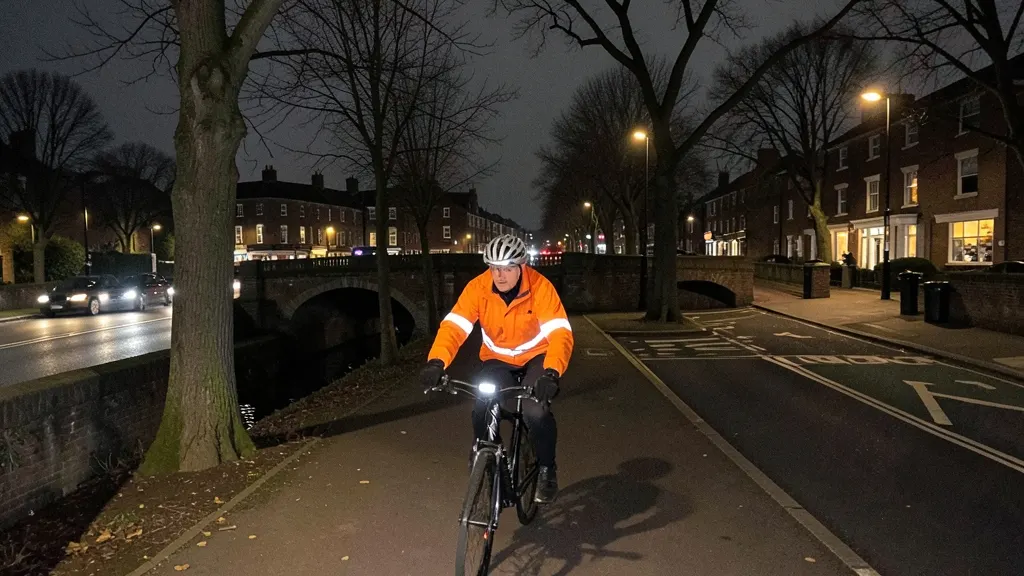
When visibility matters most on the journey
Not every minute of a commute carries the same risk. The moments that matter are the ones where you share space with fast traffic, where lighting is poor, or where a driver's attention is split.
Crossing and waiting near the ring road is the first. Bus stops on dual carriageways, crossings with multiple lanes, and junctions where traffic merges all put you close to vehicles that are moving with intent. A driver's headlights do the hard work of finding you, but only if something on you sends light back.
The evening walk home matters just as much. At half past five in January it is fully dark, pavements are crowded, and drivers are tired. Then there is the last stretch along quieter streets, where lighting is patchy and speeds can be higher than people expect. Cyclists face a sharper version of the same problem on the main corridors, and anyone who commutes on two wheels into the city centre has their own set of moments to think about, which we cover in our guide to hi-vis jackets for cycling.
Matching the jacket to each part of the day
The morning walk and bus stop wait
For pedestrians, the Highway Code is clear. Rule 3 asks you to help other road users to see you, and notes that in the dark, reflective materials such as armbands, sashes, waistcoats, jackets or footwear can be seen by drivers using headlights up to three times as far away as non-reflective materials. A winter hi vis jacket in yellow or orange with good reflective banding covers this. The fluorescent fabric helps in the grey half-light of dawn, and the retroreflective bands take over once it is properly dark. A fleece hi vis jacket is a comfortable choice for standing at a cold stop, and you can find more on the wider range of options in our winter hi vis jackets buyer's guide.
Rainy days and wet evenings
With well over a hundred days of measurable rain a year, a waterproof hi vis jacket earns its place quickly. Water on a road surface scatters headlight beams, which cuts contrast and makes people harder to pick out. If your jacket soaks through and loses its shape, the reflective bands sit flatter and catch less light. Our article on waterproof hi vis jackets: myths and facts goes into what the waterproof claims actually mean.
Cycling and riding in
Rule 59 of the Highway Code says light-coloured or fluorescent clothing can help other road users see a cyclist in daylight and poor light, while reflective clothing or accessories such as belts, arm or ankle bands can increase visibility in the dark. Rule 60 adds the legal bit: at night a cycle must have white front and red rear lights lit, plus a red rear reflector. Clothing and lights work together, so a jacket with strong side reflectives matters as much as the front and rear. For motorcyclists, Rule 86 suggests fluorescent clothing or strips to be visible from the side as well as the front and rear, and Rule 87 says reflective clothing or strips should be worn in the dark.
The office day and the journey home
A softshell hi vis jacket suits people who move between buildings, vans and sites, or who simply want something less bulky over work clothes. If your employer requires hi-vis, the Personal Protective Equipment at Work Regulations 1992 mean suitable PPE must be provided where there is a risk, and since 6 April 2022 those duties also cover limb (b) workers, with the employer providing it free of charge. HSE guidance adds that hi-vis garments must be cleaned regularly and kept in good condition, with workers reporting any loss or obvious defect. A grubby jacket loses fluorescence, and dirt over the reflective bands dulls them, so washing it is part of road safety, not just housekeeping.
For the school run version of the same journey, see our childs hi vis jacket Birmingham school run guide.
The takeaway
Birmingham gives you short winter days, a lot of rain, and busy roads feeding into the ring road and the motorways. One jacket, chosen for your actual journey, solves most of it: fluorescent colour for the gloom, retroreflective bands for the dark, a waterproof shell for the drizzle, and regular washing to keep both halves working. For a wider view of the subject across the city, see our guide to hi-vis clothing in Birmingham, or for the national picture, winter commute visibility: a practical UK guide.
Frequently asked questions
Why do Birmingham commutes need hi-vis in winter?
On the winter solstice, sunrise in Birmingham is at 08:15 and sunset is at 15:55, giving only 7 hours and 39 minutes of daylight. Across the year there are 121 days when sunset comes before half past five in the evening or sunrise after quarter to eight in the morning, so much of a normal commute happens in darkness or poor light.
What should a winter hi vis jacket for Birmingham include?
Look for fluorescent background fabric for daylight and grey conditions, retroreflective bands for darkness, and a waterproof shell to cope with the city's 132.5 days a year with 1.0 mm or more of rain. A fleece lining or a softshell construction helps with cold waits and long walks.
Do I legally need hi-vis on my commute?
For most ordinary commutes there is no legal requirement, but the Highway Code advises it. Rule 3 says reflective materials such as armbands, sashes, waistcoats, jackets or footwear can be seen by drivers using headlights up to three times as far away as non-reflective materials. Cyclists must have lights and a rear reflector at night under Rule 60.
How does EN ISO 20471 relate to a commuting jacket?
EN ISO 20471 has three classes, with class 3 being the highest, requiring at least 0.80 m2 of fluorescent background material and 0.20 m2 of retroreflective material. Commuters do not have to buy class 3, but knowing the classes helps you judge how much fluorescent and reflective material a jacket actually offers.
Does a hi-vis jacket need cleaning to keep working?
Yes. HSE guidance says hi-vis jackets, trousers and coveralls must be cleaned regularly and kept in good condition, and workers must report any loss, destruction or obvious defect. Dirt dulls both the fluorescent colour and the reflective bands, so regular washing keeps the jacket doing its job.