Hi-vis for the school run and children in Bradford
Last updated
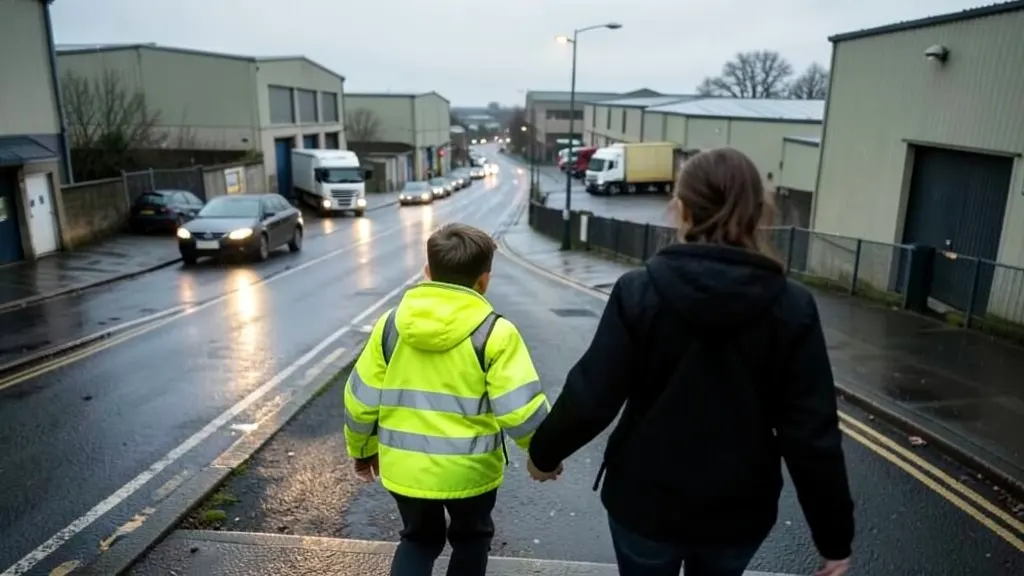
Bradford sits in the eastern foothills of the South Pennines moorland region, and much of the city is built on slopes. With a population of 352,317 in the city and 546,976 in the wider metropolitan borough, a great many children walk to school each morning along steep, built-up residential streets. Those streets carry morning traffic, parked cars and delivery vans, often in poor light.
The light really is the issue. On the winter solstice in Bradford the sun rises at 08:22 and sets at 15:47, giving just 7 hours and 25 minutes of daylight. In Bradford there are 123 days a year when sunset comes before half past five in the evening or sunrise after quarter to eight in the morning. So a normal school run is partly in the dark, or at least in the grey half-light of early morning and mid afternoon. A child in a dark coat against a background of parked cars and terraced housing is very hard for a driver to pick out.
The inclines add their own complication. Children walking uphill on a cold morning are often muffled up in hoods and scarves, which hides even more of them. Coming downhill, drivers can be travelling faster than they realise, and a child stepping out between parked cars has less time to be seen than anyone would like.
What the dark school run means for what your child wears
The distinction that matters is between fluorescent and reflective materials, because they do different jobs in different light.
Fluorescent colours, such as yellow, work best in daylight and poor daylight. They make a child stand out against pavement, brick and parked cars on a gloomy morning. Reflective strips, on the other hand, only do their job when light hits them, which means headlights. The Highway Code (Rule 3) is clear on the point: reflective materials such as armbands, sashes, waistcoats, jackets or footwear can be seen by drivers using headlights up to three times as far away as non-reflective materials. Rule 17 simply says that at night, you should wear something reflective to make it easier for others to see you.
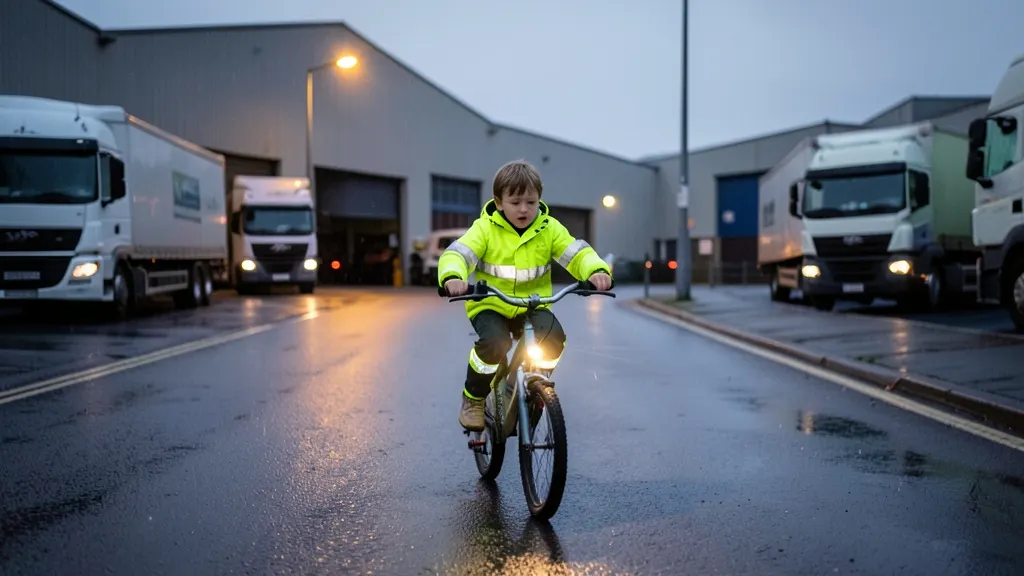
For a Bradford school run in winter, a child ideally needs both. Fluorescent colour for the walk there in the morning half-light, reflective material for the walk home after the last bell when the streetlights are already on. If your child cycles, Rule 59 of the Highway Code says fluorescent clothing can help other road users see a cyclist in daylight and poor light, while reflective clothing or accessories such as belts, arm or ankle bands can increase visibility in the dark. Rule 60 also requires a white front light and red rear light to be lit at night, along with a red rear reflector, so a jacket is a supplement to good lights, never a replacement.
Choosing a kids hi vis jacket
A childrens high visibility jacket does not need to meet any particular standard to be worn on the street, but the standard tells you something useful about how much visible material a garment actually contains. EN ISO 20471 has three classes. A class 1 garment needs a minimum fluorescent background area of 0.14 m2 and 0.10 m2 of retroreflective material. Class 2 steps up to 0.50 m2 of fluorescent background and 0.13 m2 of retroreflective material. Class 3 is the highest, with at least 0.80 m2 of fluorescent background material and 0.20 m2 of retroreflective material.
For an adult walking on a road with traffic, class 2 or class 3 is the sensible level. For a child on a pavement, a smaller class 1 garment can still be perfectly reasonable, and many school hi vis jackets fall into that category. The thing to check is that the reflective strips sit where a driver will see them, around the body and down the arms, rather than being purely decorative flashes.
Fit matters more than you might expect. A jacket worn half undone because it is tight across the chest loses half its fluorescent area. A jacket bought two sizes too big so it lasts two years flaps about and the child will resist wearing it. Sleeves should reach the wrists with arms raised, and the zip should close comfortably over a school jumper. If the coat doubles as a rain jacket for Bradford weather, check the seams and the hood. A wet, hood-up child is the hardest kind to see, so reflective piping on the hood helps. Our page on waterproof hi vis jackets goes into what to look for in a wet-weather jacket.
Also think about the whole outfit. Brightly patterned reflective strips on a backpack, reflective dots on trainers and a small flashing light on the bag all add up. For more detail on what works and what does not, see kids hi vis jackets: myths and facts.
Practical care and replacement
A hi-vis jacket only works while it is clean and intact. Guidance from the Health and Safety Executive on workplace PPE is a good rule of thumb for home use too: hi-vis garments must be cleaned regularly and kept in good condition, and any loss, destruction or obvious defect should be reported. In practice, that means washing the jacket when the fluorescent material has gone grey with playground mud, checking that the reflective strips still bounce light back rather than looking dull, and replacing the jacket when the strips crack or peel.
Wash it inside out on a gentle cycle, skip fabric conditioner, because it can coat reflective material and dull it, and let it drip dry rather than putting it on a radiator where heat can damage the reflective coating. A quick check each term is enough. Take the jacket into a dark room and shine a torch or phone light at it. If the strips still flash back brightly, it is doing its job.
If the reflective material has dulled but the fabric is fine, an arm band or ankle band is a cheap way to restore reflective coverage, and reflective material works by bouncing light straight back towards its source. Our guide to how reflective material works explains the science simply, and our broader page on hi-vis clothing in Bradford covers winter, the school run and work across the city.
Finally, get your child involved in choosing the jacket. A child who picked the colour, and who understands that the shiny bits make cars see them, will wear it every day. A child handed a jacket they did not choose will leave it on the coat peg by October. See also our guide on how to keep children visible walking to school.
Frequently asked questions
What should I look for in a childs hi vis jacket in Bradford?
Look for a fluorescent background, ideally yellow, with retroreflective strips around the body and sleeves. The EN ISO 20471 classes give you a guide to how much visible material a garment contains, with class 1 requiring at least 0.14 m2 of fluorescent background and class 3 the most at 0.80 m2. For a child on a pavement, class 1 or 2 is usually sufficient.
Does my child need a hi vis jacket on the school run?
There is no law requiring it, but with 123 days a year in Bradford when sunset comes before half past five or sunrise after quarter to eight, a good part of the school run happens in poor light or darkness. The Highway Code recommends reflective materials at night, and Rule 3 notes drivers using headlights can see them up to three times as far away as non-reflective materials.
Is fluorescent or reflective material better for children?
They do different jobs. Fluorescent colours work best in daylight and poor light, while reflective strips respond to headlights in the dark. A good childrens high visibility jacket combines both, so your child is visible on the dull morning walk and on the dark journey home.
How often should I wash or replace a kids hi vis jacket?
Wash it whenever the fluorescent material looks grey with dirt, following the care label and avoiding fabric conditioner, which can dull reflective strips. Check it each term by shining a light at the strips in a dark room. If the reflective material no longer flashes back, replace the jacket or add reflective accessories such as arm bands.
Is a hi vis jacket enough for a child who cycles to school?
No, it works alongside proper lighting. Rule 60 of the Highway Code requires a cycle at night to have a white front light and red rear light lit, plus a red rear reflector. Rule 59 says reflective clothing or accessories such as belts, arm or ankle bands can increase visibility in the dark, so a jacket is a useful extra layer of protection.