Hi-vis clothing in Bradford
Last updated
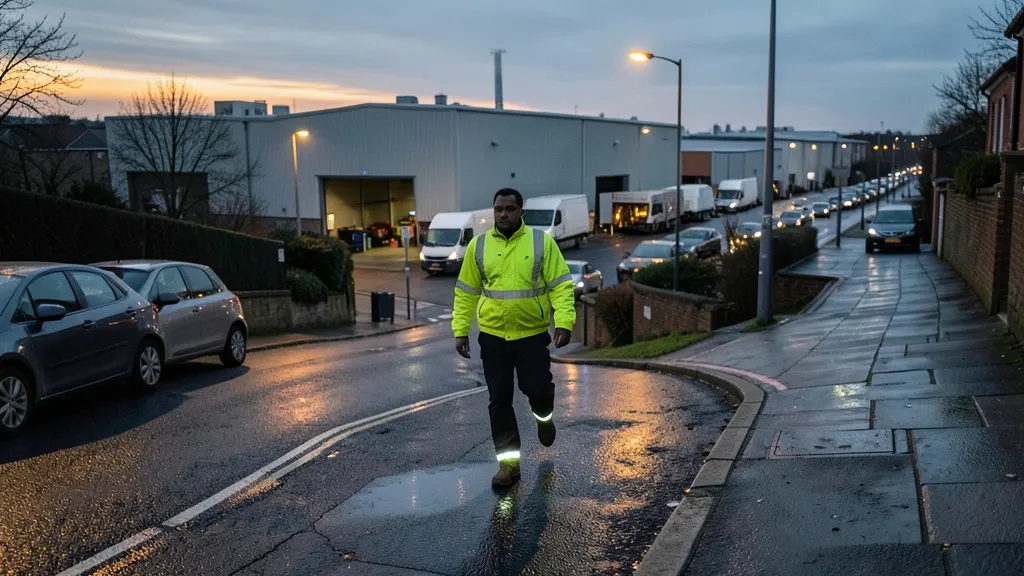
Bradford sits in the eastern foothills of the South Pennines moorland region, and that geography shapes daily life in the city. With a population of 352,317 in the city itself, and 546,976 across the wider metropolitan borough according to the 2021 census, plenty of people are out on pavements and roads every day of the year. The city grew around textile manufacture, particularly wool, and today financial and manufacturing industries sit alongside that industrial heritage. Bradford holds the third-largest economy within the Yorkshire and the Humber region, at around 10 billion pounds, so this is a busy, working place with people travelling at all hours.
The winter numbers explain why visibility matters here. On the winter solstice in Bradford, sunrise is at 08:22 and sunset is at 15:47, giving just 7 hours and 25 minutes of daylight. Across the year there are 123 days when sunset comes before half past five in the evening or sunrise after quarter to eight in the morning, which means a normal commute is partly in the dark. The clocks go back on 25 October 2026, and sunset in Bradford that day is at 16:47, right in the middle of the evening journey home. If you leave work at five and the light is already gone, what you wear becomes part of your road safety kit.
What this guide covers
This page gathers the practical hi-vis advice that matters in Bradford, split into three themes. Each theme has its own page with more detail.
Dark winter commutes
Long winters, early darkness and steep local roads add up to a real visibility concern for anyone travelling after work. Cyclists, walkers, runners and motorcyclists all face the same problem: drivers need to see you early, and street lighting in built-up areas is not always enough. Our page on hi-vis for dark winter commutes in Bradford goes into jacket choices, reflective detail and lighting. If you want broader product guidance, the winter hi vis jackets: a practical buyer's guide is a good companion.
The school run and children
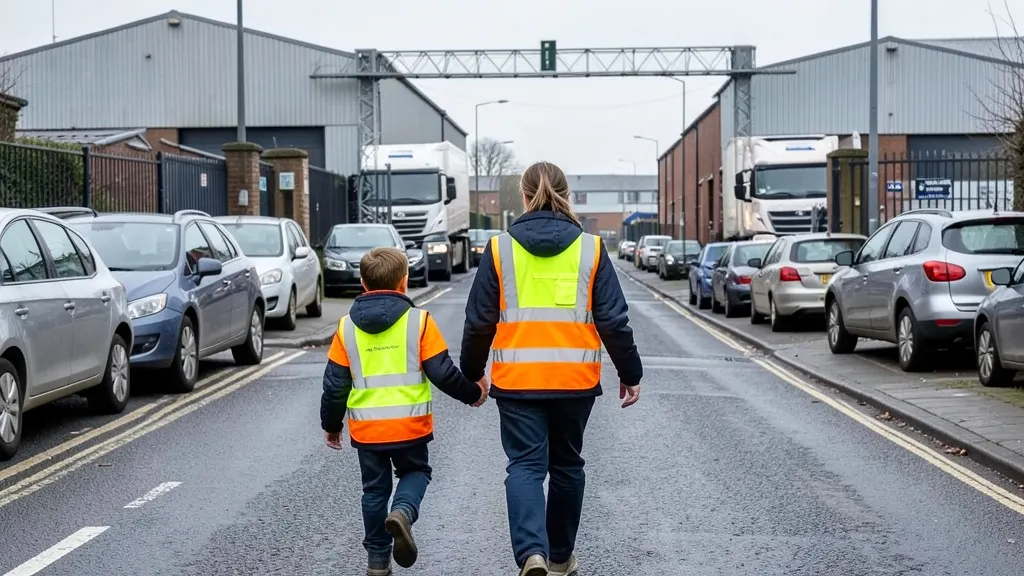
Many school journeys in Bradford happen on steep, built-up residential streets, often in exactly the low light described above. Children are smaller, harder for drivers to spot, and less predictable at the kerb, so bright, well-fitting hi-vis really earns its keep. Our page on hi-vis for the school run and children in Bradford covers jackets, bibs and accessories for children, while kids hi vis jackets: myths and facts busts a few common misunderstandings.
Work and site wear
Manufacturing and distribution sites around the city employ a large number of outdoor workers, from yard staff to delivery drivers and maintenance crews. Hi-vis workwear is not a nice-to-have on these sites; it is standard protective equipment. See high visibility clothing workwear: choosing a hi vis jacket for the full picture on classes, colours and care.
General hi-vis guidance that applies across all three themes
A few principles hold true whether you are commuting, walking the children to school or working on a site.
Understand the two materials. Hi-vis garments work in two ways. Fluorescent material (typically yellow, orange or red) makes you conspicuous in daylight and poor light. Retroreflective material, the grey or silver bands and panels, only shines when a light source hits it, which makes it essential at night under headlights. A jacket with plenty of both covers you across the day. Garments sold as compliant hi-vis follow EN ISO 20471, which has three classes. The minimum fluorescent background area is 0.14 m2 for class 1, 0.50 m2 for class 2 and 0.80 m2 for class 3, with minimum retroreflective areas of 0.10, 0.13 and 0.20 m2 respectively. Class 3 is the highest, and for anyone on fast or dark roads, such as cycle commuters, it is the level worth aiming for.
Follow the Highway Code. Rule 3 asks all road users to help others see them, and notes that reflective materials such as armbands, sashes, waistcoats, jackets or footwear can be seen by drivers using headlights up to three times as far away as non-reflective materials. Rule 59 advises cyclists to use light-coloured or fluorescent clothing in daylight and poor light, with reflective clothing or accessories, such as belts, arm or ankle bands, in the dark. Rule 60 requires a white front light and red rear light, lit, plus a red rear reflector, when cycling at night. Motorcyclists get similar advice under Rules 86 and 87, including making themselves visible from the side as well as front and rear.
Look after what you buy. Hi-vis only works if it is clean and intact. HSE guidance says reusable PPE must be cleaned and kept in good condition, hi-vis jackets, trousers and coveralls must be cleaned regularly, and workers must report any loss, destruction or obvious defect. That advice is just as sound for a commuter's jacket or a child's bib. Grubby fluorescent fabric fades towards grey, and reflective strips lose their shine once coated in road grime.
Know the law at work. Under the Personal Protective Equipment at Work Regulations 1992, employers must provide suitable PPE to workers exposed to a risk to health or safety, unless that risk is adequately controlled by other means. Since 6 April 2022 these duties also cover limb (b) workers, and the employer must provide the PPE free of charge. If you work outdoors in Bradford, your employer should be supplying your hi-vis, not your own wallet.
Where to read next
Start with the Bradford theme page that fits your day: hi-vis for dark winter commutes in Bradford or hi-vis for the school run and children in Bradford. For wider background, the regional overview at hi-vis clothing in Yorkshire: a regional guide sets Bradford in context. Cyclists may also find the dedicated hi-vis jackets for cycling: a buyer's guide useful, and if Bradford's weather does its worst, waterproof hi vis jackets: myths and facts sorts the marketing claims from the useful features.
Bradford at a glance
- Nation: England
- Region: Yorkshire
- Population: 352317
| Measure | Time |
|---|---|
| Sunrise on the winter solstice | 08:22 |
| Sunset on the winter solstice | 15:47 |
| Daylight on the winter solstice | 7h 25m |
| Sunset when the clocks go back (2026-10-25) | 16:47 |
| Days a year with a dark commute | 123 |
Frequently asked questions
Why does hi-vis matter so much in Bradford in winter?
On the winter solstice, sunrise in Bradford is at 08:22 and sunset is at 15:47, giving just 7 hours and 25 minutes of daylight. There are 123 days a year when sunset comes before half past five or sunrise after quarter to eight, so many journeys are partly in the dark. Reflective material on your jacket or accessories makes you visible to drivers far earlier.
What class of hi-vis jacket should I choose?
EN ISO 20471 has three classes. Class 1 requires at least 0.14 m2 of fluorescent background material, class 2 requires 0.50 m2 and class 3, the highest, requires 0.80 m2 plus 0.20 m2 of retroreflective material. For dark or fast roads, aim for class 2 as a minimum and class 3 where the risk is higher.
Does my employer have to provide hi-vis clothing?
Under the Personal Protective Equipment at Work Regulations 1992, employers must provide suitable PPE to workers exposed to a health or safety risk, unless the risk is controlled by other means. Since 6 April 2022 the duties also cover limb (b) workers, and the employer must provide the PPE free of charge.
Is fluorescent or reflective material better for commuting in the dark?
They do different jobs. Fluorescent material works best in daylight and poor light, while retroreflective material only shines under a light source such as headlights, which is what you need at night. Rule 3 of the Highway Code notes that reflective materials can be seen by drivers using headlights up to three times as far away as non-reflective materials, so the best jacket has both.
How should I look after a hi-vis jacket?
Clean it regularly, because grime dulls both the fluorescent colour and the reflective strips. HSE guidance on reusable PPE says hi-vis jackets, trousers and coveralls must be cleaned regularly and kept in good condition, and workers must report any loss or obvious defect. A faded or damaged jacket is no longer doing its job.