Winter hi-vis jackets for dark commutes in Blackpool
Last updated
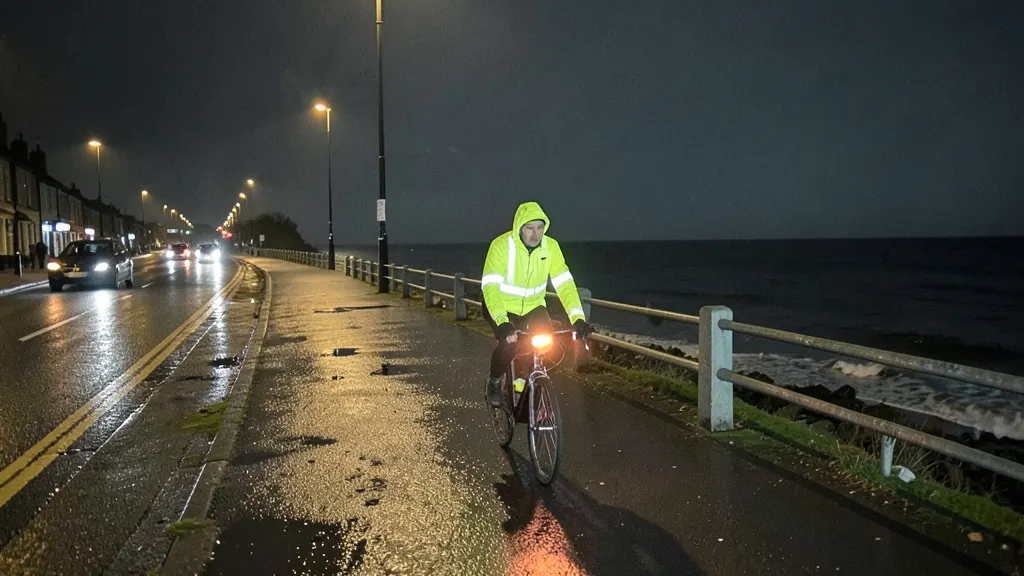
A dark commute on the Fylde coast
It is a little after eight in the morning in late December, and Blackpool is still dark. On the winter solstice the sun does not rise here until 08:27, and it sets again at 15:52, giving just 7 hours and 24 minutes of daylight. For a worker heading for a shift in a town whose economy remains centred around tourism, that means both ends of the journey happen in the dark.
The picture is the same across the season. In Blackpool there are 124 days a year when sunset comes before half past five in the evening or sunrise after quarter to eight in the morning. Add the clocks going back on 25 October 2026, when the sun sets at 16:53, and a huge stretch of the working year involves travelling home in the dark.
Blackpool sits on the Irish Sea coast of the Fylde peninsula, and that geography shapes the commute. Sea air can carry damp and salt spray onto clothing, and the Promenade, famous for being part of the world's first municipal electric street lighting back in 1879, still has long stretches where your own visibility matters more than the streetlights. Plenty of locals also ride the Blackpool Tramway, which opened officially on 29 September 1885, but the walk or ride to the stop is often the darkest part of the trip.
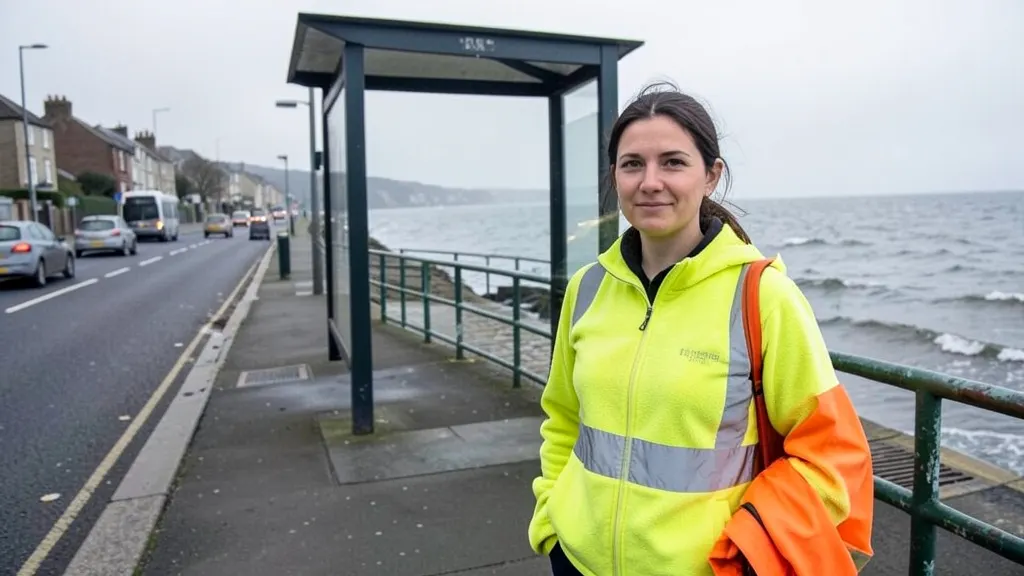
When visibility matters most
The first pinch point is the walk from the front door to the main road. A pedestrian in dark clothing is easy to miss under headlights. The Highway Code is blunt about this. Rule 3 advises helping other road users to see you, and notes that in the dark reflective materials such as armbands, sashes, waistcoats, jackets or footwear can be seen by drivers using headlights up to three times as far away as non-reflective materials. Rule 17 says it plainly: at night, wear something reflective.
Cyclists face the same problem with more speed involved. Rule 59 explains that light-coloured or fluorescent clothing helps in daylight and poor light, while reflective clothing or accessories such as belts, arm or ankle bands increase visibility in the dark. Rule 60 adds a legal requirement: at night a cycle must have white front and red rear lights lit, plus a red rear reflector. A hi-vis jacket does not replace those lights, it works alongside them.
For anyone working outdoors, the Personal Protective Equipment at Work Regulations 1992 require employers to provide suitable PPE where there is a risk to health or safety and other controls are not enough. Since 6 April 2022 that duty also covers limb (b) workers, and the PPE must be provided free of charge. Winter maintenance crews, seafront staff and delivery riders all fall into this group in a tourist town like Blackpool.
Kit for each moment
The walk and the wait
For short walks and waits at tram or bus stops, a fleece hi-vis jacket is often the easiest choice. It keeps the warmth in without bulk, and the fluorescent background gets you noticed under streetlights. If you want more coverage, EN ISO 20471 class 2 requires at least 0.50 square metres of fluorescent material and 0.13 square metres of retroreflective material, which is plenty for most urban commuting. The fleece lining earns its keep when the wind comes in off the Irish Sea.
The cycle along the coast
Blackpool is well served for two wheels. National Cycle Route 62 follows the coast on traffic-free paths from Fleetwood to Lytham St Annes via Blackpool, which is a genuine gift for dark mornings. Even so, you will cross roads, and crossings are where reflective panels on a softshell hi-vis jacket prove their worth. A softshell blocks the wind, sheds a light shower and moves with you on the pedals, and the retroreflective tape lights up as soon as headlights hit it. For more detail on choosing cycling gear, see our guide to hi-vis jackets for cycling, or read the local angle in Hi vis jacket cycling in Blackpool: a local guide.
Wet days and exposed stretches
When the weather turns properly wet, a waterproof hi vis jacket is the piece that keeps the rest of your clothes usable at work. Look for taped seams and storm flaps rather than just a coated fabric. Wet reflective tape loses some of its shine, so a hood and a decent front zip matter as much as the colour. Our piece on waterproof hi vis jackets covers the common myths and facts.
Working shifts outdoors
If you are roadside or trackside for work, the class of your garment counts. Class 3, the highest under EN ISO 20471, needs at least 0.80 square metres of fluorescent background material and 0.20 square metres of retroreflective material. HSE guidance also says reusable PPE must be cleaned and kept in good condition, and that hi-vis jackets, trousers and coveralls must be cleaned regularly, with workers reporting any loss or obvious defect. A jacket that has been through a wet Blackpool winter and never washed will not perform as well as it did when new.
The takeaway
With sunrise at 08:27 on the shortest day, Blackpool commutes will be dark for a good part of the year, and no single jacket covers every situation. Match the garment to the moment: a fleece hi-vis jacket for short walks, a softshell for the bike, a waterproof hi vis jacket for the wet stuff, and a class 3 garment where the rules of your job require it. For wider advice, read our winter hi vis jackets buyer's guide or the broader winter commute visibility guide. More local background is in our Hi-vis jacket in Blackpool: a local guide.
Frequently asked questions
Why does a winter hi vis jacket matter more in Blackpool than in many inland towns?
Blackpool has 124 days a year when sunset comes before half past five or sunrise after quarter to eight, so commuting in the dark is normal for a large part of the year. On the winter solstice the sun rises at 08:27 and sets at 15:52, giving only 7 hours and 24 minutes of daylight. The exposed Irish Sea coastline also adds wind, damp and salt spray that affect what you wear.
What should cyclists in Blackpool wear for dark commutes?
Rule 59 of the Highway Code recommends light-coloured or fluorescent clothing in daylight and poor light, plus reflective clothing or accessories such as belts, arm or ankle bands in the dark. Rule 60 also requires a white front light, a red rear light and a red rear reflector at night. A softshell hi-vis jacket works well on traffic-free routes like National Cycle Route 62, which runs from Fleetwood to Lytham St Annes via Blackpool.
Is a fleece hi-vis jacket warm enough for winter on the coast?
For walking and waiting at stops, a fleece hi-vis jacket usually gives enough warmth without bulk. For cycling or longer exposure in wind and rain, layer it under a waterproof hi vis jacket. The fluorescent background gets you seen under streetlights while the fleece handles the cold.
What class of hi-vis jacket do I legally need for work?
That depends on your role. Under the Personal Protective Equipment at Work Regulations 1992, employers must provide suitable PPE where there is a risk that other measures do not control. Since 6 April 2022 this also covers limb (b) workers, free of charge. For higher-risk settings, class 3 under EN ISO 20471 requires at least 0.80 square metres of fluorescent material and 0.20 square metres of retroreflective material.
Does a hi-vis jacket replace bike lights at night?
No. Rule 60 requires a cycle to have lit white front and red rear lights plus a red rear reflector at night. A hi-vis jacket and reflective accessories improve how far away drivers can see you, but the lights are a legal requirement and do a job a jacket cannot.