Cycling and commuting in Blackpool: choosing a hi vis jacket
Last updated
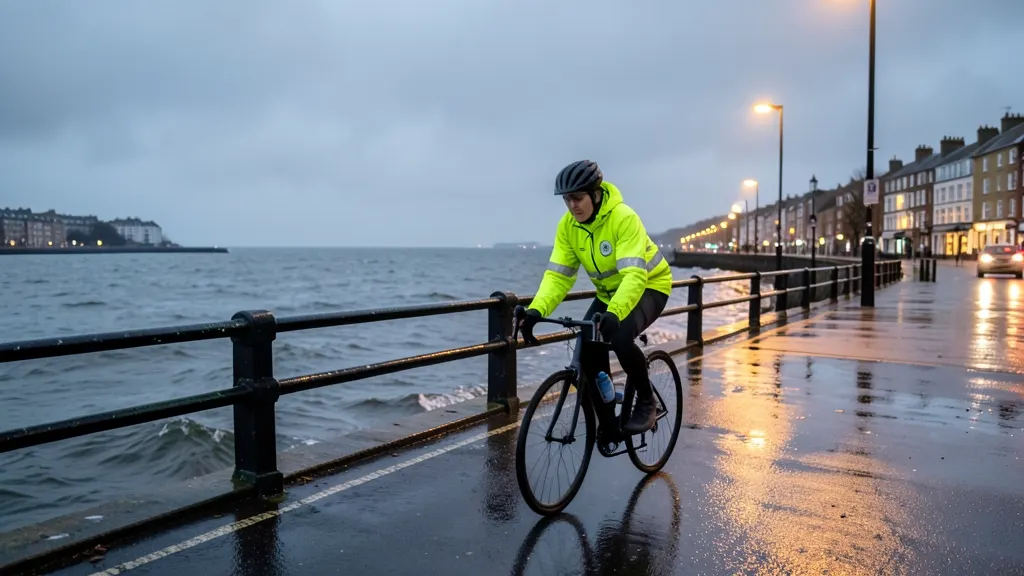
If you commute by bike in Blackpool, you will spend a good chunk of the year riding in the dark. There are 124 days a year in the town when sunset comes before half past five in the evening or sunrise after quarter to eight in the morning. On the winter solstice the sun does not rise until 08:27 and it sets at 15:52, leaving just 7 hours and 24 minutes of daylight. For anyone travelling to and from work or school, that means part of the journey happens with little or no daylight at all. A hi vis jacket stops being a nice extra and becomes part of your everyday kit.
The setting matters too. Blackpool sits on the Irish Sea coast of the Fylde peninsula, and a coastal town brings its own visibility problems. Sea air can carry damp haze, and winter weather rolling in off the Irish Sea can grey everything out, from the sky to the road. Drivers heading into a resort town whose economy is centred around tourism are often unfamiliar with the roads, looking for parking or distractions rather than a cyclist at a junction. That combination of low winter light, coastal murk and traffic that is not always expecting bikes makes you easy to miss unless you make yourself hard to miss.
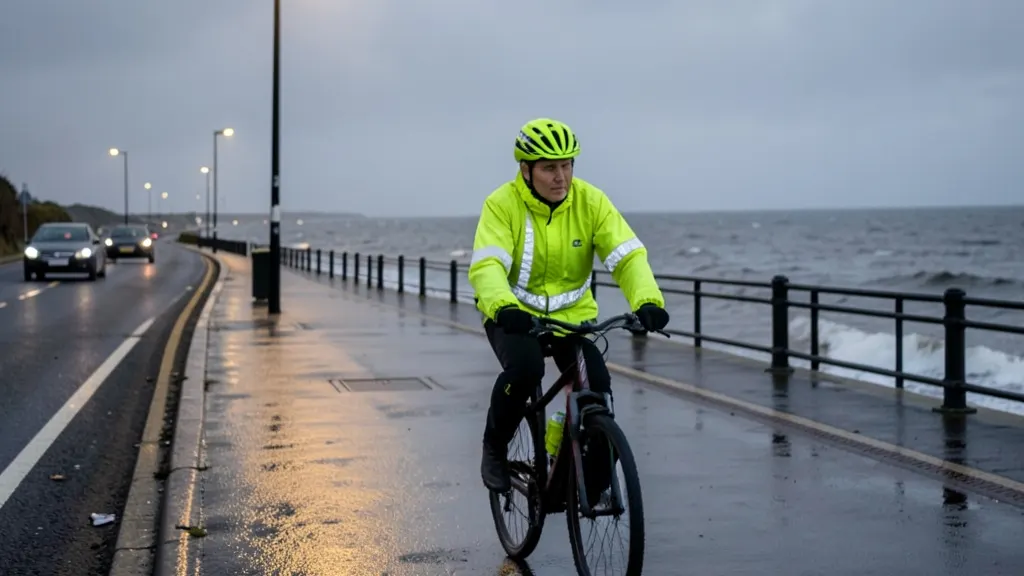
What this means for what you wear
The Highway Code is clear on the principle. Rule 59 says light-coloured or fluorescent clothing can help other road users see a cyclist in daylight and poor light, while reflective clothing or accessories can increase visibility in the dark. Rule 60 adds that at night a cycle must have white front and red rear lights lit, plus a red rear reflector. So your jacket works alongside your lights, not instead of them.
The key thing to understand is that fluorescent material and reflective material do different jobs. Fluorescent yellow, orange or pink stands out in daylight and poor light because it converts ultraviolet light into extra visible glow. In full darkness, with no daylight to work with, it behaves like any other colour. Reflective material is the opposite. Retroreflective bands and panels bounce light from headlights straight back to the driver, which is why Rule 3 says reflective materials can be seen by drivers using headlights up to three times as far away as non-reflective ones. In Blackpool, where so much commuting happens in the dark, you need both.
Our guide to how reflective material works explains the science in more detail, and what the highway code says about hi-vis covers the rules for cyclists, motorcyclists and pedestrians.
Choosing a cycling hi vis jacket
A cycling hi vis jacket needs to do three things well: show up in daylight, glow in headlights, and keep the weather out. Here is how to weigh them up.
Look for both material types. A good high visibility cycling jacket has a fluorescent background across the chest, back and arms plus retroreflective bands around the torso and sleeves. The bands matter most after dark, so check they wrap around rather than sitting only on the front. Reflective piping on cuffs and elbows moves as you pedal, which catches a driver's eye at junctions.
Decide how much coverage you want. EN ISO 20471 sets three classes of hi-vis garment. Class 1 needs a minimum of 0.14 m2 of fluorescent background material, class 2 needs 0.50 m2, and class 3, the highest, needs at least 0.80 m2 of fluorescent material and 0.20 m2 of retroreflective material. You do not legally need any class to ride a bike, but the numbers give you a useful yardstick. A class 2 cycling jacket covers most commuting needs. If you ride on faster or busier roads in the dark, class 3 coverage gives more margin for error.
Get a waterproof hi vis jacket. Coastal rain and drizzle are a fact of life here, and a jacket that soaks through on a wet evening commute will end up left at home. Look for taped seams, a storm flap over the zip and some ventilation at the back or under the arms so you do not overheat on the ride. The myths and facts page on waterproof hi vis jackets is worth a read before you buy, and the winter hi vis jackets guide covers cold-weather options.
Think about fit for the bike. Commuter jackets are cut longer at the back so your lower back stays covered when you lean forward. A slightly roomy fit lets you wear a jumper underneath in winter, but avoid anything so loose it flaps about or catches the wind.
One local comfort: if your route takes you along traffic-free coastal paths, you may not need maximum visibility for every mile. National Cycle Route 62 runs on traffic-free paths from Fleetwood to Lytham St Annes via Blackpool, and quieter stretches are a good place to warm up before you join busier streets. The riskiest parts of most commutes are junctions, roundabouts and crossings, and that is where your reflective panels earn their keep.
Caring for your jacket
Hi-vis garments work only while they are clean and intact. Guidance from the Health and Safety Executive on protective clothing says reusable items must be cleaned regularly and kept in good condition, with any loss, destruction or obvious defect reported. The same logic applies to your own jacket.
Wash it as the label instructs, usually at a low temperature, and skip fabric conditioner because it can leave a film that dulls reflective strips. Do not tumble dry unless the label says so, since heat can crack the retroreflective coating. Mud on the shoulders and back dims the fluorescent colour, so if you have been riding wet coastal paths, rinse grit off promptly.
Inspect the jacket every few weeks. If the fluorescent fabric has faded towards grey, the reflective bands no longer shine when a torch or car headlights catch them, or the waterproofing has given up, it is time to replace it. A hi-vis jacket that no longer does its job is just a yellow jacket, and on a dark December evening in Blackpool, with lights required and drivers hunting through rain, that is not enough. For a wider look at options, see the buyer's guide to hi-vis jackets for cycling and our broader hi-vis guide for Blackpool.
Frequently asked questions
Do I legally have to wear a hi vis jacket when cycling in Blackpool?
No. UK law does not require cyclists to wear hi-vis, and Rule 60 of the Highway Code requires only that your cycle has white front and red rear lights lit at night plus a red rear reflector. However, Rule 59 recommends light-coloured or fluorescent clothing in daylight and poor light, and reflective clothing or accessories in the dark. On Blackpool's dark winter commutes, a hi vis jacket is strongly advisable even though it is not compulsory.
Why does winter commuting in Blackpool involve so much riding in the dark?
Blackpool has 124 days a year when sunset comes before half past five in the evening or sunrise after quarter to eight in the morning. On the winter solstice sunrise is at 08:27 and sunset at 15:52, giving only 7 hours and 24 minutes of daylight. Most nine-to-five commuters will therefore travel partly or entirely in the dark for a large part of the year.
What is the best hi vis jacket for riding to work in Blackpool?
Choose a waterproof hi vis jacket with a fluorescent background plus retroreflective bands around the torso and sleeves. A class 2 garment under EN ISO 20471, with at least 0.50 m2 of fluorescent material, suits most commuting, while class 3, with at least 0.80 m2, gives more coverage if you ride faster roads in the dark. Look for taped seams, a storm flap and a longer back cut for the riding position.
How do I know when to replace my high visibility cycling jacket?
Replace it when the fluorescent fabric has faded to grey, when the reflective strips no longer shine under headlights or a torch, or when the waterproofing fails. HSE guidance on protective clothing requires regular cleaning and good condition, and the same principle applies to your own kit. Never use fabric conditioner when washing, as it can dull the reflective coating.
Are there traffic-free cycle routes in Blackpool for safer commuting?
Yes. National Cycle Route 62 follows traffic-free coastal paths from Fleetwood to Lytham St Annes via Blackpool. Using these paths can reduce the amount of riding you do among motor traffic, which is helpful in the dark winter months. You should still wear reflective clothing and use your lights whenever you ride in poor light or at night.