Hi-vis clothing in North West England: a regional guide
Last updated
A region built around visibility
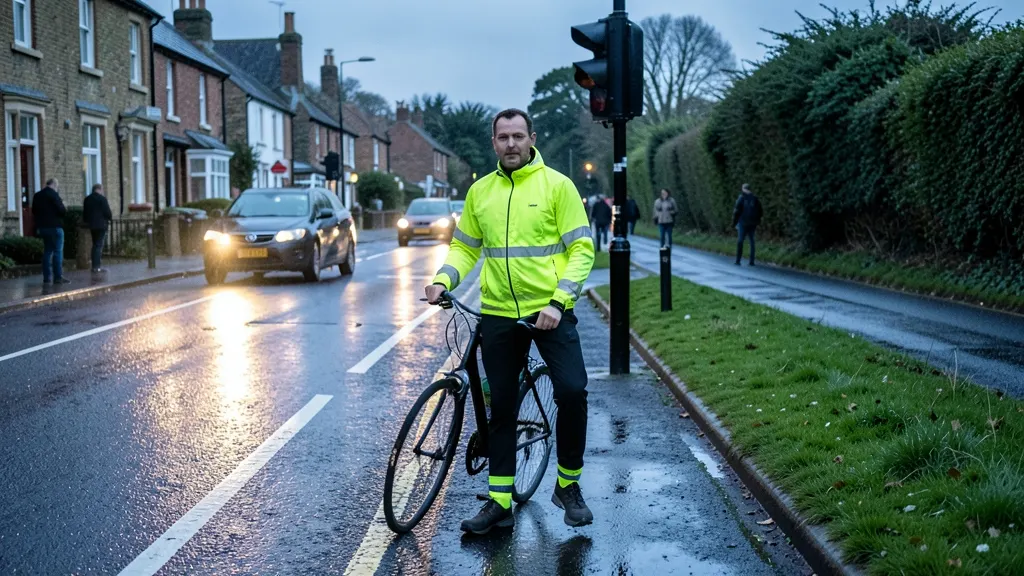
This corner of England brings together seaside resorts, busy administrative centres and cities with long industrial histories. What links the places we cover is the way people use the roads and pavements: commuters walking in poor light, cyclists heading to work or college in the rain, site workers moving between depots and jobs, and dog walkers out on grey afternoons in winter. In every case, being seen early matters more than almost anything else you wear.
A hi vis jacket is the piece most people reach for first, and with good reason. Under EN ISO 20471, the highest class of garment, class 3, must have at least 0.80 m2 of fluorescent background material and 0.20 m2 of retroreflective material. That is the level normally expected where traffic is fast or conditions are poor. The Highway Code also makes the case plainly: reflective materials such as armbands, sashes, waistcoats, jackets or footwear can be seen by drivers using headlights up to three times as far away as non-reflective materials in the dark.
The places we cover
Blackpool
Blackpool has a population of 141,000 according to the 2021 census, and the town's economy remains centred around tourism. That shapes when and where people are out. Tourism work means early starts setting up before visitors arrive, late finishes after they leave, and plenty of staff crossing roads and seafront walks in low light for much of the year. For our full local guide, see Hi-vis clothing in Blackpool.
Carlisle
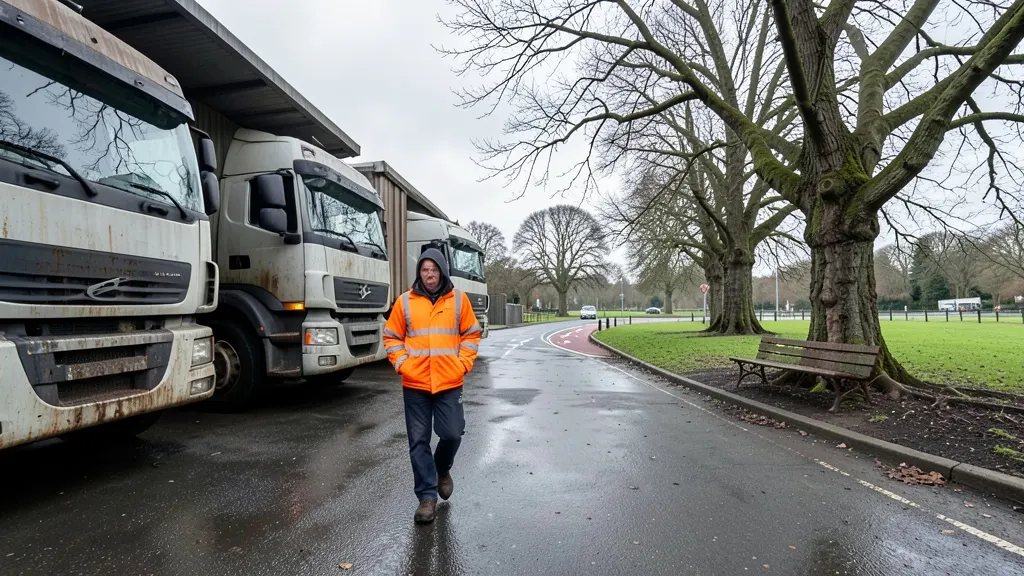
Carlisle has a built-up area population of 77,730 (2021 census). Historically the city was known for textile mills, engineering works and food manufacturers, and several road haulage firms have been headquartered there. Haulage in particular means lots of depot work, yard movements and drivers stepping out of cabs beside moving vehicles, which is exactly the environment where class 2 or class 3 garments earn their keep. Read more in Hi-vis clothing in Carlisle.
Preston
Preston recorded a population of 147,835 in the 2021 census. In the 21st century, tertiary education and the defence industry are major employment sectors. That mix puts students on bikes alongside engineering and industrial workers, two groups with quite different visibility needs but the same underlying goal: to be spotted early by drivers. Our local page covers both. See Hi-vis clothing in Preston.
Conditions across the region
Whatever the town, the practical conditions are broadly similar. Much of the working day in winter falls outside daylight hours, so people travel in the dark at one or both ends. Rain, drizzle and overcast skies reduce contrast, which is when fluorescent yellow and orange backgrounds do their best work in poor light, and retroreflective bands take over once headlights are the main source of illumination.
The rules of the road apply everywhere. Rule 59 advises that light-coloured or fluorescent clothing can help other road users see a cyclist in daylight and poor light, while reflective clothing or accessories such as belts, arm or ankle bands can increase visibility in the dark. Rule 60 adds that at night a cycle must have white front and red rear lights lit, plus a red rear reflector. For motorcyclists, Rule 86 suggests making yourself as visible as possible from the side as well as the front and rear, for example with fluorescent clothing or strips, and Rule 87 says reflective clothing or strips should be worn when riding in the dark.
For anyone working rather than commuting, the legal picture is set by the Personal Protective Equipment at Work Regulations 1992. Employers must provide suitable PPE to workers exposed to a health or safety risk unless that risk is adequately controlled by other means. Since 6 April 2022 those duties also cover limb (b) workers, and the employer must provide the PPE free of charge. There are extra requirements in some industries: SATRA, a UK PPE testing body, states that rail standard RIS-3279-TOM requires an orange colour and garments meeting at least class 2 of EN ISO 20471. Anyone working near the railway should check that standard before buying.
Looking after a garment matters as much as choosing it. HSE guidance says reusable PPE must be cleaned and kept in good condition, and that hi-vis jackets, trousers and coveralls must be cleaned regularly. Workers must report any loss, destruction or obvious defect. A jacket that is dirty or faded may still look bright to you, but it may no longer meet the class stated on its label.
Where to read next
If you are unsure when hi-vis is actually required, at work or elsewhere, our guide When is high visibility clothing required in the UK? walks through the regulations in plain language. Each town page above goes into local detail, including the industries and road types that matter most there. Between them, they should give you a clear picture of what to wear, which class to look for, and how to keep your kit working as it should.
Frequently asked questions
What class of hi vis jacket should I look for in this region?
For most everyday use, such as cycling, dog walking or the school run, a class 2 garment is usually a sensible choice, with class 3 reserved for high-risk settings such as fast roads or professional site work. Class 3 requires at least 0.80 m2 of fluorescent background material and 0.20 m2 of retroreflective material under EN ISO 20471. If you work on or near the railway, note that rail standard RIS-3279-TOM requires an orange colour and at least class 2.
Do employers have to provide hi-vis clothing?
Under the Personal Protective Equipment at Work Regulations 1992, employers must provide suitable PPE to workers exposed to a risk to health or safety, unless the risk is adequately controlled by other means. Since 6 April 2022 these duties also cover limb (b) workers, and the employer must provide the PPE free of charge.
Is reflective clothing really more visible at night?
Yes. The Highway Code states that reflective materials such as armbands, sashes, waistcoats, jackets or footwear can be seen by drivers using headlights up to three times as far away as non-reflective materials in the dark. Fluorescent colours help most in daylight and poor light, while reflective strips take over once it is properly dark.
How should I look after a hi vis jacket?
HSE guidance says reusable PPE must be cleaned and kept in good condition, and that hi-vis jackets, trousers and coveralls must be cleaned regularly. Workers must report any loss, destruction or obvious defect. Washing according to the care label helps preserve both the fluorescent colour and the retroreflective bands.