High visibility clothing and workwear in Belfast
Last updated
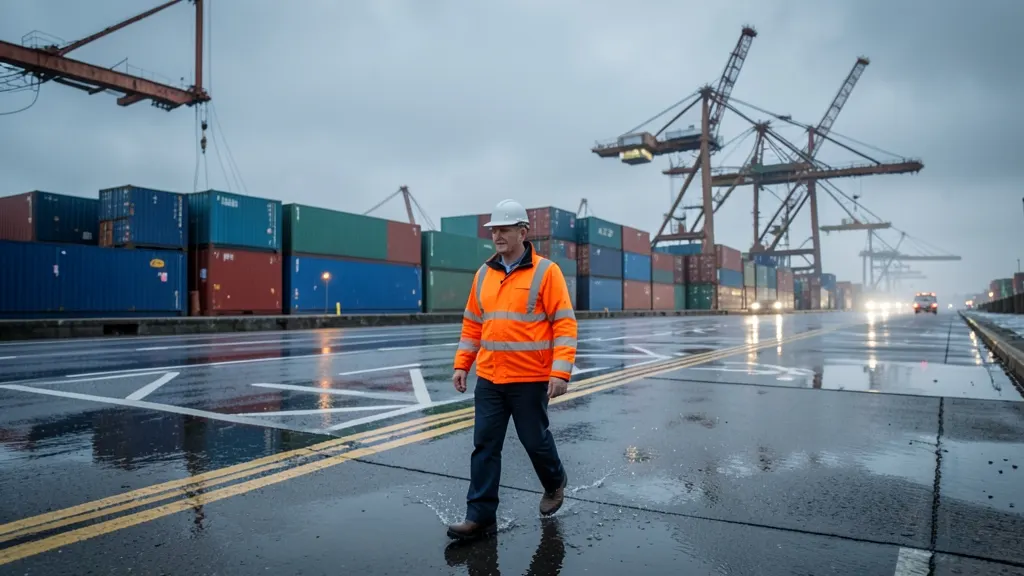
Belfast has more than its share of jobs where being seen is a matter of safety. The city is the capital, largest city and main port of Northern Ireland, and it still has commercial and industrial docks, a reduced shipyard and aerospace and defence contractors, alongside newer offices in the redeveloped Harbour Estate. Plenty of that work happens outdoors, at height, around vehicles and cranes, or in the half-light of early shifts and late finishes.
The daylight does not cooperate either. On the winter solstice the sun rises at 08:44 and sets at 15:59 in Belfast, giving only 7 hours and 15 minutes of daylight. Across the year there are 126 days when sunset falls before half past five in the evening or sunrise comes after quarter to eight in the morning. On many working days, that means you arrive in the dark, work through the grey, and head home in the dark again. Anyone clocking on at a dockside yard or a building site on the M1 corridor is doing at least part of their day in conditions where a plain work jacket simply disappears.
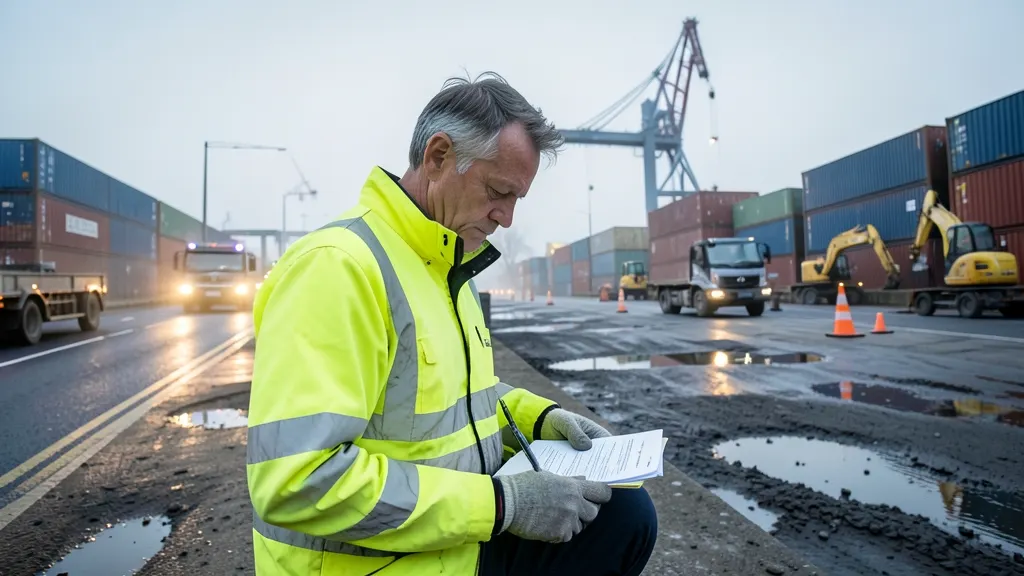
What the dark part of the day means for what you wear
Two things have to happen for a garment to keep you visible. In daylight and poor light, fluorescent background material catches attention. In the dark, retroreflective bands bounce headlight beams straight back at the driver. Both matter in Belfast winters, because a commute that starts under sodium lamps can end on an unlit access road by the harbour.
The Highway Code makes the same point for anyone on the roads. Rule 3 advises using reflective materials in the dark, such as armbands, sashes, waistcoats or jackets, which drivers can see up to three times as far away as non-reflective materials. If you ride a motorbike to work, Rule 87 says to wear reflective clothing or strips when riding in the dark. Cyclists are covered by Rule 59 and Rule 60.
At work, the legal footing is the Personal Protective Equipment at Work Regulations 1992. Employers must provide suitable PPE to workers exposed to a health or safety risk, unless that risk is controlled by other means. Since 6 April 2022 those duties also cover limb (b) workers, and the employer must provide the PPE free of charge. So if your role puts you near moving plant, the jacket is your employer's responsibility, not your own purchase. If you are unsure when hi-vis is actually required, When is high visibility clothing required in the UK? covers it in detail.
Choosing a jacket that solves the problem
Most workwear sold in the UK is certified to EN ISO 20471, which has three classes. Class 1 is the minimum, with at least 0.14 m2 of fluorescent background material and 0.10 m2 of retroreflective material. Class 2, with 0.50 m2 and 0.13 m2, is the common choice for site and roadside work. Class 3 is the highest, requiring at least 0.80 m2 of fluorescent material and 0.20 m2 of retroreflective material, and it suits high-risk settings such as working on or near busy roads, at night, or around large vehicles. Our guide to Hi-vis classes explained: EN ISO 20471 made simple spells out which class fits which job.
Colour depends on your site, not just your taste. An orange hi vis jacket is the norm where rail work is involved, because the rail standard RIS-3279-TOM requires an orange colour and at least class 2 of EN ISO 20471, according to SATRA, a UK PPE testing body. Yellow is more common on general construction and docksides. If in doubt, ask your site manager before you buy.
Fabric choice matters as much as colour. Belfast weather is wet, and a soaked hi vis jacket loses both comfort and some of its brightness. A softshell hi vis jacket gives flexibility and warmth for active outdoor work, while a fleece hi vis jacket suits dry cold days, perhaps as a mid layer under something waterproof. For standing around in rain on a quayside, a coated waterproof outer shell is the better bet, and Waterproof hi vis jackets: myths and facts is worth a read. Cold morning starts make Winter hi vis jackets: a practical buyer's guide useful too, and our general advice on High visibility clothing workwear: choosing a hi vis jacket covers the basics.
Care and replacement
Hi-vis only works while it is clean and intact. Health and Safety Executive guidance says reusable PPE must be cleaned and kept in good condition, and that hi-vis jackets, trousers and coveralls must be cleaned regularly. Workers must report any loss, destruction or obvious defect. In practice, that means washing off harbour grime and mud according to the garment label, never letting reflective tape get scuffed to grey, and binning a jacket once the retroreflective strips stop glinting under headlights, even if the fluorescent fabric still looks bright.
Check the fit as well. A hi vis jacket flapping open hides its reflective bands, and layers underneath can cover them entirely. Replace a jacket that has faded in the sun or been through one too many tumble dries, because certification only counts while the garment still meets the standard in its worn condition.
Belfast workers who cycle or walk part of their journey can find more in our page on Hi-vis for cycling and commuting in Belfast, and our main guide to Hi-vis clothing in Belfast collects everything for the city in one place.
Frequently asked questions
What class of hi-vis jacket do I need for site work in Belfast?
Most general construction and dockside work calls for class 2 under EN ISO 20471, which requires at least 0.50 m2 of fluorescent background material and 0.13 m2 of retroreflective material. Night work near traffic or heavy plant usually needs class 3, the highest class. If your work touches the railway, the rail standard RIS-3279-TOM requires an orange colour and at least class 2, according to the UK testing body SATRA.
Is my employer obliged to provide my hi-vis jacket?
Under the Personal Protective Equipment at Work Regulations 1992, employers must provide suitable PPE to workers exposed to a health or safety risk, unless the risk is controlled by other means. Since 6 April 2022 this duty also covers limb (b) workers, and the PPE must be provided free of charge.
Do I need a hi-vis jacket for commuting in Belfast in winter?
It is a sensible idea. In Belfast there are 126 days a year when sunset comes before half past five in the evening or sunrise after quarter to eight in the morning. The Highway Code, Rule 3, says reflective materials such as jackets, waistcoats or armbands can be seen by drivers up to three times as far away as non-reflective materials in the dark.
Can I wear a fleece or softshell hi-vis jacket instead of a standard one?
Yes, as long as the garment is certified to EN ISO 20471 at the class your site requires. A fleece hi vis jacket suits cold, dry conditions and works well as a mid layer, while a softshell hi vis jacket gives warmth and flexibility for active work. For wet weather, you will want a waterproof outer layer so the fluorescent and reflective surfaces stay effective.