Hi-vis clothing in Northern Ireland
Last updated
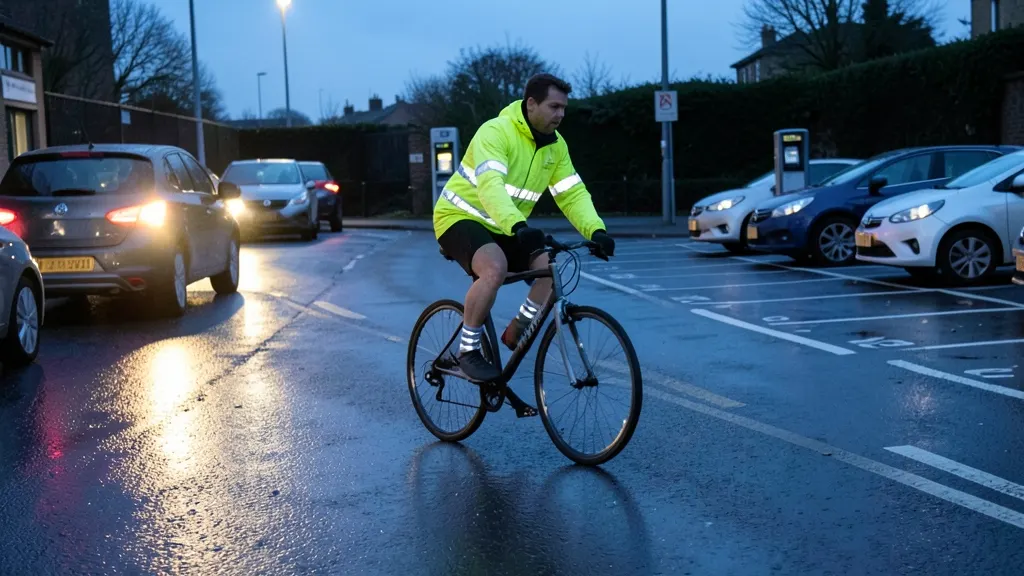
Northern Ireland is a compact region, which means a lot of people move between city centres, industrial sites, country roads and the coast in a single day. If you commute by bike in the morning, walk the dog along a rural lane in the evening and work near traffic or machinery during the week, visibility matters in all three settings. A good hi vis jacket for Northern Ireland use has to cope with damp weather, short winter days and a mix of busy urban streets and unlit rural roads.
What the region's places share is straightforward. Daylight hours in winter are short across the whole of the UK, and grey, wet weather cuts contrast, making pedestrians, cyclists and workers harder to pick out. The Highway Code addresses this directly. Rule 3 advises helping other road users to see you, and notes that in the dark, reflective materials such as armbands, sashes, waistcoats, jackets or footwear can be seen by drivers using headlights up to three times as far away as non-reflective materials. Rule 17 puts it simply: at night, wear something reflective.
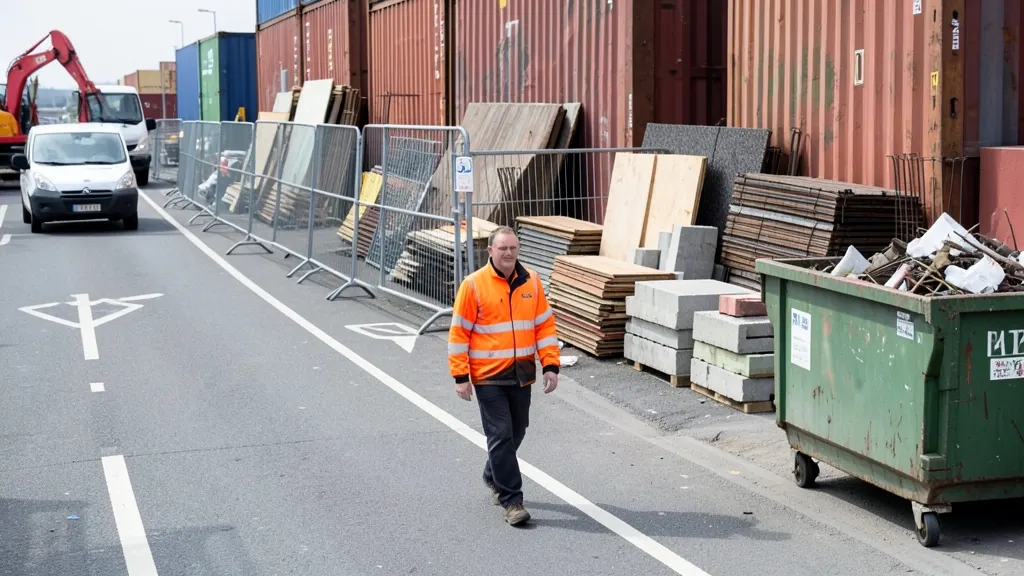
Where we cover in Northern Ireland
We have dedicated pages for three places in the region, each with its own working patterns and daily routines.
Hi-vis clothing in Belfast
Belfast is the region's largest city, with a population of 345,418 at the 2021 census for the Belfast local government district. The city retains a port with commercial and industrial docks, a reduced shipyard and aerospace and defence contractors. That mix of dockside work, industrial sites and busy city traffic makes high visibility clothing a daily necessity for thousands of workers, as well as for the cyclists and walkers sharing the same streets.
Hi-vis clothing in Derry
Derry, with a population of 85,279 at the 2021 census, has an industrial heritage rooted in textiles. The economy of the district was based significantly on the textile industry until relatively recently, and the city still has manufacturing and distribution employers where hi-vis workwear is standard issue. Our Derry page looks at what workers, cyclists and parents on the school run need from visibility clothing in and around a compact, busy city.
Hi-vis clothing in Newry
Newry has traditionally been a merchant's town, and its population was 27,913 at the 2021 census. Trade, logistics and retail distribution remain important to the local economy, which means plenty of van drivers, warehouse staff and delivery cyclists moving around in mixed light and weather. Our Newry page covers the practical choices for a smaller city where urban streets quickly give way to rural roads.
Region-wide conditions
Across Northern Ireland, the things that shape your visibility are the same as anywhere in the UK, but they bite hard here. Winter days are short, so many commuters travel both ways in darkness or poor light. Damp weather is common, and wet roads reflect glare from headlights while making dark clothing blend into the background.
For cyclists, Rule 59 of the Highway Code says light-coloured or fluorescent clothing can help other road users see a cyclist in daylight and poor light, while reflective clothing or accessories such as belts, arm or ankle bands can increase visibility in the dark. Rule 60 adds that at night a cycle must have white front and red rear lights lit, and a red rear reflector. Lighting and reflective gear work together, not instead of each other.
Motorcyclists get similar advice. Rule 86 says riders should make themselves as visible as possible from the side as well as the front and rear, for example with fluorescent clothing or strips. Rule 87 says that when riding in the dark, motorcyclists should wear reflective clothing or strips.
For workers, the standard to look for is EN ISO 20471. It has three classes, based on how much fluorescent and retroreflective material a garment carries. The minimum fluorescent background area is 0.14 m2 for class 1, 0.50 m2 for class 2 and 0.80 m2 for class 3, with minimum retroreflective areas of 0.10, 0.13 and 0.20 m2 respectively. Class 3 is the highest class and suits the riskiest settings, such as working on or near fast roads. If you work on the railways, the requirements differ. SATRA, a UK PPE testing body, states that rail standard RIS-3279-TOM requires an orange colour and garments that meet at least class 2 of EN ISO 20471.
Employers have duties too. Under the Personal Protective Equipment at Work Regulations 1992, employers must ensure suitable PPE is provided to workers exposed to a risk to health or safety, unless the risk is adequately controlled by other means. Since 6 April 2022 these duties also cover limb (b) workers, and the employer must provide the PPE free of charge. HSE guidance says reusable PPE must be cleaned and kept in good condition, hi-vis jackets, trousers and coveralls must be cleaned regularly, and workers must report any loss, destruction or obvious defect.
Related guides
If you want the wider picture, start with our guide When is high visibility clothing required in the UK?. We also cover other regions, including Hi-vis clothing in Greater Manchester, Hi-vis clothing in Greater London and Hi-vis clothing in East of England: a regional guide.
Frequently asked questions
What class of hi vis jacket should I choose in Northern Ireland?
It depends on where you wear it. EN ISO 20471 has three classes, with minimum fluorescent background areas of 0.14 m2 for class 1, 0.50 m2 for class 2 and 0.80 m2 for class 3. Class 3 is the highest class and is best for the riskiest situations, such as working near fast traffic. A class 2 hi vis jacket covers many everyday work and commuting needs.
Is reflective clothing really that much more visible at night?
Yes. Rule 3 of the Highway Code notes that reflective materials such as armbands, sashes, waistcoats and jackets can be seen by drivers using headlights up to three times as far away as non-reflective materials. In short winter days and wet weather, that extra distance gives drivers more time to react.
Does my employer have to provide hi-vis clothing for free?
Under the Personal Protective Equipment at Work Regulations 1992, employers must provide suitable PPE to workers exposed to a health or safety risk unless that risk is adequately controlled by other means. Since 6 April 2022 the duties also cover limb (b) workers, and the employer must provide the PPE free of charge.
How should I look after a hi vis jacket?
HSE guidance says reusable PPE must be cleaned and kept in good condition, and hi-vis jackets, trousers and coveralls must be cleaned regularly. Dirt and grime reduce both fluorescence and reflectance. Workers must report any loss, destruction or obvious defect so the garment can be replaced.