Hi-vis clothing in Belfast: a practical guide
Last updated
Why visibility matters in Belfast
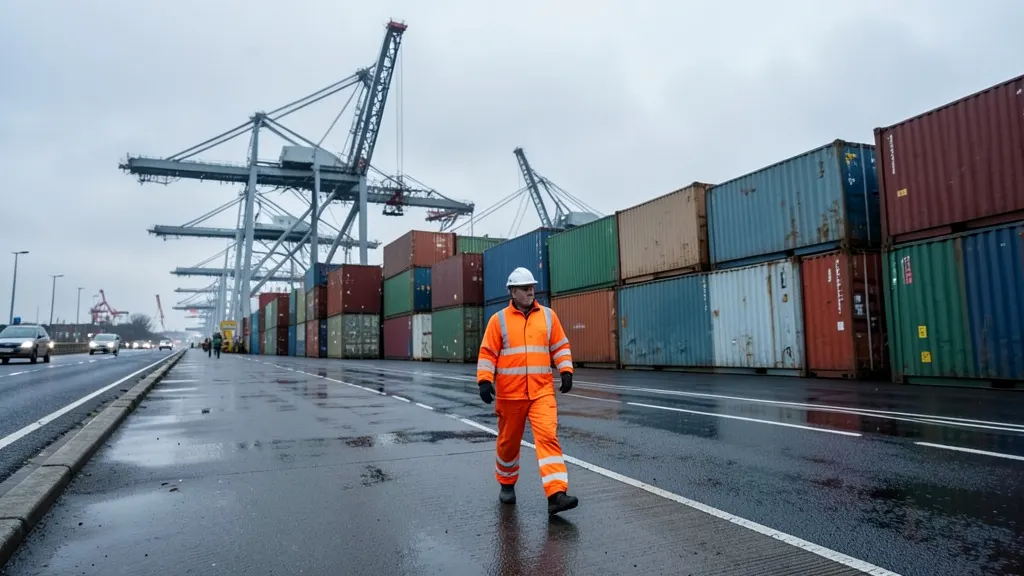
Belfast is the capital and largest city of Northern Ireland, with a population of 345,418 in the 2021 census for the Belfast local government district. It is also the main port of the region, and that maritime identity still shapes how the city works. The docks remain commercial and industrial, a reduced shipyard is still in operation, and aerospace and defence contractors are based in the city. Meanwhile the redeveloped Harbour Estate has brought growth in financial technology, tourism and film. Put together, this means a large number of people in Belfast spend their working day outdoors, near vehicles, plant and machinery, where being seen is part of staying safe.
The city's northerly latitude makes visibility an everyday concern in winter too. On the winter solstice in Belfast, sunrise is at 08:44 and sunset at 15:59, giving just 7 hours and 15 minutes of daylight. The clocks go back on 25 October 2026, when sunset in Belfast falls at 17:02. In total, there are 126 days a year in Belfast when sunset comes before half past five in the evening or sunrise comes after quarter to eight in the morning, so an ordinary commute is partly in the dark.
What this guide covers
This page pulls together the main reasons people in Belfast wear hi-vis, with a dedicated page for each:
- Work and site wear. The port, shipyard and industrial employers mean many jobs need certified high visibility clothing. Read Hi-vis for work and site wear in Belfast.
- Dark winter commutes. Short days and early sunsets mean many journeys start or end without daylight. Read Hi-vis for dark winter commutes in Belfast.
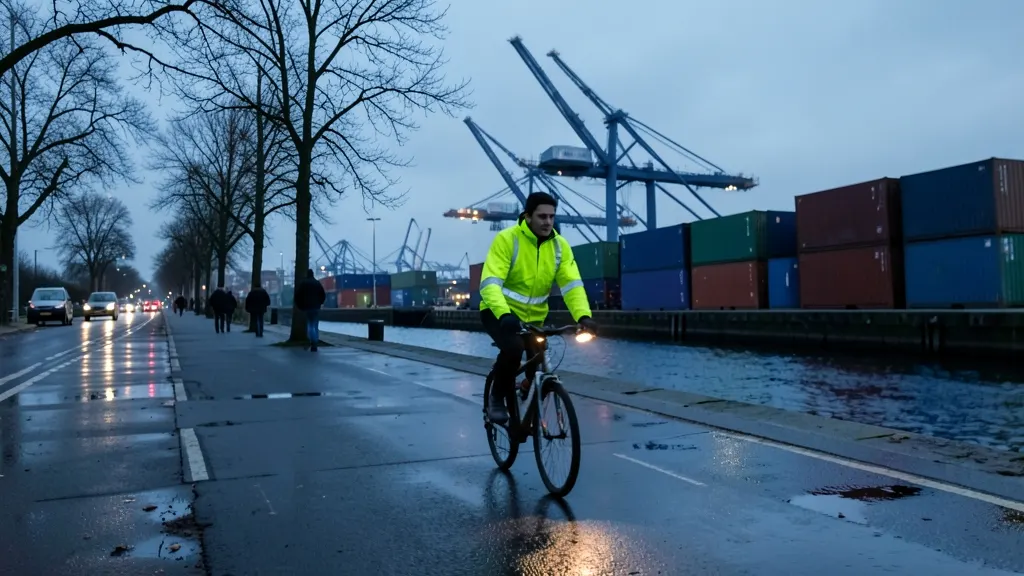
- Cycling and commuting. The Lagan Valley Regional Park towpath runs from the city-centre quayside to Lisburn, and the Connswater Community Greenway, with the Comber Greenway, runs through east Belfast, so plenty of people travel by bike. Read Hi-vis for cycling and commuting in Belfast.
Hi-vis guidance that applies across the board
Whatever the reason for wearing it, the same basic rules of hi-vis apply.
The standard and its classes
Look for garments certified to EN ISO 20471. It has three classes, based on how much fluorescent background material and retroreflective material the garment contains. Class 1 requires at least 0.14 square metres of fluorescent background and 0.10 square metres of retroreflective material. Class 2 requires 0.50 and 0.13 square metres respectively. Class 3, the highest, requires at least 0.80 square metres of fluorescent background material and 0.20 square metres of retroreflective material. For road work, railways and most site environments, class 2 is the usual minimum, while class 3 suits the highest-risk situations such as motorway work. SATRA, a UK PPE testing body, notes that the rail standard RIS-3279-TOM requires an orange colour and garments that meet at least class 2 of EN ISO 20471, which matters for anyone working near rail lines in the port area.
Workwear and the law
Under the Personal Protective Equipment at Work Regulations 1992, employers must ensure suitable PPE is provided to workers exposed to a risk to their health or safety, unless the risk is adequately controlled by other means. Since 6 April 2022 those duties also cover limb (b) workers, and the employer must provide the PPE free of charge. If you are an employer in Belfast with people on the docks, in the shipyard or on site, this applies to you. HSE guidance says reusable PPE must be cleaned and kept in good condition, that hi-vis jackets, trousers and coveralls must be cleaned regularly, and that workers must report any loss, destruction or obvious defect. A jacket caked in grime loses much of its fluorescent effect, so washing is part of safety, not just housekeeping.
On foot, on a bike and on a motorcycle
The Highway Code asks everyone to help other road users see them. Rule 3 says that in the dark you should use reflective materials such as armbands, sashes, waistcoats, jackets or footwear, which can be seen by drivers using headlights up to three times as far away as non-reflective materials. Rule 17 says simply that at night you should wear something reflective.
For cyclists, Rule 59 explains that light-coloured or fluorescent clothing can help other road users see you in daylight and poor light, while reflective clothing or accessories such as belts, arm or ankle bands can increase visibility in the dark. Rule 60 adds that at night a cycle must have white front and red rear lights lit, along with a red rear reflector, so clothing works alongside legal lighting rather than instead of it. Rule 69 reminds cyclists to obey all traffic signs and traffic light signals.
Motorcyclists are covered too. Rule 86 says riders should make themselves as visible as possible from the side as well as the front and rear, for example with fluorescent clothing or strips, and Rule 87 says that when riding in the dark they should wear reflective clothing or strips. This applies on the M1 motorway (to Dublin and the west) and the Westlink, both of which serve the city, as well as on unlit rural roads.
Where to go next
If you work outdoors or on site, start with Hi-vis for work and site wear in Belfast, and for choosing a jacket in general see High visibility clothing workwear: choosing a hi vis jacket.
If your journeys happen in the dark, read Hi-vis for dark winter commutes in Belfast along with Winter hi vis jackets: a practical buyer's guide and Waterproof hi vis jackets: myths and facts.
If you travel by bike, see Hi-vis jackets for cycling: a buyer's guide and our page on Hi-vis for cycling and commuting in Belfast. For a broader view of the whole region, we also cover Hi-vis clothing in Northern Ireland: where to wear it.
Belfast at a glance
- Nation: Northern Ireland
- Region: Northern Ireland
- Population: 345418
| Measure | Time |
|---|---|
| Sunrise on the winter solstice | 08:44 |
| Sunset on the winter solstice | 15:59 |
| Daylight on the winter solstice | 7h 15m |
| Sunset when the clocks go back (2026-10-25) | 17:02 |
| Days a year with a dark commute | 126 |
Frequently asked questions
What class of hi-vis jacket do I need for work in Belfast?
It depends on the risk. EN ISO 20471 has three classes: class 1 requires at least 0.14 square metres of fluorescent background material, class 2 requires 0.50 and class 3 requires 0.80. Most site and road work calls for class 2 as a minimum, while class 3 suits the highest-risk environments such as motorway work. If you work near railways, the rail standard RIS-3279-TOM requires an orange colour and at least class 2.
Does my employer have to provide hi-vis clothing?
Under the Personal Protective Equipment at Work Regulations 1992, employers must provide suitable PPE to workers exposed to a health or safety risk unless the risk is adequately controlled by other means. Since 6 April 2022 the duties also cover limb (b) workers, and the employer must provide the PPE free of charge.
How much daylight does Belfast get in winter?
On the winter solstice, sunrise in Belfast is at 08:44 and sunset at 15:59, giving 7 hours and 15 minutes of daylight. There are 126 days a year when sunset comes before half past five or sunrise comes after quarter to eight, so many commutes are partly in the dark. Reflective material is therefore as important as fluorescent fabric.
Do cyclists need hi-vis or just lights?
Both. Rule 60 of the Highway Code says that at night a cycle must have white front and red rear lights lit and a red rear reflector. Rule 59 says fluorescent clothing helps other road users see you in daylight and poor light, while reflective clothing or accessories increase your visibility in the dark. Clothing supports your lights, it does not replace them.
How do I keep a hi-vis jacket working properly?
HSE guidance says reusable PPE must be cleaned and kept in good condition, and hi-vis jackets, trousers and coveralls must be cleaned regularly. Dirt and grime reduce the fluorescent effect and damaged reflective strips stop working. Report any loss, destruction or obvious defect so the garment can be replaced.