A child's hi-vis jacket for the Aberdeen school run
Last updated
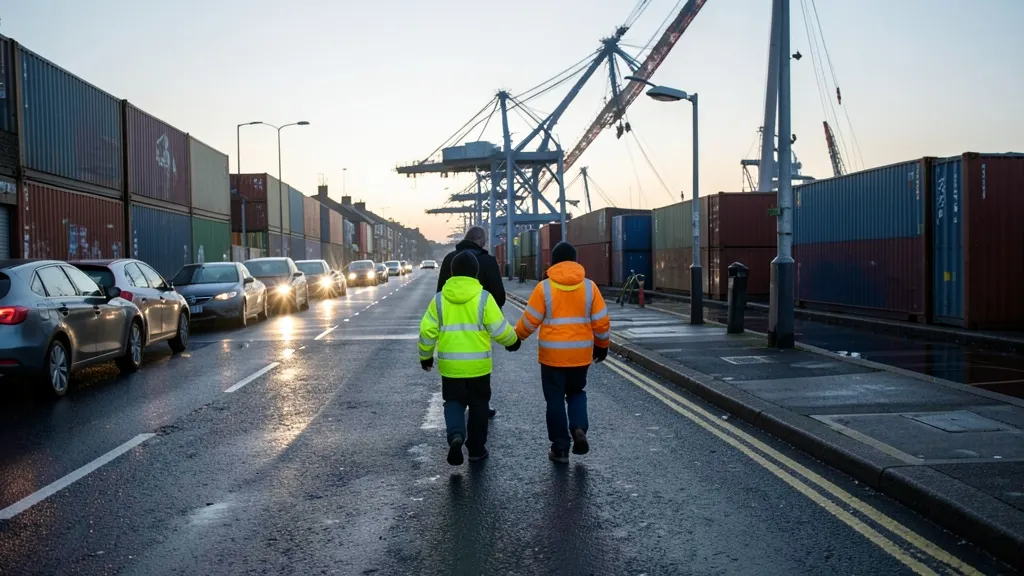
A school morning in Aberdeen
It is just after eight in the morning in mid-January, and it is still properly dark. In Aberdeen that is normal for a large part of the school year. On the winter solstice the sun does not rise until 08:46, so children setting off for school are doing the first part of the journey in darkness or twilight, whatever the weather.
Picture a family in one of Aberdeen's suburban streets. Coats on, bags packed, and the walk to school involves crossing the sort of roads that carry commuter traffic heading towards the A90, the main arterial route into the city from the north and south. The parent has a reflective strip on their own coat. The children have a kids hi vis jacket each, fluorescent yellow with reflective bands, and it is already done up before they leave the house.
By the time the school bell is due, the sun is barely above the horizon and the light is flat and grey. Aberdeen sits far enough north that there are 131 days a year when sunset comes before half past five in the evening or sunrise after quarter to eight in the morning, so a journey that happens in daylight in June is a dark one in December. The school run home can be in the dark too, especially in the depths of winter when sunset on the solstice is at 15:26.
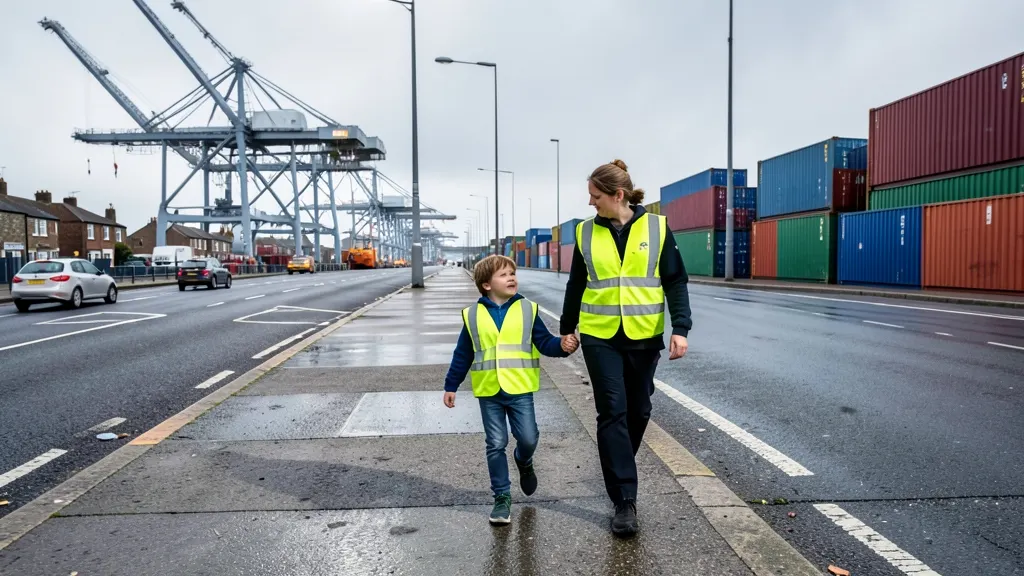
Where visibility matters most on the journey
Not every part of the walk carries the same risk. The quiet cul-de-sac at the start is low concern. The moments that matter are predictable, and it helps to know them.
Crossings on busier roads. Drivers heading for work in the morning are often watching traffic rather than the pavement. A child in dark colours at a kerb is easy to miss in headlights. A child in a childrens high visibility jacket with reflective bands is picked out much earlier.
Parked cars and driveways. Children appear between vehicles and at junctions, which is exactly where drivers have the least time to react. Bright material at chest height catches the eye.
Cycling and scooting. Plenty of Aberdeen children scoot or cycle part of the way. The Highway Code is clear on this point. Rule 59 says light-coloured or fluorescent clothing can help other road users see a cyclist in daylight and poor light, while reflective clothing or accessories such as belt, arm or ankle bands can increase visibility in the dark. Rule 60 requires a white front light and red rear light on a cycle at night, plus a red rear reflector, so a school hi vis jacket works alongside the lights rather than instead of them.
Rain, sleet and low winter sun. Aberdeen winters deliver all three, often in the same week. Wet roads scatter headlight beams, and low sun behind a driver makes it very hard to see what is ahead.
The right kit for each moment
For the walk, a child's hi vis jacket with a good area of fluorescent material and retroreflective bands does most of the work. The Highway Code, in Rule 3, notes that reflective materials such as armbands, sashes, waistcoats, jackets or footwear can be seen by drivers using headlights up to three times as far away as non-reflective materials. That distance is the difference between a driver seeing a child early and reacting late.
For a child who cycles or scoots, add ankle bands. Moving reflective material catches the eye because it moves, and ankles are in the sweep of headlight beams near the road surface. A backpack in a dark colour undoes some of the benefit of a bright jacket, so a reflective strip or bright bag helps.
For wet days, choose a waterproof hi vis jacket rather than a thin vest over a coat. Soggy children peel layers off, and a vest over a soaked coat is the first thing to go. Our page on waterproof hi vis jackets: myths and facts covers what to look for.
For the coldest months, when the clocks have gone back and the walk home is dark, see our winter hi vis jackets: a practical buyer's guide. If you have heard conflicting claims about what hi-vis does and does not do for children, kids hi vis jackets: myths and facts sets out the evidence plainly, and how does reflective material work? A simple guide explains the difference between fluorescent and reflective material in daylight and in the dark.
The one thing to remember
Aberdeen's school run happens in the dark for a large part of the year, on roads shared with commuters. A child's hi vis jacket, properly fastened and worn on every journey, is the simplest way to make sure drivers see them early. If your own commute also runs through the dark, our pages on hi-vis clothing in Aberdeen and hi-vis for dark winter commutes in Aberdeen are worth a read.
Frequently asked questions
Does my child need a hi-vis jacket in Aberdeen in summer?
Daylight hours are long in summer, so the case is weaker, but fluorescent material still helps on dull, wet days and in poor light. Many parents keep a lightweight child's hi vis jacket in the school bag all year. It weighs little and does no harm when it is not needed.
What is the difference between fluorescent and reflective material on a childrens high visibility jacket?
Fluorescent material, usually yellow or orange, works by making the wearer stand out in daylight and poor light. Reflective material returns light from headlamps back towards the driver, so it works in the dark. A good jacket for the Aberdeen school run needs both, because winter journeys often start in darkness and finish in daylight.
How far away can a driver see a child in reflective clothing?
The Highway Code, in Rule 3, states that reflective materials can be seen by drivers using headlights up to three times as far away as non-reflective materials. For a child at a kerb on a busy road, that extra distance gives a driver much more time to slow down.
Is a hi-vis vest over a school coat good enough?
It is better than nothing, but vests get taken off, forgotten or hidden under bags. A school hi vis jacket that zips up like a normal coat is more likely to stay on all the way to the gate. On wet days a waterproof version is more comfortable and stays in use.
Do children cycling to school need lights as well as hi-vis?
Yes. Rule 60 of the Highway Code requires a cycle used at night to have a white front light and a red rear light lit, along with a red rear reflector. Reflective clothing adds to that and does not replace it.