Hi-vis clothing in Aberdeen: what to wear and when
Last updated
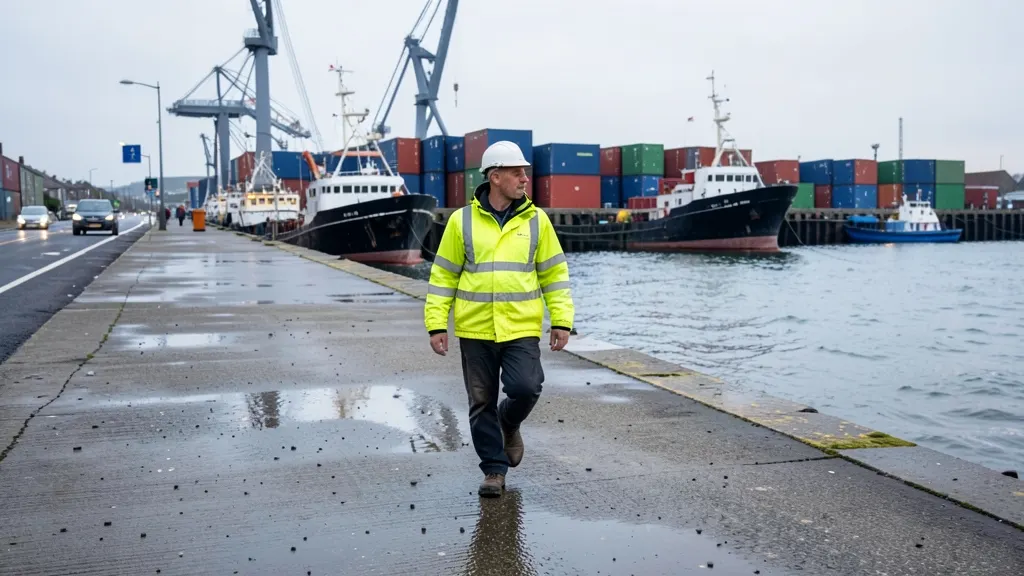
Aberdeen sits on the north east coast of Scotland, with a population of 230,180 in the council area as of the 2025 estimate. It is a city built around its harbour. Aberdeen Harbour is the largest port in the north of Scotland and serves the ferry route to Orkney and Shetland. It was established in 1136 and has been called the oldest business in Britain. Since the discovery of North Sea oil in 1969, Aberdeen has been known as the offshore oil capital of Europe, which means a large share of the working population spends its days outdoors, on sites, or supporting offshore operations.
That working life matters when we talk about visibility clothing, but it is not the only reason. Aberdeen is far enough north that winter daylight is genuinely scarce. On the winter solstice, sunrise is at 08:46 and sunset is at 15:26, giving just 6 hours and 41 minutes of daylight. Across a full year, Aberdeen has 131 days when the sun sets before half past five in the evening or rises after quarter to eight in the morning. In plain terms, many people here travel to work, school or the shops in the dark or near dark for a third of the year, and a hi vis jacket stops being optional and starts being a habit.
What this guide covers
This page is the starting point. We have built separate pages for the situations where Aberdeen residents most often need high visibility clothing:
- Hi-vis for dark winter commutes in Aberdeen, covering walking, cycling and riding through the city on those short winter days, including the A90 approach roads and the shared use paths on old railway lines such as the Deeside Way to Banchory and the Formartine and Buchan Way to Ellon.
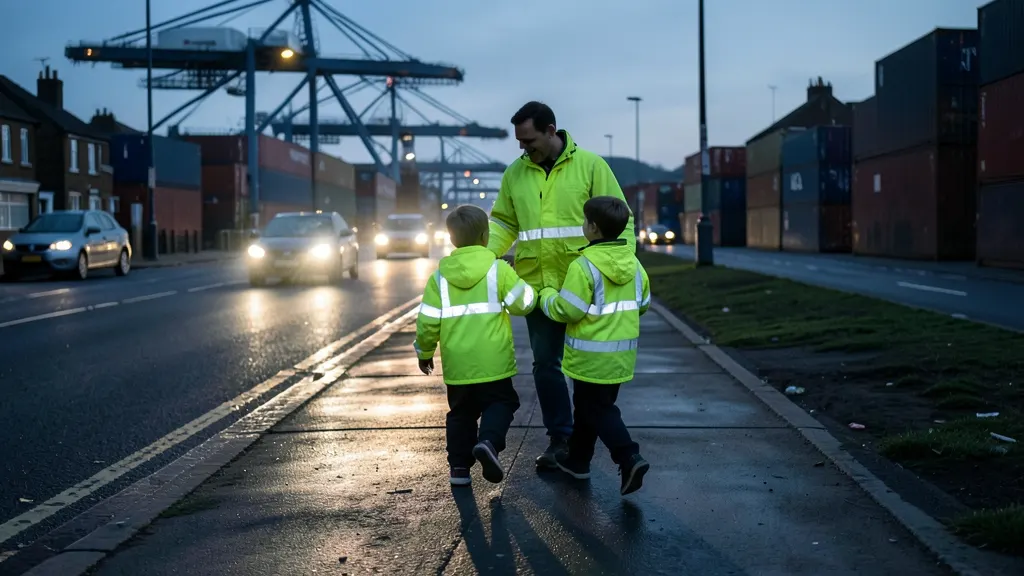
- Hi-vis for the school run and children in Aberdeen, with practical advice for parents dressing children for dark mornings on busy suburban roads.
- High visibility clothing workwear: choosing a hi vis jacket, for anyone working in the port, on sites or in offshore support roles.
We also point you to our general guides on waterproof and winter hi vis jackets, because the north east climate rarely gives you a dry, mild option.
General hi-vis guidance for Aberdeen
A few principles apply whatever you are doing and wherever you are in the city.
Match the class of garment to the risk
EN ISO 20471, the standard for high visibility clothing, has three classes. Class 1 is the lowest, with a minimum of 0.14 square metres of fluorescent background material and 0.10 square metres of retroreflective material. Class 2 requires at least 0.50 and 0.13 square metres respectively. Class 3 is the highest, with at least 0.80 square metres of fluorescent background material and 0.20 square metres of retroreflective material. For most roadside or harbour side work, class 2 is the usual baseline, and class 3 is what you want where traffic is fast, close or poorly lit.
Know your employer duties
If you wear hi vis as part of your job, your employer must provide suitable PPE free of charge when you are exposed to a health or safety risk that is not controlled by other means. Since 6 April 2022 these duties also cover limb (b) workers, not just permanent staff. If your jacket is worn out, torn or has lost its reflectivity, report it. Guidance from the Health and Safety Executive says reusable PPE must be cleaned and kept in good condition, and hi vis jackets, trousers and coveralls must be cleaned regularly to keep them working as intended. A grubby fluorescent panel is far less effective than a clean one.
Make yourself seen as a pedestrian and cyclist
The Highway Code is clear on this. Rule 3 asks all road users to help others see them, and notes that in the dark, reflective materials such as armbands, sashes, waistcoats, jackets or footwear can be seen by drivers using headlights up to three times as far away as non reflective materials. Rule 59 advises cyclists that light coloured or fluorescent clothing helps in daylight and poor light, while reflective clothing or accessories, including belts, arm and ankle bands, increase visibility in the dark. Rule 60 adds that at night a cycle must have white front and red rear lights lit and a red rear reflector. Lights and hi vis do different jobs, and you need both.
Motorcyclists should take note of Rules 86 and 87 as well: fluorescent clothing or strips help you stand out from the side as well as the front and rear, and reflective material should be worn when riding in the dark.
Think about the weather
Aberdeen winters combine early darkness with frequent wind and rain, so a hi vis jacket that keeps you dry performs better in practice than one you leave at home. Our page on Waterproof hi vis jackets: myths and facts explains what waterproof ratings mean in everyday use, and Winter hi vis jackets: a practical buyer's guide looks at insulation, layering and visibility in poor weather. Cyclists may prefer the more specific advice in Hi-vis jackets for cycling: a buyer's guide.
Where to go next
If you walk, cycle or ride to work through the dark months, start with our page on dark winter commutes in Aberdeen. If you are kitting out children for the school run, the children's page covers sizes, fit and the myths around what actually makes a child visible. If you work in the port, on a site or in offshore support, the workwear page explains how to choose a hi vis jacket that meets the standard your job demands. You can also read our wider guide at Hi-vis clothing in Scotland: where you need it.
Whatever your reason for being out on an Aberdeen winter morning, the same rule holds. Fluorescent material gets you noticed in daylight and gloom, reflective material gets you noticed under headlights, and the jacket that works best is the one you actually put on.
Aberdeen at a glance
- Nation: Scotland
- Region: Scotland
- Population: 230180
| Measure | Time |
|---|---|
| Sunrise on the winter solstice | 08:46 |
| Sunset on the winter solstice | 15:26 |
| Daylight on the winter solstice | 6h 41m |
| Sunset when the clocks go back (2026-10-25) | 16:40 |
| Days a year with a dark commute | 131 |
Frequently asked questions
Why does Aberdeen have so many dark commutes?
Aberdeen is far north, so winter days are very short. On the winter solstice the sun rises at 08:46 and sets at 15:26, giving 6 hours and 41 minutes of daylight. Across the year there are 131 days when the sun sets before half past five in the evening or rises after quarter to eight in the morning, so many commutes are partly in the dark.
What class of hi vis jacket do I need for work in Aberdeen?
EN ISO 20471 has three classes. Class 2, with at least 0.50 square metres of fluorescent background material, suits most work environments with vehicle movement. Class 3, with at least 0.80 square metres of fluorescent material and 0.20 square metres of retroreflective material, is for higher risk settings such as fast roads or poorly lit sites. Your employer must provide suitable PPE free of charge when a risk is not controlled by other means.
Is a hi vis jacket enough for cycling in the dark?
No. Rule 60 of the Highway Code requires a cycle to have white front and red rear lights lit at night, plus a red rear reflector. Rule 59 recommends reflective clothing or accessories such as belts and arm or ankle bands in the dark, and fluorescent or light coloured clothing in daylight and poor light. Lights and reflective clothing do different jobs, so use both.
How far away can drivers see reflective material?
According to Rule 3 of the Highway Code, reflective materials such as armbands, sashes, waistcoats, jackets or footwear can be seen by drivers using headlights up to three times as far away as non reflective materials. That is why reflective trim matters so much on short Aberdeen winter days.
How should I look after a hi vis jacket?
HSE guidance says reusable PPE must be cleaned and kept in good condition, and hi vis jackets, trousers and coveralls must be cleaned regularly. Dirt and grime reduce both fluorescence and reflectivity, so wash the garment as the label directs and report any loss, destruction or obvious defect to your employer if it is work PPE.