Hi-vis clothing in York
Last updated
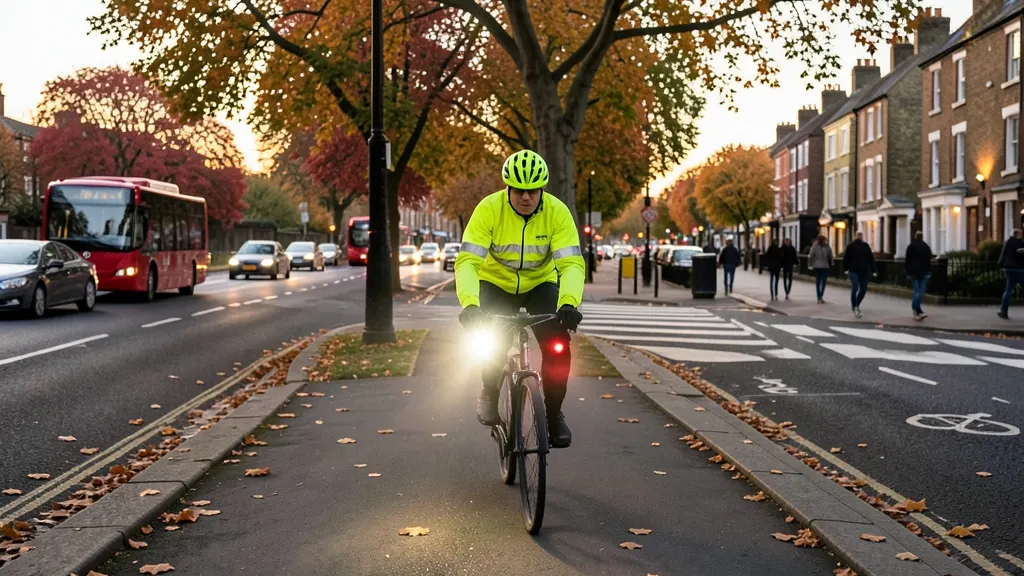
York is a compact city of 141,685 people (2021 census, built-up area) in Yorkshire, and its streets, paths and green spaces get busy with everyday traffic of every kind. Tourism is one of the city's major assets, and it has long been a railway hub with confectionery manufacturing dating back to the 19th century. That mix means plenty of workers, commuters and visitors sharing the same routes at the same times.
Daylight is a real issue here. On the winter solstice in York, sunrise is at 08:21 and sunset is at 15:43, giving just 7h 23m of daylight. The clocks go back on 25 October 2026, when sunset in York is at 16:44. In fact, York has 124 days a year when sunset comes before half past five in the evening or sunrise after quarter to eight in the morning, so a normal commute is partly in the dark for a good chunk of the year. Whatever your mode of travel, being seen matters.
What this guide covers
This page is the hub for our York guides. We cover three main activities:
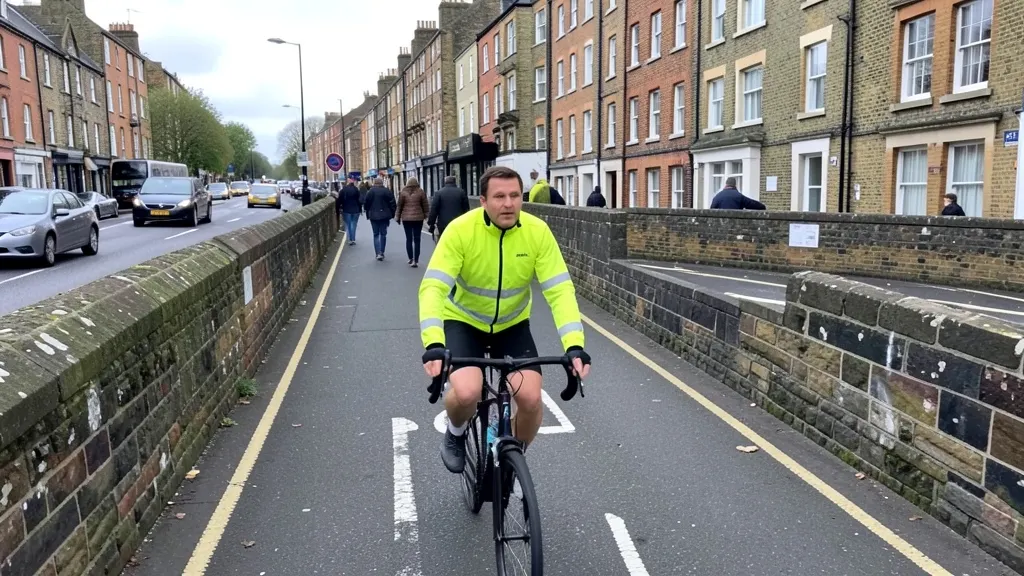
- Cycling and commuting. York is famously flat and compact around its centre, and the riverside paths along the flood meadows known as the ings make riding a bike a sensible everyday option. Our page on hi-vis for cycling and commuting in York goes into the detail.
- Horse riding. A large part of the Knavesmire is occupied by York Racecourse, where racing was first held in its current location in 1731, and riders also use the surrounding countryside lanes. See hi-vis for horse riding in York.
- Running. The city centre is enclosed by medieval walls, which are a popular walk, and runners also use the river paths and the Knavesmire, where a free 5k running event has been held every Saturday morning since January 2012.
For the wider picture across the county, our regional guide to hi-vis clothing in Yorkshire puts York in context.
Choosing the right hi-vis for York
Cycling and the daily commute
The Highway Code (Rule 59) says light-coloured or fluorescent clothing can help other road users see a cyclist in daylight and poor light, while reflective clothing or accessories such as belts, arm or ankle bands can increase visibility in the dark. Rule 60 requires a cycle used at night to have white front and red rear lights lit, plus a red rear reflector. A hi-vis jacket supplements your lights, it does not replace them. Rule 3 adds that reflective materials such as armbands, sashes, waistcoats, jackets or footwear can be seen by drivers using headlights up to three times as far away as non-reflective materials. Our hi-vis jackets for cycling: a buyer's guide explains what to look for, and since York commutes often happen in rain, waterproof hi vis jackets: myths and facts is worth a read too.
Horse riding on the lanes
Riders around the racecourse and out in the countryside lanes are often sharing space with fast traffic. Rule 17 of the Highway Code states that at night you should wear something reflective to make it easier for others to see you, and the same logic applies in daytime poor light, when fluorescent yellow stands out well against grey hedgerows. If you ride out on the Knavesmire, which is also popular for dog-walking and public events, remember there may be loose dogs around, so being clearly visible helps everyone give you space. Our hi-vis jackets for horse riding: a buyer's guide covers tabards, leg bands and tail accessories.
Running around the city
With a Saturday morning 5k on the Knavesmire, plus runs along the river and around the walls, plenty of York runners train early or late. In the depths of winter, with sunrise at 08:21, you will often be out before dawn. Rule 3 applies here as much as on the road: reflective armbands, sashes and jackets get you seen up to three times sooner. For choosing kit, hi-vis jackets for running: how to choose has practical advice, and winter hi vis jackets: a practical buyer's guide is timed well for York's short days.
Standards and care
If you wear hi-vis for work, EN ISO 20471 has three classes. Class 1 requires a minimum fluorescent background area of 0.14 m2, class 2 requires 0.50 m2 and class 3, the highest, requires 0.80 m2 plus 0.20 m2 of retroreflective material. For most commuting and leisure uses, class 2 is a sensible choice. If your employer provides hi-vis, the Personal Protective Equipment at Work Regulations 1992 require suitable PPE to be provided to workers exposed to a risk, and since 6 April 2022 those duties cover limb (b) workers too, with the PPE provided free of charge.
Whatever you buy, keep it clean. HSE guidance says reusable PPE must be cleaned and kept in good condition, and hi-vis jackets, trousers and coveralls must be cleaned regularly. Dirty fluorescent fabric fades in effectiveness, and scuffed reflective strips stop bouncing light back to drivers. Wash per the garment label, and replace anything with cracked or peeling reflectivity.
Related pages
- Hi-vis for cycling and commuting in York
- Hi-vis for horse riding in York
- Hi-vis clothing in Yorkshire: a regional guide
Whichever activity brings you outdoors in York, the short winter days mean reflective kit earns its keep. Pick the right class for your needs, look after it, and make sure lights, reflectors and reflective accessories work together.
York at a glance
- Nation: England
- Region: Yorkshire
- Population: 141685
| Measure | Time |
|---|---|
| Sunrise on the winter solstice | 08:21 |
| Sunset on the winter solstice | 15:43 |
| Daylight on the winter solstice | 7h 23m |
| Sunset when the clocks go back (2026-10-25) | 16:44 |
| Days a year with a dark commute | 124 |
Frequently asked questions
How much daylight does York get in winter?
On the winter solstice in York, sunrise is at 08:21 and sunset is at 15:43, giving 7h 23m of daylight. There are 124 days a year when sunset comes before half past five in the evening or sunrise after quarter to eight in the morning. This means a normal commute is partly in the dark for much of the year.
What hi-vis class do I need for cycling to work?
EN ISO 20471 has three classes, with class 2 requiring 0.50 m2 of fluorescent background material and class 3 requiring 0.80 m2 plus 0.20 m2 of retroreflective material. Class 2 is generally a good choice for commuting. Remember that Rule 60 requires a cycle used at night to have white front and red rear lights lit and a red rear reflector, so a jacket supplements lights rather than replacing them.
Does reflective clothing really make a difference?
Yes. Rule 3 of the Highway Code notes that reflective materials such as armbands, sashes, waistcoats, jackets or footwear can be seen by drivers using headlights up to three times as far away as non-reflective materials. Rule 59 says fluorescent clothing helps drivers see a cyclist in daylight and poor light, while reflective gear increases visibility in the dark.
Why do horse riders around York need hi-vis?
A large part of the Knavesmire is occupied by the racecourse, and horses are ridden on the surrounding countryside lanes where traffic can be fast. Wearing reflective and fluorescent gear helps drivers spot both horse and rider earlier, giving them time to slow down and pass wide.
Who pays for work hi-vis clothing?
Under the Personal Protective Equipment at Work Regulations 1992, employers must provide suitable PPE to workers exposed to a risk to health or safety, unless the risk is adequately controlled by other means. Since 6 April 2022 these duties also cover limb (b) workers, and the employer must provide the PPE free of charge.