Hi-vis clothing in Wrexham: what to wear and why
Last updated
Wrexham is a market town in north Wales with a built up area population of 44,785 at the 2021 census. It sits on a relatively flat plateau between the lower Dee Valley and the Clwydian Range, and it serves north Wales and the Welsh borderlands as a centre for manufacturing, retail, education and administration. That mix matters if you are deciding what to wear outdoors. A town of this size generates steady commuter traffic, and the A483 dual carriageway bypasses the town centre on its way to Chester and England's trunk road network, so plenty of people are out on the roads at either end of the working day.
Why visibility matters here
The short answer is daylight. On the winter solstice in Wrexham, sunrise is at 08:23 and sunset is at 15:56, giving 7 hours and 33 minutes of daylight. In practical terms, Wrexham sees 122 days a year when sunset comes before half past five in the evening or sunrise comes after quarter to eight in the morning. That means a normal commute is partly in the dark for a large part of the year. When the clocks go back on 25 October 2026, sunset in Wrexham that day is at 16:54, and it only gets earlier from there. If you walk, cycle, ride or drive on the roads around the town between late autumn and early spring, you will be doing some of it in poor light or darkness.
The countryside adds to the picture. The Clwydian Range and Dee Valley AONB covers 390 km2 and extends into Wrexham County Borough, and long distance walking routes such as Offa's Dyke Path and the Clwydian Way pass through it. Erddig, a National Trust property near Wrexham, and the Clywedog Valley, with its nationally significant industrial heritage, draw people outdoors at weekends too. Lanes, bridleways and country roads around the town are shared by walkers, riders, cyclists and drivers, often in low light under trees or on unlit stretches.
What this guide covers
This page gathers the local angle on visibility clothing for Wrexham and links to our detailed guides. Three activities come up again and again here.
Horse riding
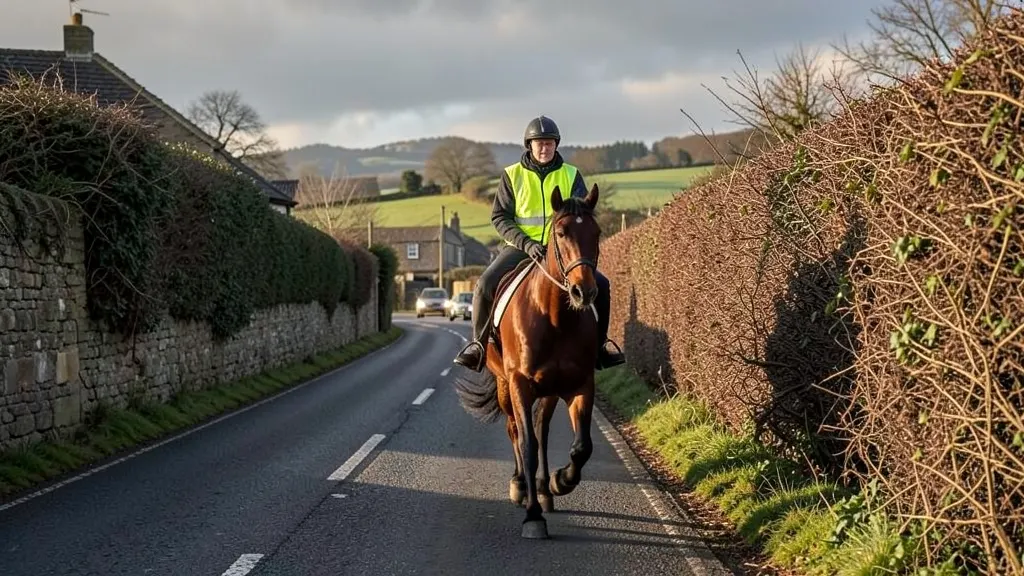
Rural lanes in the surrounding border country suit riders, but they are also the places where a horse and rider are hardest for a driver to spot. Reflective and fluorescent kit on both rider and horse gives drivers more time to slow down. Our page on hi-vis for horse riding in Wrexham covers the local detail, and the wider hi-vis jackets for horse riding: a buyer's guide explains what to look for in a garment.
Dog walking
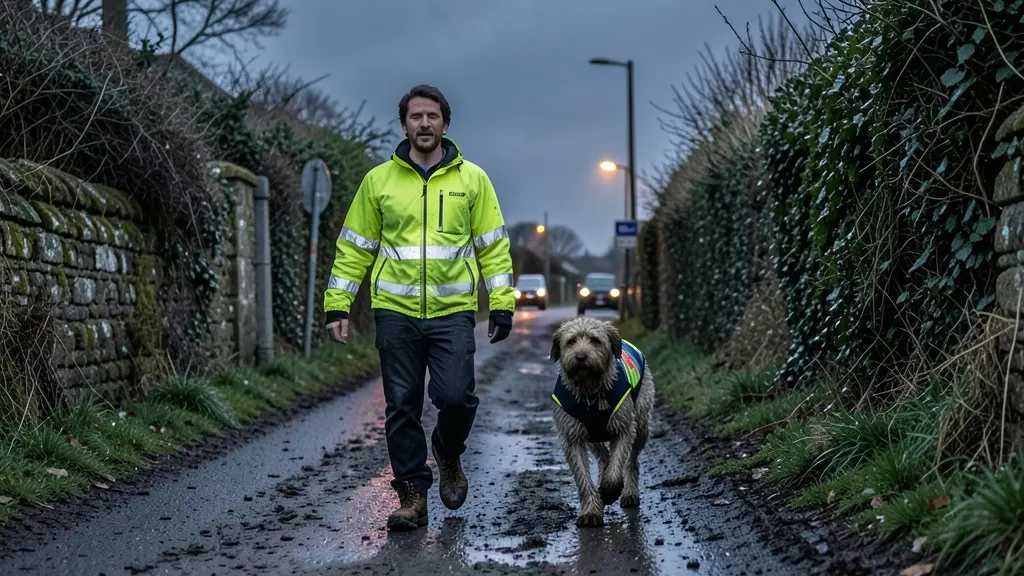
Parks and countryside around the town make Wrexham good dog walking territory, and many walks happen early or late in the day around work hours. A hi-vis jacket for you and something reflective on the dog helps in car parks, on lanes and near roads. See hi-vis for dog walking in Wrexham for the local picture, and hi-vis jackets for dog walking: how to choose for buying advice.
Motorcycling
The roads heading into the Welsh hills attract motorcyclists, and riders benefit from being seen from the side as well as the front and rear. Fluorescent clothing or strips help in daylight, and reflective kit matters at night. Start with motorcycle hi vis jackets: myths and facts.
Hi-vis guidance that applies across all of these
Whatever you are doing, a few principles hold.
Fluorescent material works by reacting to ultraviolet light, so it is at its best in daylight and poor daylight, such as overcast winter afternoons. Reflective material works in headlights and torchlight. Most people in Wrexham need both, because the same journey often starts in grey daylight and ends in the dark.
The Highway Code makes the same point. Rule 3 asks all road users to help others see them, and notes that in the dark, reflective materials such as armbands, sashes, waistcoats, jackets or footwear can be seen by drivers using headlights up to three times as far away as non-reflective materials. Rule 17 asks pedestrians to wear something reflective at night.
For cyclists, Rule 59 says light-coloured or fluorescent clothing helps in daylight and poor light, while reflective clothing or accessories such as belt, arm or ankle bands increase visibility in the dark. Rule 60 requires a white front light and red rear light, lit at night, plus a red rear reflector on the cycle itself.
For motorcyclists, Rule 86 suggests making yourself as visible as possible from the side as well as front and rear, for example with fluorescent clothing or strips, and Rule 87 says reflective clothing or strips should be worn when riding in the dark.
If you need certified gear, look at EN ISO 20471. It has three classes, and the minimum fluorescent background area rises from 0.14 m2 for class 1 to 0.50 m2 for class 2 and 0.80 m2 for class 3, with minimum retroreflective areas of 0.10, 0.13 and 0.20 m2 respectively. Class 3 is the highest. If your employer provides hi-vis as personal protective equipment, the Personal Protective Equipment at Work Regulations 1992 require them to make sure it is suitable, and since 6 April 2022 those duties also cover limb (b) workers, with the PPE provided free of charge.
Kit also needs looking after. HSE guidance says reusable PPE must be cleaned and kept in good condition, and hi-vis jackets, trousers and coveralls must be cleaned regularly, because dirt dulls both fluorescence and reflectivity. Workers must report any loss, destruction or obvious defect. The same logic applies to your own gear: a muddy, crumpled jacket reflects far less light than a clean one.
Wrexham winters are wet as well as dark, so a waterproof layer often has to double as your visibility layer. Our page on waterproof hi vis jackets: myths and facts explains how these garments combine the two jobs, and winter hi vis jackets: a practical buyer's guide covers warmth and visibility together. For a wider view of standards and choices across Wales, see hi-vis jacket Wales: a regional guide.
Where to read next
Start with the two Wrexham activity pages, hi-vis for dog walking in Wrexham and hi-vis for horse riding in Wrexham, then follow the topic links above for buying advice on each kind of jacket.
Wrexham at a glance
- Nation: Wales
- Region: Wales
- Population: 44785
| Measure | Time |
|---|---|
| Sunrise on the winter solstice | 08:23 |
| Sunset on the winter solstice | 15:56 |
| Daylight on the winter solstice | 7h 33m |
| Sunset when the clocks go back (2026-10-25) | 16:54 |
| Days a year with a dark commute | 122 |
Frequently asked questions
Why is hi-vis especially useful in Wrexham?
Wrexham has 122 days a year when sunset comes before half past five in the evening or sunrise after quarter to eight in the morning, so commuting and dog walking often happen in the dark. On the winter solstice, daylight lasts only 7 hours and 33 minutes. Reflective and fluorescent clothing gives drivers more time to see you in those conditions.
What class of EN ISO 20471 should I look for?
It depends on the risk. Class 1 has a minimum fluorescent background of 0.14 m2, class 2 has 0.50 m2 and class 3, the highest, has at least 0.80 m2 of fluorescent material plus 0.20 m2 of retroreflective material. For most everyday use around Wrexham, class 2 offers a sensible balance, and class 3 suits higher risk situations.
Does fluorescent clothing work at night?
Not really. Fluorescent material needs daylight or ultraviolet light to work, so it is best in daytime and poor daylight such as dull winter afternoons. After dark, reflective material does the work: the Highway Code notes it can be seen by drivers using headlights up to three times as far away as non-reflective materials. A good jacket combines both.
Is my employer required to provide hi-vis clothing?
Under the Personal Protective Equipment at Work Regulations 1992, employers must ensure suitable PPE is provided to workers exposed to a health or safety risk unless the risk is controlled by other means. Since 6 April 2022 these duties also cover limb (b) workers, and the employer must provide the PPE free of charge.
How should I look after a hi-vis jacket?
Clean it regularly, because dirt reduces both fluorescence and reflectivity. HSE guidance says reusable PPE must be cleaned and kept in good condition, and any loss, destruction or obvious defect should be reported. The same applies to your own kit, so wash it according to the label and replace it when the reflective strips stop catching the light.