Hi-vis clothing in Wales
Last updated
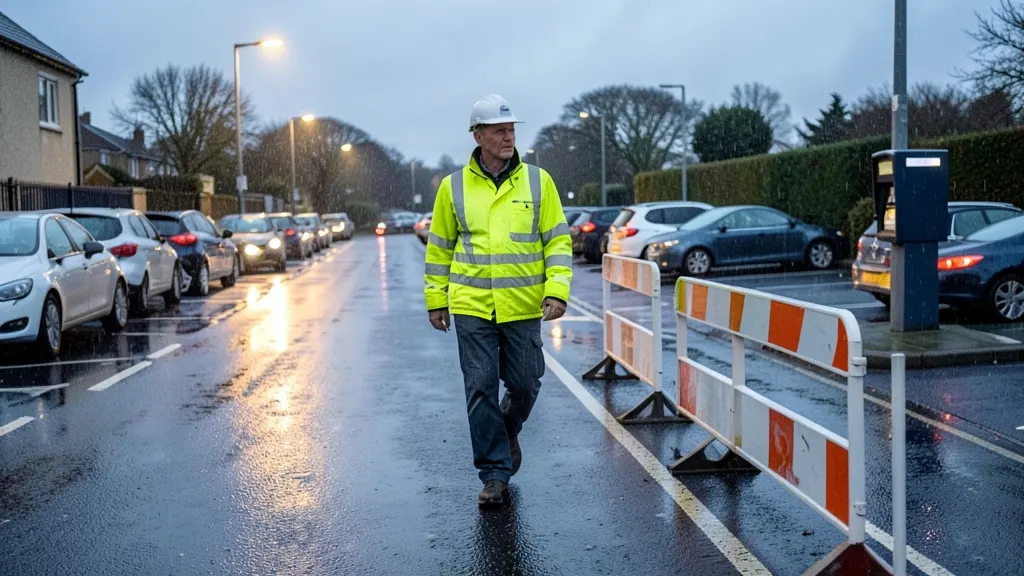
Wales packs a lot into a small country. In the space of a single day you can walk a coastal path in the morning, cross open hill country at midday and sit in city traffic on the way home. That variety is exactly why visibility clothing matters here. A hi-vis jacket that suits a site worker in Cardiff may be the same one a dog walker needs on a dark lane in the valleys, and the same principle applies from the M4 corridor in the south to the borderlands of the north.
What ties the places in this guide together is simple. Short winter days, frequent rain, narrow rural roads and regular commutes on fast routes mean people spend a lot of time near traffic in poor light. Fluorescent material helps drivers pick you out in daylight and overcast conditions. Reflective strips take over after dark, bouncing headlight beams back so you register earlier. The Highway Code sets this out plainly. Rule 3 advises road users to help others see them, noting that reflective materials such as jackets, armbands and sashes can be seen by drivers using headlights up to three times as far away as non-reflective materials. Rule 17 says the same thing for pedestrians: at night, wear something reflective.
Where we cover in Wales
We currently cover four places across Wales, from the capital in the south to the largest town in the north. Each hub page looks at local work, walking, cycling and riding conditions in detail.
Cardiff
Cardiff, with a population of 362,400 in the 2021 census for the unitary authority area, is the main commercial centre of Wales and the base for the Senedd, the Welsh Parliament. That mix of office work, construction, events and public sector employment means a steady demand for hi-vis across very different settings, from riverside building sites to evening walks home through busy streets. See our page on Hi-vis clothing in Cardiff for the full picture.
Newport
Newport, home to 159,587 people at the 2021 census, sits on the high-technology M4 corridor, with expanding aerospace and semiconductor industries. Manufacturing and distribution work brings its own visibility rules, and the town's road network keeps commuting cyclists and pedestrians on their toes. Our Hi-vis clothing in Newport page covers what matters locally.
Swansea
Swansea, with a population of 238,500 in the 2021 census for the Swansea principal area, grew as a centre for metals and mining, especially copper, and has since moved towards a post-industrial, service sector economy. The coastal setting draws plenty of walkers and runners out in the greyer months, when a good reflective jacket earns its keep. Details are on our Hi-vis clothing in Swansea page.
Wrexham
Wrexham serves north Wales and the borderlands as a centre for manufacturing, retail, education and administration. Its built up area had a population of 44,785 at the 2021 census. Workwear, school runs and rural roads around the town all feature in our Hi-vis clothing in Wrexham hub.
Conditions that shape visibility across Wales
Wales does not have a single climate, but some patterns repeat wherever you go. Daylight hours in winter are short, and the sun sits low for weeks on either side of the solstice, so dawn and dusk commutes often happen in poor light or full darkness. Rain is frequent, cloud cover is common, and mist can hang around in valleys and on hills long after towns have cleared. Wet road surfaces also throw more glare back at drivers and everyone else.
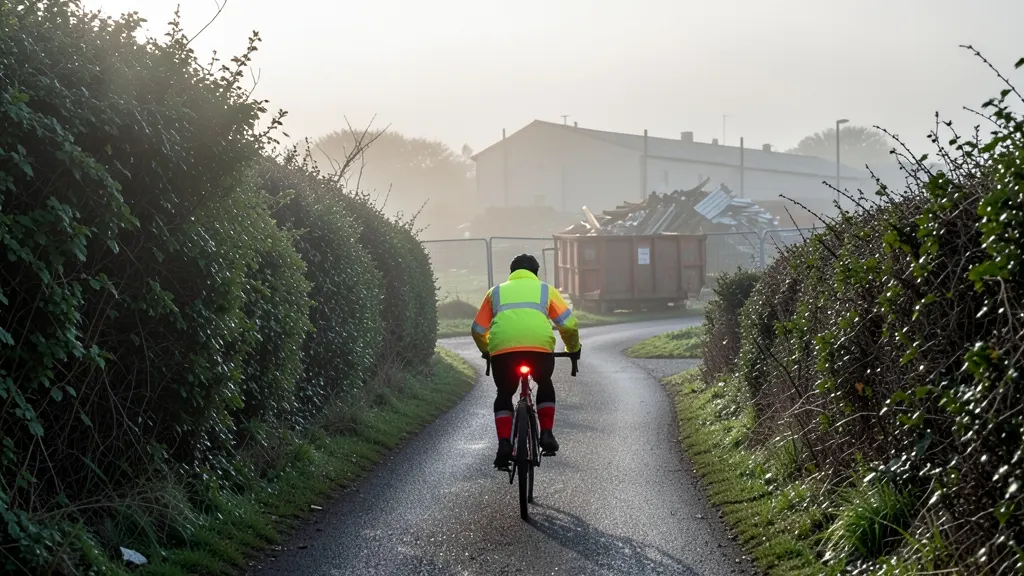
Away from the main motorway routes in the south, much of the Welsh road network is made up of narrow country lanes and steep town streets with tight bends and limited footpaths. On unlit rural roads, the Highway Code's advice in Rule 3 becomes very practical: reflective material is seen by drivers up to three times further away than non-reflective material, and that extra distance is what gives a driver time to slow down. For cyclists, Rule 59 recommends light-coloured or fluorescent clothing for daylight and poor light, plus reflective belts, arm or ankle bands after dark. Rule 60 adds that a cycle used at night must have a white front light, a red rear light and a red rear reflector. Motorcyclists get similar advice in Rules 86 and 87, which suggest fluorescent clothing or strips for visibility from the side, front and rear, and reflective strips when riding in the dark.
Choosing the right jacket for Welsh conditions
If you are buying a hi-vis jacket for work in Wales, the class system under EN ISO 20471 is the place to start. It has three classes. Class 1 requires a minimum fluorescent background area of 0.14 m2 and 0.10 m2 of retroreflective material. Class 2 requires 0.50 m2 of fluorescent background and 0.13 m2 of retroreflective material. Class 3, the highest, requires at least 0.80 m2 of fluorescent background material and 0.20 m2 of retroreflective material. A class 2 jacket is a common choice for everyday workwear on or near roads, while class 3 suits higher-risk settings with fast traffic or poor lighting.
Workers on the railway have an extra consideration. SATRA, a UK PPE testing body, states that rail standard RIS-3279-TOM requires an orange colour and garments meeting at least class 2 of EN ISO 20471, so a standard yellow jacket will not do for trackside work.
Employers should also be aware of the law. Under the Personal Protective Equipment at Work Regulations 1992, employers must provide suitable PPE to workers exposed to a risk to health or safety, unless the risk is adequately controlled by other means. Since 6 April 2022 those duties also cover limb (b) workers, and the employer must provide the PPE free of charge. HSE guidance adds that hi-vis jackets, trousers and coveralls must be cleaned regularly, kept in good condition, and any loss or obvious defect must be reported. In Welsh weather, mud and road grime build up quickly, and a dirty jacket reflects far less light than a clean one.
Where to read next
If you want the wider picture on when hi-vis is legally expected, read When is high visibility clothing required in the UK?. We cover other parts of Britain too, including Hi-vis clothing in Greater London, if your work or travel takes you outside Wales.
Whatever you are doing this winter, whether that is walking the dog, riding to work or clocking on at a site, pick something fluorescent for the day and reflective for the dark, and keep it clean. It is the simplest safety decision you will make all week.
Frequently asked questions
What class of hi-vis jacket do I need for roadwork in Wales?
EN ISO 20471 has three classes, and class 2 is a common minimum for work on or near roads, requiring at least 0.50 m2 of fluorescent background material and 0.13 m2 of retroreflective material. For higher-risk settings with fast traffic, class 3 is better, with at least 0.80 m2 of fluorescent material and 0.20 m2 of reflective material. Your employer's risk assessment should confirm which class applies to your job.
Do Welsh employers have to provide hi-vis jackets?
Under the Personal Protective Equipment at Work Regulations 1992, employers must provide suitable PPE to workers exposed to a risk to health or safety, unless the risk is adequately controlled by other means. Since 6 April 2022, these duties also cover limb (b) workers, and the employer must provide the PPE free of charge.
Is a hi-vis jacket enough for cycling in the dark?
A jacket helps, but the Highway Code sets out two separate things. Rule 59 advises light-coloured or fluorescent clothing in daylight and poor light, plus reflective belts, arm or ankle bands in the dark. Rule 60 also requires a cycle used at night to have a lit white front light, a red rear light and a red rear reflector.
Does hi-vis clothing for railway work in Wales need to be orange?
Yes. SATRA, a UK PPE testing body, states that rail standard RIS-3279-TOM requires an orange colour and garments that meet at least class 2 of EN ISO 20471. A yellow hi-vis jacket is not acceptable for trackside work.
How often should a hi-vis jacket be washed?
HSE guidance says hi-vis jackets, trousers and coveralls must be cleaned regularly and kept in good condition, and workers must report any loss, destruction or obvious defect. Dirt and grime reduce how well the fluorescent and reflective materials work, which matters even more during wet Welsh winters.