Hi-vis clothing in Wolverhampton
Last updated
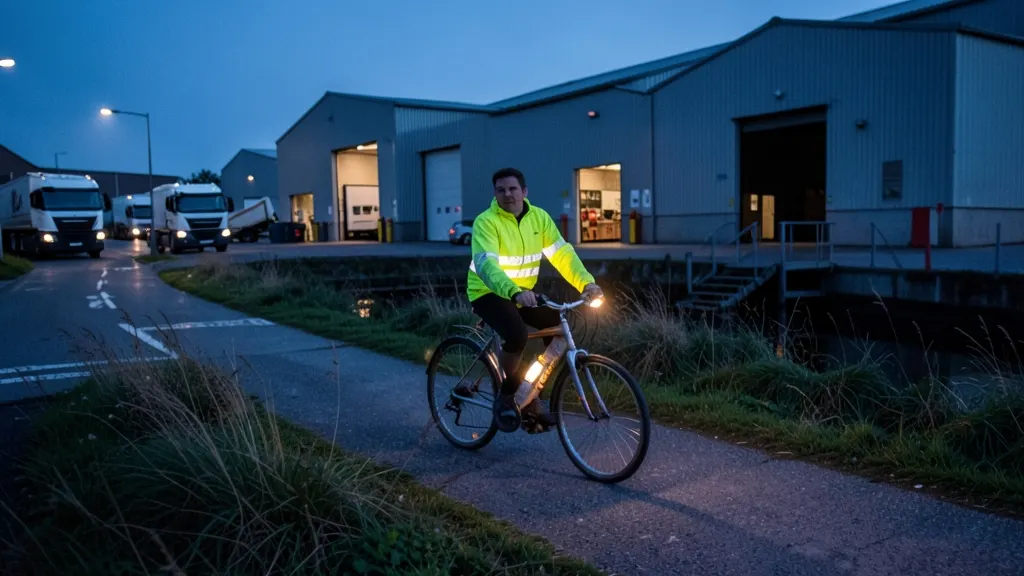
Wolverhampton is a city of around 263,700 people (2021) in the West Midlands, and it grew up as an industrial place. Engineering still underpins the local economy, including a large aerospace industry, alongside a service sector. That mix means a lot of people in the area spend their working day on sites, in depots, on logistics yards or on the road, and a lot of them need to be seen.
It also means a lot of daily life happens early or late. In Wolverhampton there are 121 days a year when sunset comes before half past five in the evening or sunrise after quarter to eight in the morning, so a normal commute is partly in the dark. On the winter solstice the sun rises at 08:17 and sets at 15:55, giving 7 hours 38 minutes of daylight. Add wet weather, dark mornings and busy roads, and being visible becomes a practical everyday matter rather than a nice extra.
What this guide covers
This page is the local hub for hi-vis in Wolverhampton, and it links to pages on the themes that matter most here:
- Hi-vis for cycling and commuting in Wolverhampton. The city has a genuine cycling heritage, with a prolific bicycle industry from 1868 to 1975 that involved more than 200 manufacturing companies. It also lies on the Smethwick to Telford section of Sustrans National Cycle Network Route 81, and the Birmingham Canal Main Line passes through the city centre, so the city has navigable canals. This page looks at what to wear on roads, towpaths and routes that are often unlit.
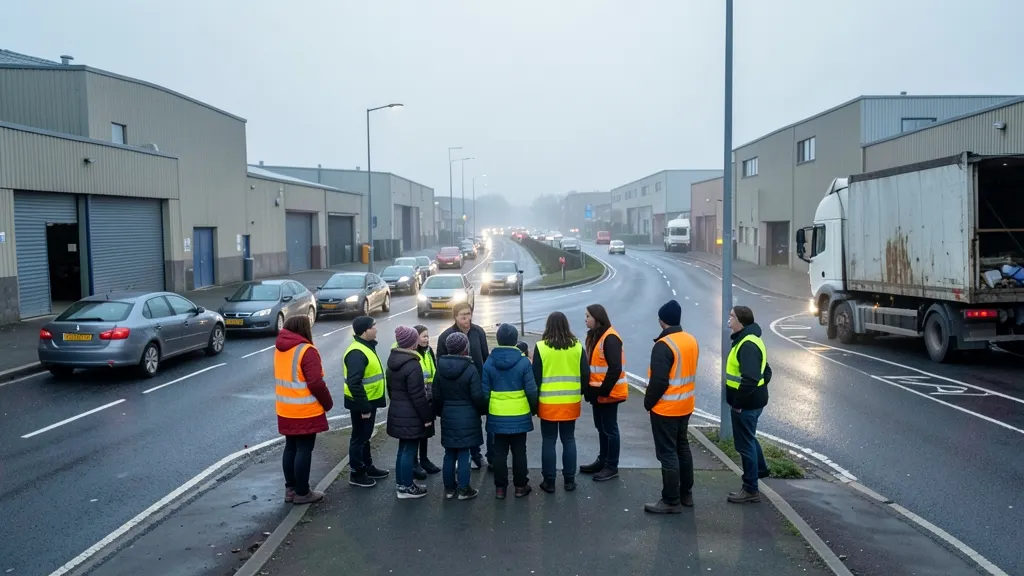
- Hi-vis for the school run and children in Wolverhampton. The Wolverhampton Ring Road circumnavigates the city centre, linking the radial routes, and was built between 1960 and 1986 and numbered A4150. Busy roads and suburban streets make visibility a real concern for families walking to school in low light.
- Work and site wear. Engineering, aerospace and distribution all bring shift work, vehicle movements and shared yards. Our general advice on this is in High visibility clothing workwear: choosing a hi vis jacket.
For the wider regional picture, see our Hi-vis clothing in the West Midlands: a regional guide.
Hi-vis guidance that applies across the board
Fluorescent by day, reflective at night
Fluorescent material works in daylight and poor light. Reflective material only works properly in the dark, when it bounces light from headlamps and lamps back towards the source. A hi vis jacket with both is what most people in Wolverhampton need, because a single journey often spans both conditions in winter.
The Highway Code makes the same point. Rule 3 advises road users to help others see them, and notes that reflective materials such as armbands, sashes, waistcoats, jackets or footwear can be seen by drivers using headlights up to three times as far away as non-reflective materials. Rule 59 applies this to cyclists, recommending light-coloured or fluorescent clothing in daylight and poor light, and reflective clothing or accessories such as belts, arm or ankle bands in the dark. Rule 17 gives walkers the same advice at night.
Match the class to the job
EN ISO 20471 has three classes, based on how much visible material a garment carries. The minimum fluorescent background area is 0.14 m2 for class 1, 0.50 m2 for class 2 and 0.80 m2 for class 3. The minimum retroreflective area is 0.10, 0.13 and 0.20 m2 respectively. Class 3 is the highest, and it is what you want for dark, fast or complex environments, such as night work beside a busy road. Class 2 covers many general site and yard roles. A class 1 garment is for lower-risk settings where you want to be seen but are not working near traffic.
For workwear, employers have duties under the Personal Protective Equipment at Work Regulations 1992, which require suitable PPE to be provided to workers exposed to a risk to health or safety, unless the risk is adequately controlled by other means. Since 6 April 2022 those duties also cover limb (b) workers, and the employer must provide the PPE free of charge.
Look after what you buy
Hi-vis garments stop working when they are dirty, faded or torn. HSE guidance says reusable PPE must be cleaned and kept in good condition, and that hi-vis jackets, trousers and coveralls must be cleaned regularly. Workers must report any loss, destruction or obvious defect. Washing matters more than most people expect: grime kills fluorescence, and reflective tape wears out with repeated scrubbing. If a jacket has gone grey in the wash or the tape has cracked, replace it rather than hoping for the best.
Layers and weather
Winter in the West Midlands is wet as often as it is cold, and a hi-vis jacket that soaks through stops being worn. A waterproof hi-vis outer layer keeps the habit alive, and reflective panels on sleeves and shoulders help you stay visible from the side as well as front and back, which matters at junctions. For cold mornings waiting at bus stops or walking children to school, a warm hi-vis coat with a hood works better than a thin vest worn reluctantly over a coat.
Where to go next
If you cycle or walk the towpaths and roads into the city, read Hi-vis jackets for cycling: a buyer's guide alongside the local page, and remember that Rule 60 requires a cycle at night to have white front and red rear lights lit, plus a red rear reflector, so clothing is the second layer of defence rather than the first.
If you are kitting out children, Kids hi vis jackets: myths and facts deals with the common questions about fit, comfort and whether a cheap yellow coat actually counts as hi-vis.
For workwear, start with High visibility clothing workwear: choosing a hi vis jacket, then look at Winter hi vis jackets: a practical buyer's guide and Waterproof hi vis jackets: myths and facts once you know the class and colour your site requires. Orange matters in some settings: SATRA, a UK PPE testing body, states that rail standard RIS-3279-TOM requires an orange colour and garments that meet at least class 2 of EN ISO 20471.
Whatever the reason you are out in low light, the same rule of thumb holds. Fluorescent for the grey end of the day, reflective for the dark end, and enough of both that a driver, a forklift driver or a parent on the school run picks you out early.
Wolverhampton at a glance
- Nation: England
- Region: West Midlands
- Population: 263700
| Measure | Time |
|---|---|
| Sunrise on the winter solstice | 08:17 |
| Sunset on the winter solstice | 15:55 |
| Daylight on the winter solstice | 7h 38m |
| Sunset when the clocks go back (2026-10-25) | 16:52 |
| Days a year with a dark commute | 121 |
Frequently asked questions
What class of hi vis jacket do I need for site work in Wolverhampton?
It depends on the risk around you. EN ISO 20471 class 2, with at least 0.50 m2 of fluorescent background material and 0.13 m2 of retroreflective material, suits many general site and yard roles. Class 3, with at least 0.80 m2 and 0.20 m2 respectively, is the highest class and is the one to choose for dark roads or fast-moving traffic. Your employer should assess the risk, since the Personal Protective Equipment at Work Regulations 1992 require suitable PPE to be provided where needed.
Do I need hi-vis to cycle along the canals in Wolverhampton?
Canal towpaths are often unlit, and the Birmingham Canal Main Line passes through the city centre, so you can find yourself in near darkness on an otherwise familiar route. Reflective clothing or accessories such as arm and ankle bands are what make you visible to other towpath users and to drivers at bridge crossings. At night Rule 60 also requires a white front light, a red rear light and a red rear reflector on the bike.
How much daylight does Wolverhampton get in winter?
On the winter solstice, sunrise in Wolverhampton is at 08:17 and sunset is at 15:55, giving 7 hours 38 minutes of daylight. Across the year there are 121 days when sunset comes before half past five in the evening or sunrise after quarter to eight in the morning, so a normal commute is partly in the dark.
Is a hi-vis jacket enough on its own for the school run?
A jacket is a good start, but coverage matters. Reflective strips on sleeves, backpacks and shoes help drivers see a child from the side as well as the front, which matters near junctions on busy roads. Rule 3 of the Highway Code notes that reflective materials can be seen by drivers using headlights up to three times as far away as non-reflective materials, so it is worth adding armbands or a satchel strip in the darkest months.
How often should hi-vis workwear be washed and replaced?
HSE guidance says hi-vis jackets, trousers and coveralls must be cleaned regularly and kept in good condition, and workers must report any loss, destruction or obvious defect. If the fluorescent material has faded or the reflective tape has cracked or peeled, the garment is no longer doing its job and should be replaced.